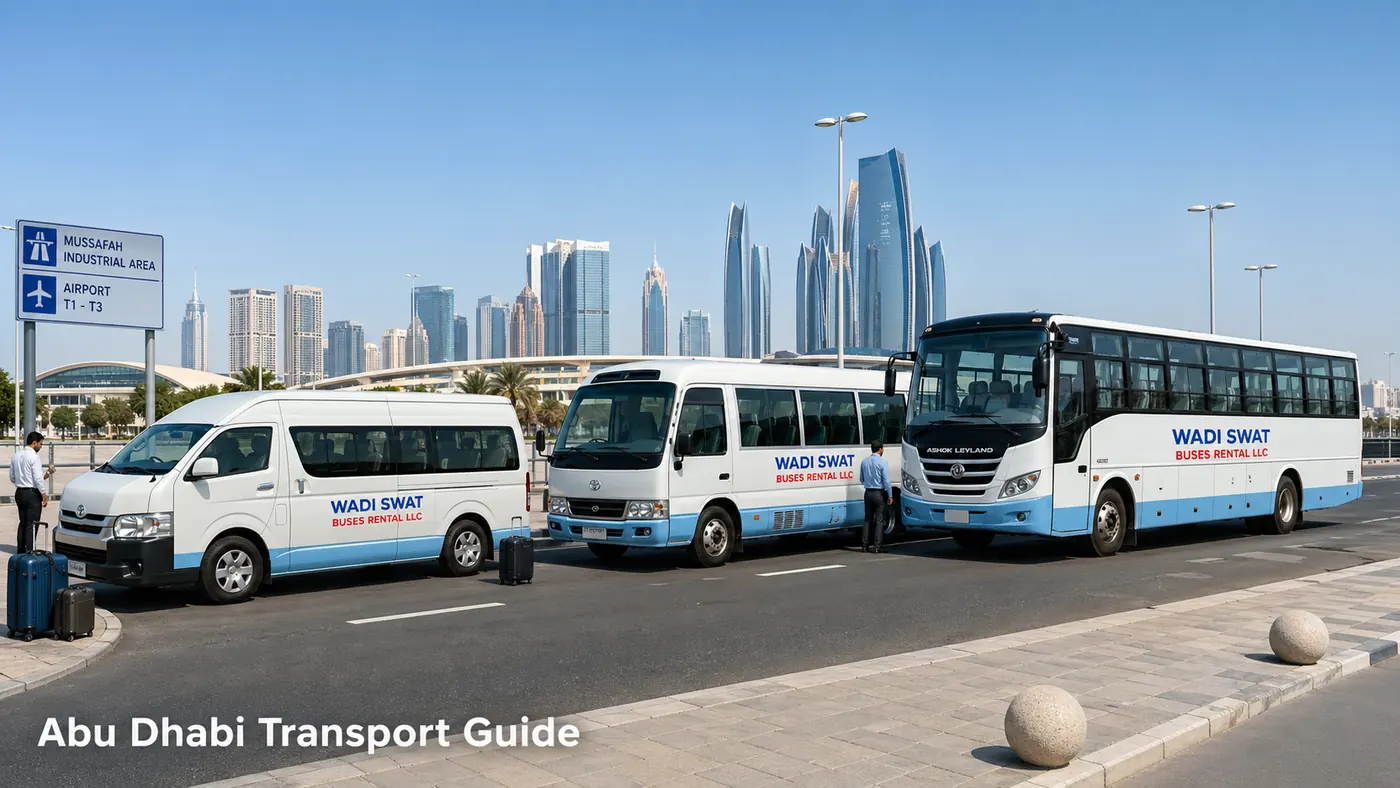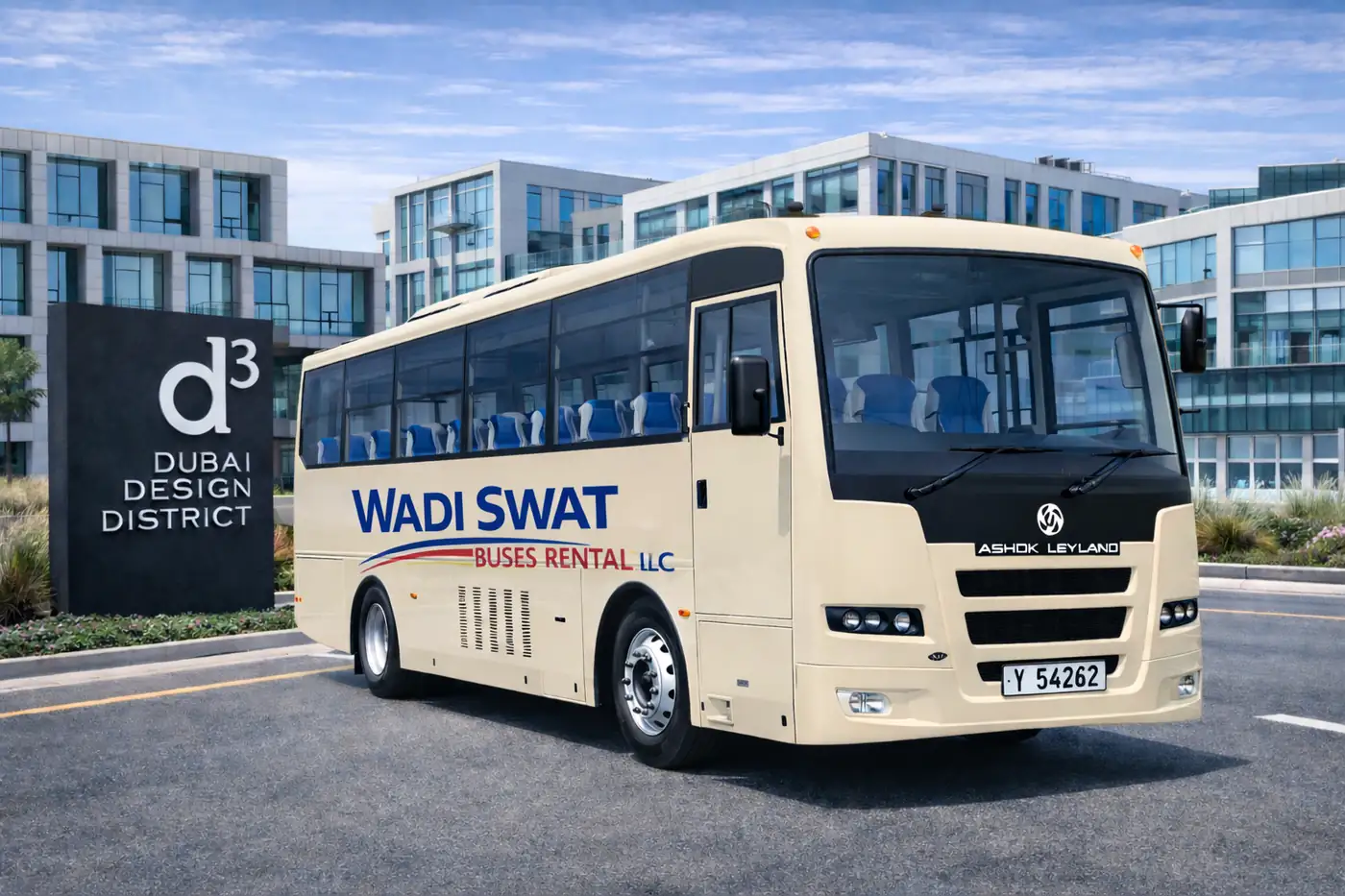
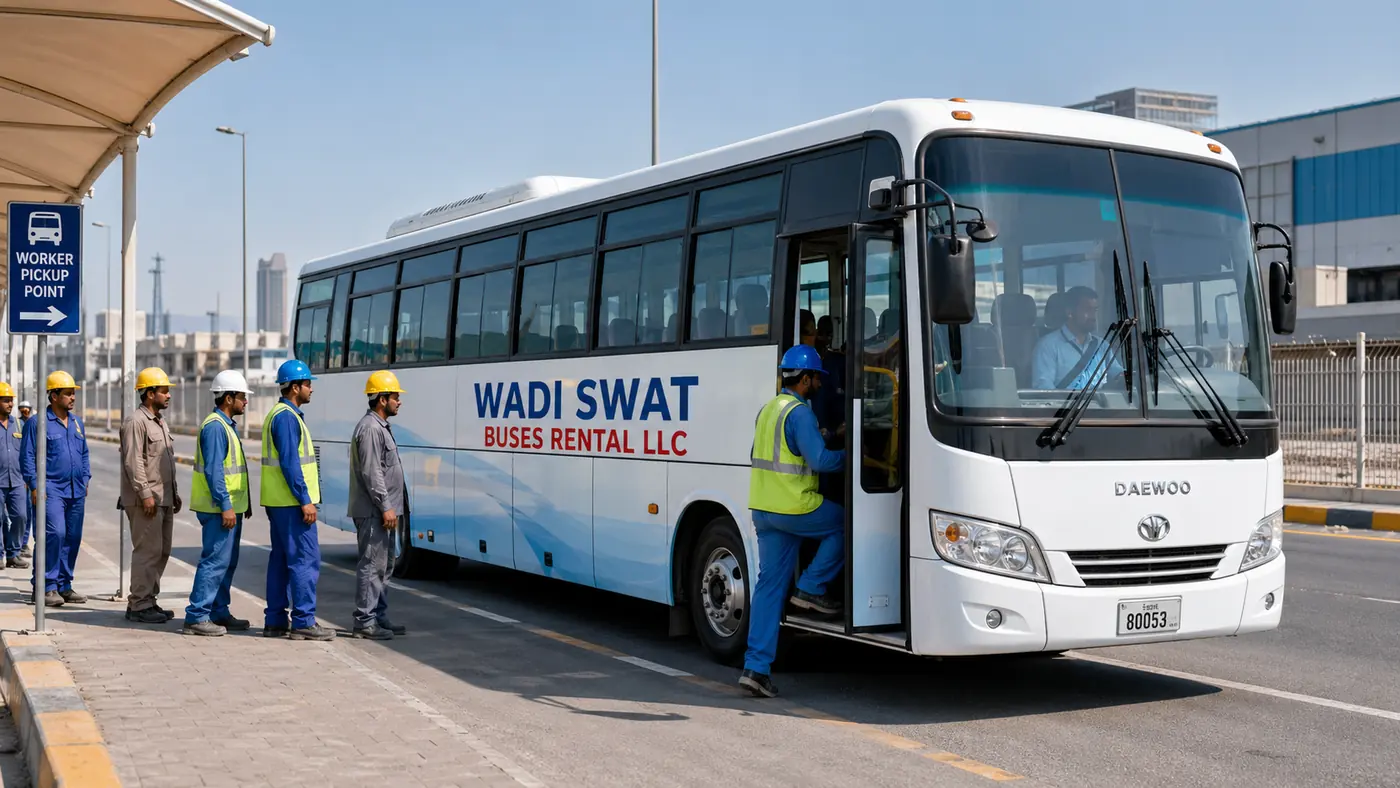
Abu Dhabi worker routes structured for longer distances
Focus on long routes, worker camps, site schedules and industrial zones.
Labor transport Abu Dhabi is planned for longer worker corridors, remote-site access and repeated daily movement where route control matters as much as vehicle capacity.

Focus on long routes, worker camps, site schedules and industrial zones.
contractors, site managers, industrial employers, camp operators, logistics teams and companies moving workers on fixed daily schedules
Abu Dhabi benefits from route discipline, high-capacity deployment and transport plans that reflect real industrial timing instead of generic city assumptions.
Recurring transport fit based on real seat planning and daily route structure.
Abu Dhabi labor transport often stretches across longer routes, remote projects and site-linked worker demand that is less compact than buyers initially assume. A useful page here needs to explain that operating reality clearly and commercially.

The route, passenger profile and service format determine whether this page is the right match.
Abu Dhabi shows steady demand from contractors, industrial operators, camps, warehouses and employers running fixed worker shifts.
Transport in Abu Dhabi often depends on industrial access roads, gate procedures, long corridors, shift changes and high-capacity loading periods.
Operational success normally comes from camp-based assembly, site sequencing, gate-ready arrivals and bus allocation that fits worker waves.
Worker Transportation Abu Dhabi, Staff Transport Abu Dhabi or Labor Transport Musaffah may be a better fit depending on whether the requirement is industrial, office-led or site-connected.

It works best for camp-to-site movement, worker-shift transport, remote project access and repeated high-volume movement tied directly to industrial operations.
If the actual need is premium guest transport, leisure movement or a small casual booking, labor transport is usually not the correct category.
Confirm parking, gates, permits, loading areas, waiting limits and any site-specific procedure before the vehicle is allocated.
Planning generally begins with accommodation origin, site destination, duty timing, road distance and the most practical route sequence for orderly loading and arrival.

Small teams, airport groups and access-sensitive routes.

Medium groups, repeated shuttles and practical local movement.

Daily employee and workforce routes with higher passenger volume.

Longer journeys, events and groups requiring added comfort.
Shift-based worker movement stays stable when departure waves, return times and loading control are clearly planned instead of improvised.

Clear standards help buyers compare providers on more than price alone.
Commercially aware route planning with access realities, load suitability and practical operating discipline
Professional driver allocation, punctual reporting, route familiarity and service discipline suited to recurring transport
Safe boarding, disciplined routing, sensible stop design and practical loading-point control throughout the daily operation
Consistent scheduling, route stability, responsive coordination and continuity planning for repeated transport demand
Flexible recurring booking structure with room for route review, capacity changes and timetable adjustment as demand evolves
In Abu Dhabi, labor transport is often affected by longer routes, remote sites, broader industrial spread and the need to move workers without losing time across larger daily corridors. Buyers usually need guidance on how local geography and site access influence scheduling, vehicle scale and route practicality.
Abu Dhabi shows steady demand from contractors, industrial operators, camps, warehouses and employers running fixed worker shifts.
Transport in Abu Dhabi often depends on industrial access roads, gate procedures, long corridors, shift changes and high-capacity loading periods.
Operational success normally comes from camp-based assembly, site sequencing, gate-ready arrivals and bus allocation that fits worker waves.
Abu Dhabi benefits from route discipline, high-capacity deployment and transport plans that reflect real industrial timing instead of generic city assumptions.

Share route, date, timing, passenger count, luggage and access notes.
The team checks feasibility, duty structure and suitable vehicle categories.
Review the included items, exclusions, payment terms and change conditions.
Approve the scope, keep one named coordinator and confirm final trip details.
These answers cover the route, vehicle and commercial points buyers usually review before confirmation.
The route is generally shaped around where the workers stay, how far they need to travel and which corridors allow the most reliable site arrival.
The best size depends on workforce concentration, but longer-distance projects often benefit from capacity that reduces unnecessary route fragmentation.
Yes. A multi-site pattern can be organized through separate drops, route branches or planned waves depending on geography and timing.
Project location, worker count, accommodation origin, start time, return schedule, service days and site-access rules all matter.
Yes. It is mainly built for recurring labor logistics and ongoing project support.
Consistency is strongest when site timing, travel distance, boarding order and vehicle choice all align with the actual operating conditions.
Share the exact pickup and destination, service date, reporting and return times, passenger count, luggage, stops, waiting, access conditions and whether the service is one-time or recurring.
The vehicle is matched to the registered passenger load, usable luggage space, route length, access restrictions, comfort expectation and operating format. Seat count alone is not enough.
Changes can be reviewed, but a new stop, different time, longer waiting or new destination may affect feasibility, driver duty, parking and price. Written approval is required.
Review the vehicle category, route, duty hours, waiting, tolls, parking, permits, overtime, payment terms, cancellation conditions and the method for approving later changes.
If the requirement is labor transport in Abu Dhabi, send the project location, worker volume and reporting time so the quote reflects route length, access and operating pressure from the start.

Accurate journey information helps us review the route, match the correct vehicle and calculate the operating scope properly. Send the essentials below and our team will shape the recommendation around your actual requirement.
Pickup, destination, boarding points, drop-off points and any preferred route.
Service date, departure and return times, duty hours and expected waiting.
Confirmed passenger numbers and any expected variation between trips or shifts.
Luggage volume, parking, security gates, permits and site or coach restrictions.
Van, minibus, staff bus or luxury coach—or allow our team to recommend the best fit.
One-time journey, weekly service, monthly contract or long-term recurring transport.