Labor Transport Sonapur
Labor transport Sonapur supports camp-cluster worker movement with route logic shaped around accommodation density, departure waves and large-scale daily transport needs.
Sonapur pickups organized around camp-density flow
Focus on accommodation clusters, morning and evening waves and high-volume transport.
Fleet choices shaped by large camp-based demand
contractors, site managers, industrial employers, camp operators, logistics teams and companies moving workers on fixed daily schedules
Route stability for repeated labor-site transfers
Sonapur benefits from route discipline, high-capacity deployment and transport plans that reflect real industrial timing instead of generic city assumptions.
20-1000+ workers across camp, site and industrial shift routes
Recurring transport fit based on real seat planning and daily route structure.
Camp-to-site, multi-stop worker route, industrial corridor and shift-based return movement
Planned around pickup flow, multi-stop movement and access realities.
Early-shift, late-shift, split-shift, overtime-support and return-wave scheduling
Suitable for peak starts, staggered arrivals and recurring route timing.
Comparison + Vendor Selection
Sonapur should remain separate because labor accommodation density and camp-based transport demand there are highly specific and tied to large-scale recurring worker movement.
Monthly contract, site-term agreement or long-term worker transport arrangement
High-capacity worker movement with route discipline, shift continuity and practical industrial execution
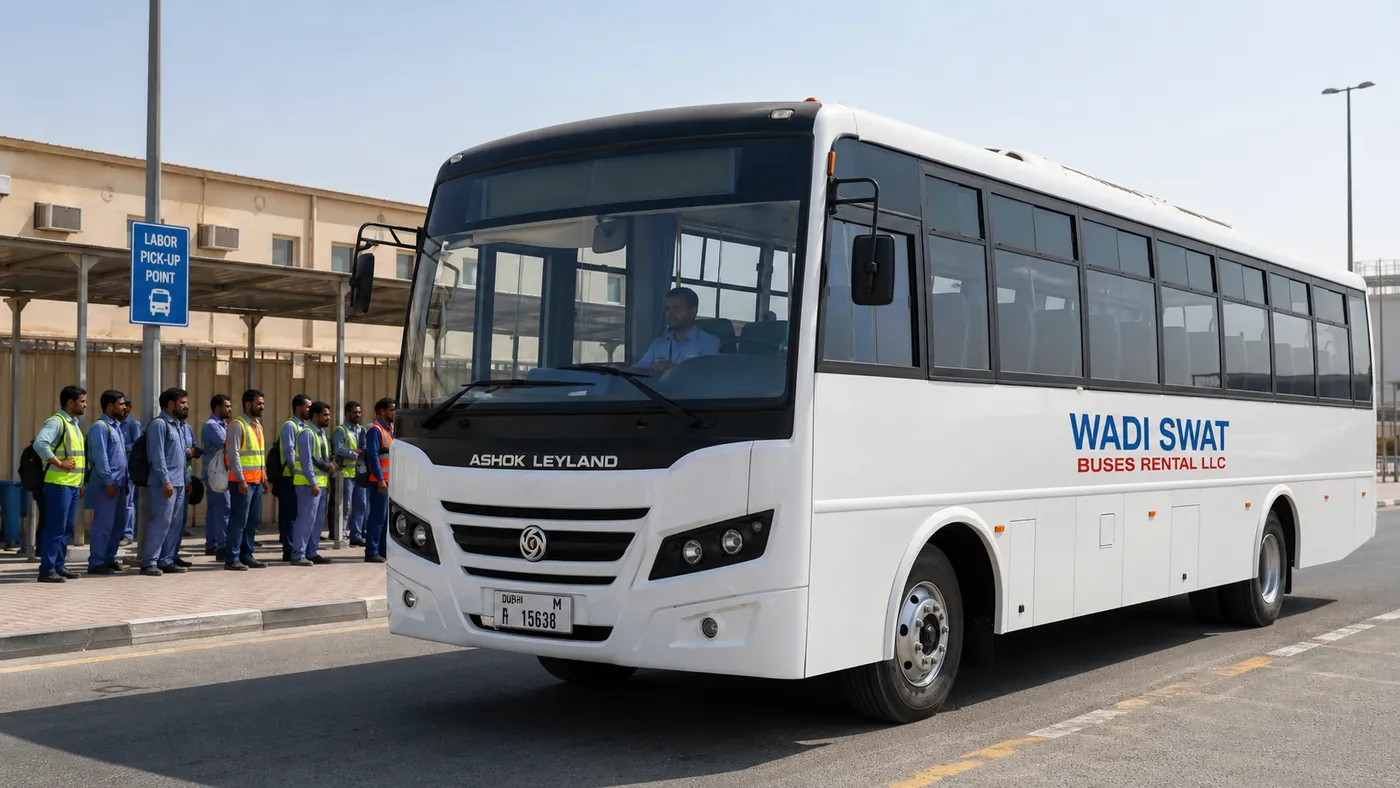
Camp-to-site worker transport
Sonapur shows steady demand from contractors, industrial operators, camps, warehouses and employers running fixed worker shifts.
High-volume shift movement
Transport in Sonapur often depends on industrial access roads, gate procedures, long corridors, shift changes and high-capacity loading periods.
Industrial route planning around Sonapur
Operational success normally comes from camp-based assembly, site sequencing, gate-ready arrivals and bus allocation that fits worker waves.
VIP movement, executive hospitality, tourist trips and low-volume ad hoc rides
Labor Transport Dubai, Worker Transportation Dubai or Labor Transport Jebel Ali may be more suitable when the need extends beyond camp clusters into broader industrial or city-linked worker transport.
Sonapur Labor Transport for Camp-Based Worker Movement
Sonapur transport decisions usually begin with camp density, worker volume and the practicality of moving large groups into repeated job-site patterns. That makes route structure and loading control central to the page from the first paragraph.
Who This Service Is Intended For
This page suits contractors, labor coordinators, camp operators, project teams and employers moving workers from accommodation clusters to sites on repeated daily patterns.
Where It Usually Delivers the Most Value
It performs best in camp-to-site labor movement, worker route waves, repeated high-volume trips and industrial or construction-linked daily transport.
When a Different Page Is More Suitable
If the requirement is premium guest movement, tourism travel or small casual transport, labor transport is not the right category.
How Sonapur Worker Routes Are Usually Planned
Route structure usually begins with camp clusters, worker count, site timing and the most practical way to organize large-scale loading without wasting route time or capacity.
Managing Departure Waves and Return Logic
The daily schedule often has to absorb multiple worker waves, return runs and site-driven timing that can change by project or contractor.
Fleet Planning for Accommodation-Based Worker Demand
Vehicle choice depends on workforce scale, route length, loading conditions and whether the movement needs high-capacity buses or a mixed fleet approach.
How Sonapur Labor Pricing Is Normally Considered
Pricing usually depends on headcount, camp origin, site distance, shift timing and how regularly the transport repeats. The labor pattern is what shapes the cost model.
Why Wadi Swat Works for Sonapur Labor Buyers
Buyers here usually need a provider that can keep high-volume movement controlled every day. That value comes from route structure, capacity discipline and dependable coordination.
Labor Movement Standards and Daily Reliability
Reliability here comes from process, not promises. The service becomes easier to manage when route planning, communication, driver standards and day-to-day continuity are handled in a commercially clear way.
RTA-Aware Planning
RTA-conscious planning and access-aware operation aligned with practical route realities
Service Discipline
Professional driver allocation, punctual reporting, route familiarity and service discipline suited to recurring transport
Operational Safety
Safe boarding, disciplined routing, sensible stop design and practical loading-point control throughout the daily operation
Daily Continuity
Consistent scheduling, route stability, responsive coordination and continuity planning for repeated transport demand
Recurring Booking Logic
Flexible recurring booking structure with room for route review, capacity changes and timetable adjustment as demand evolves
What Buyers Need to Consider in Sonapur
Sonapur buyers usually start from camp density and worker volume rather than from vehicle branding. The local section should therefore explain how accommodation clusters, departure waves, project spread and boarding control shape the transport model for repeated labor movement.
Local Demand
Sonapur shows steady demand from contractors, industrial operators, camps, warehouses and employers running fixed worker shifts.
Access and Timing
Transport in Sonapur often depends on industrial access roads, gate procedures, long corridors, shift changes and high-capacity loading periods.
Staging Logic
Operational success normally comes from camp-based assembly, site sequencing, gate-ready arrivals and bus allocation that fits worker waves.
Location Strength
Sonapur benefits from route discipline, high-capacity deployment and transport plans that reflect real industrial timing instead of generic city assumptions.
Labor Transport Sonapur FAQs
Sonapur buyers generally want clearer guidance on camp-cluster transport, worker wave planning and the route controls needed for high-volume daily movement.
How are Sonapur labor routes typically built around accommodation clusters?
Sonapur planning usually begins with camp density, route grouping, site timing and the best way to manage morning and return waves without overloading the same corridor.
What bus sizes are most common for Sonapur worker transport?
Large worker volumes often call for higher-capacity buses, though smaller support routes may still be useful where the boarding pattern is more limited.
Can Sonapur transport be aligned with multiple site start times?
Yes. Several departure layers can be created when the workforce is split by project, contractor or reporting window.
What inputs are needed to quote labor movement from Sonapur accurately?
Worker count, camp reference, project location, service days, start and finish times and any site-control details are the most useful inputs.
Is this page mainly for regular worker transport rather than one-off bus use?
Yes. It is meant for ongoing labor logistics tied to repeated daily movement.
What helps large Sonapur routes remain manageable every day?
Manageability comes from strict boarding logic, practical wave planning and route grouping that avoids unnecessary overlap.
Plan Labor Transport Sonapur With a Route That Actually Works
For Sonapur labor movement, the most useful first step is to send the camp cluster, worksite and start time. That makes it easier to build a realistic high-volume transport proposal.