A practical guide to choosing 80 84 Seater Labor Non Ac Buses by passenger count, luggage, route, comfort and operating hours before requesting a written quotation.
80-84 Seater Labour Non AC Buses: Category Overview
This category is intended for large construction, industrial and project workforces requiring high-capacity scheduled movement. The correct selection starts with the registered passenger capacity, but the practical decision must also consider luggage, boarding access, journey duration and the comfort expected by the group. A quotation should identify the approved vehicle class and should not rely on a generic capacity label alone.
Capacity Range and Vehicle Types — 80 84 Seater Labor Non Ac Buses
80 84 Seater Labor Non Ac Buses can be a strong fit for high-volume camp-to-site routes, construction shifts, industrial projects and fixed daily crew transport. Its main planning advantage is maximum seating capacity and cost-conscious operation for defined routes where non-AC use is operationally appropriate. The route, exact pickup point, number of stops and expected waiting time should be reviewed before a vehicle is allocated, especially when the duty includes airports, hotels, controlled sites or several collection points.
interior and seating
What is included — 80 84 Seater Labor Non Ac Buses
Passenger capacity means the registered seating layout, not a promise that every combination of people and bags will be comfortable. Children, adults, mobility requirements, child seats where applicable, aisle access and the organiser's preference for personal space all affect the practical load. The final passenger list should therefore be checked against the actual vehicle offered.
Confirm the final passenger count
Send the luggage profile
Provide the exact boarding point
Typical Interior and Luggage Arrangement — 80 84 Seater Labor Non Ac Buses
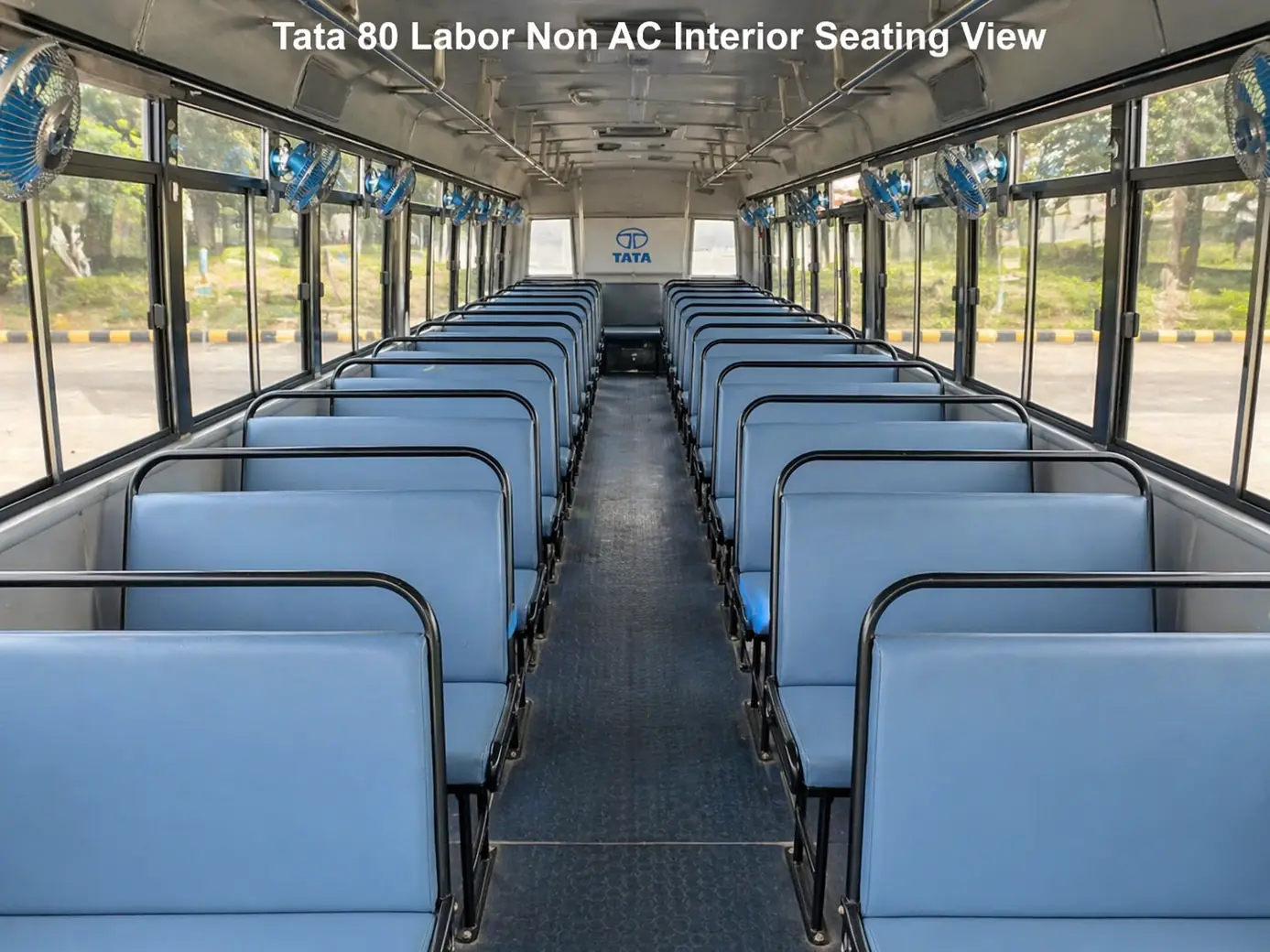
This is a non-air-conditioned category. Ventilation, journey duration, season, route and welfare requirements must be assessed before approval. The written confirmation should state the key equipment that matters to the booking rather than assuming that every vehicle in the category has identical features. This protects the customer and the operator from a mismatch between the requested duty and the available configuration.
Practical capacity — 80 84 Seater Labor Non Ac Buses
This category is intended for large construction, industrial and project workforces requiring high-capacity scheduled movement. The correct selection starts with the registered passenger capacity, but the practical decision must also consider luggage, boarding access, journey duration and the comfort expected by the group. A quotation should identify the approved vehicle class and should not rely on a generic capacity label alone.
Decision pointCompare 50–67 seater labor AC buses when cooling, longer travel time or passenger comfort requires an air-conditioned vehicle.
Models Available in This Category — 80 84 Seater Labor Non Ac Buses
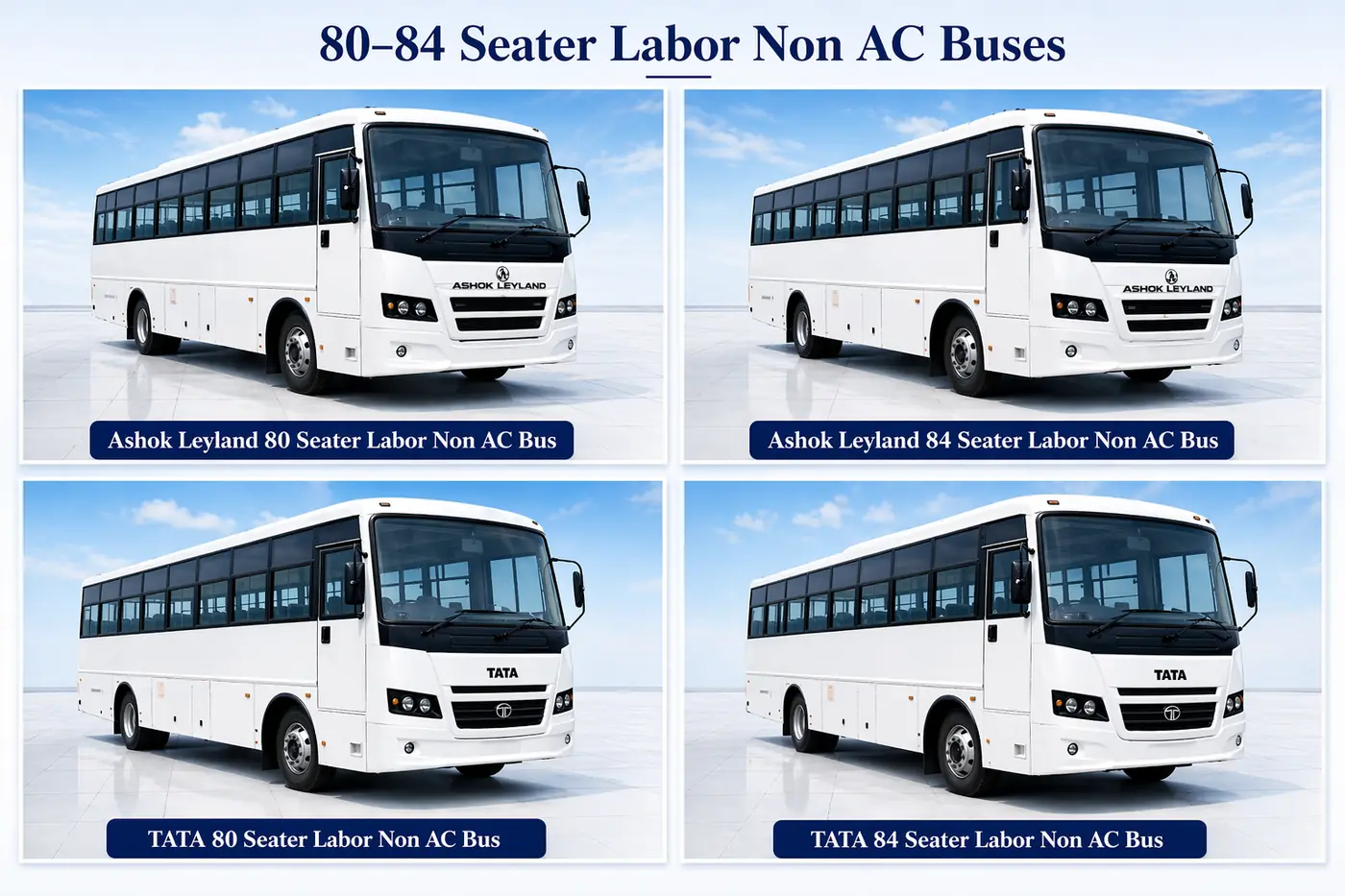
Common examples associated with this category include Ashok Leyland 80 seater non-AC bus, Ashok Leyland 84 seater non-AC bus, Tata 80 seater non-AC bus, Tata 84 seater non-AC bus. These names help a buyer understand the likely size and arrangement, but a specific make, year or body configuration should never be treated as guaranteed unless it appears in the written quotation. Fleet availability can change with maintenance, scheduling and the exact date of service.
Common Makes and Configurations — 80 84 Seater Labor Non Ac Buses
The model comparison should focus on passenger access, seat arrangement, luggage provision, turning space, route restrictions and the operating environment. Two vehicles with a similar registered capacity can serve very different purposes. A high-roof van, a commuter configuration, a minibus and a full coach may all feel different even when their headline capacity is close.
luggage and access
Fleet examples — 80 84 Seater Labor Non Ac Buses
When the named model is unavailable, an approved equivalent may be proposed only if it meets the agreed capacity, service level and route requirements. The customer should be told about any material difference in luggage capacity, air-conditioning, accessibility or interior standard before final confirmation.
Ashok Leyland 80 seater non-AC bus
Ashok Leyland 84 seater non-AC bus
Tata 80 seater non-AC bus
Availability and Equivalent Alternatives — 80 84 Seater Labor Non Ac Buses
Compare 50–67 seater labor AC buses when cooling, longer travel time or passenger comfort requires an air-conditioned vehicle. Comparing the next smaller and next larger category is a practical way to avoid overpaying for unused capacity or choosing a vehicle that becomes uncomfortable once all passengers and bags are present.
Substitution rule — 80 84 Seater Labor Non Ac Buses
Common examples associated with this category include Ashok Leyland 80 seater non-AC bus, Ashok Leyland 84 seater non-AC bus, Tata 80 seater non-AC bus, Tata 84 seater non-AC bus. These names help a buyer understand the likely size and arrangement, but a specific make, year or body configuration should never be treated as guaranteed unless it appears in the written quotation. Fleet availability can change with maintenance, scheduling and the exact date of service.
Decision pointCompare 50–67 seater labor AC buses when cooling, longer travel time or passenger comfort requires an air-conditioned vehicle.
Compare Ashok Leyland 71 Seater Workforce Bus when passenger capacity, luggage, comfort or route access affects the vehicle choice. Ashok Leyland 71 Seater Workforce Bus
Compare 80 Seater Bus for Rent Ashok Leyland UAE when passenger capacity, luggage, comfort or route access affects the vehicle choice. 80 Seater Bus for Rent Ashok Leyland UAE
Compare Ashok Leyland 84 Seater Bus Rental when passenger capacity, luggage, comfort or route access affects the vehicle choice. Ashok Leyland 84 Seater Bus Rental
Compare 30 Seater Bus for Rent when passenger capacity, luggage, comfort or route access affects the vehicle choice. 30 Seater Bus for Rent
Suitable Services and Passenger Groups — 80 84 Seater Labor Non Ac Buses
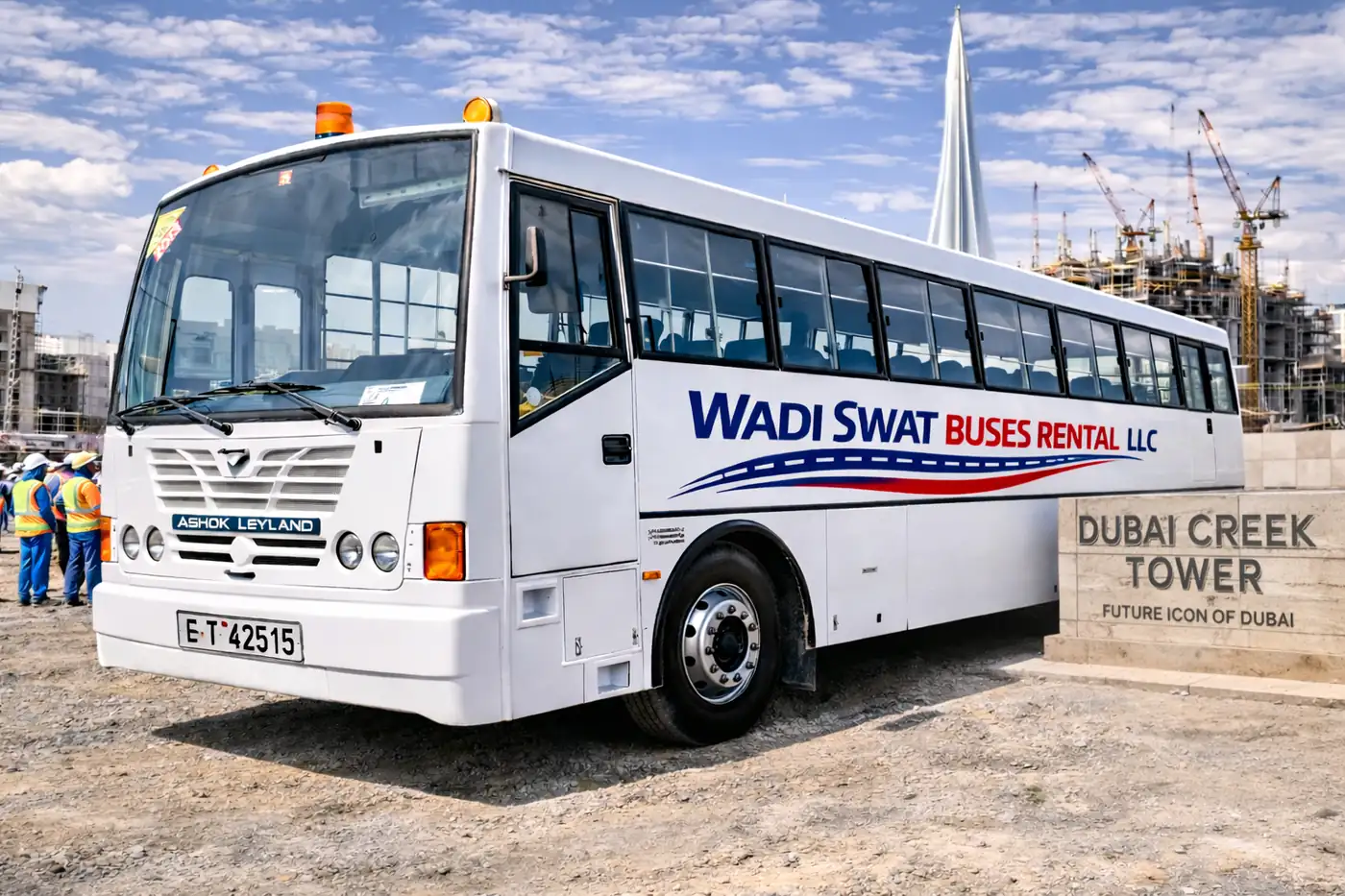
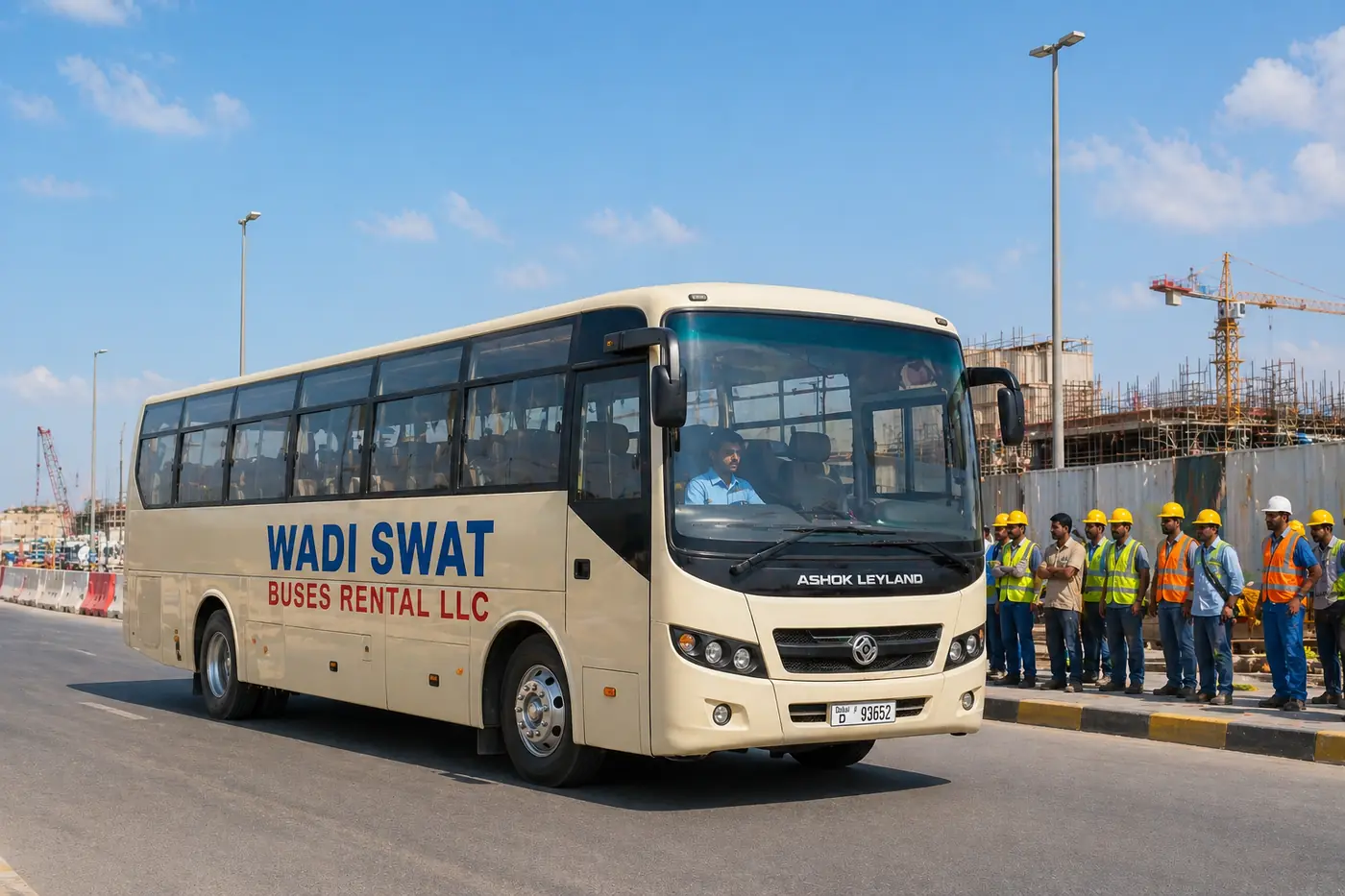
Suitable duties include high-volume camp-to-site routes, construction shifts, industrial projects and fixed daily crew transport. Recurring transport normally needs stable pickup points, a passenger communication process, an agreed reporting time and a clear rule for late changes. One-time trips need the same clarity, but usually place greater emphasis on itinerary, luggage and the event or venue schedule.
Recurring and One-Time Duties — 80 84 Seater Labor Non Ac Buses
Maximum seating capacity and cost-conscious operation for defined routes where non-ac use is operationally appropriate makes the category useful when the vehicle must match both passenger needs and the physical route. The operator should receive accurate map pins, entrance or gate details, parking information and the sequence of stops. A destination name without the exact access point is often not enough for reliable planning.
operational use case
Use cases — 80 84 Seater Labor Non Ac Buses
Passenger seating is the priority. Only ordinary personal work bags should be assumed unless a separate storage arrangement is confirmed. The organiser should count suitcases, backpacks, equipment boxes, pushchairs or other bulky items separately from passengers. If bags would block an aisle, door or emergency access, a larger vehicle or separate luggage arrangement should be selected.
Confirm the final passenger count
Send the luggage profile
Provide the exact boarding point
Route Access, Distance and Comfort — 80 84 Seater Labor Non Ac Buses
Longer journeys require more attention to seat comfort, climate control, planned breaks, driver duty hours and realistic travel time. Short urban duties may place greater emphasis on easy boarding, turning space and quick loading. The same category can therefore be suitable for one route and unsuitable for another.
Selection factors — 80 84 Seater Labor Non Ac Buses
Suitable duties include high-volume camp-to-site routes, construction shifts, industrial projects and fixed daily crew transport. Recurring transport normally needs stable pickup points, a passenger communication process, an agreed reporting time and a clear rule for late changes. One-time trips need the same clarity, but usually place greater emphasis on itinerary, luggage and the event or venue schedule.
Decision pointCompare 50–67 seater labor AC buses when cooling, longer travel time or passenger comfort requires an air-conditioned vehicle.
Rental Terms and Cost Factors — 80 84 Seater Labor Non Ac Buses
A written rental offer should identify whether the service includes a professional driver, the agreed duty hours, planned mileage, pickup and drop points, waiting time and the number of operating days. It should also explain what happens if the route or schedule changes after confirmation. This is more useful than a single headline price without scope.
Driver, Mileage and Duty Hours — 80 84 Seater Labor Non Ac Buses
Price is normally affected by vehicle class, service date, route length, operating hours, repeated trips, standby time, driver accommodation where relevant, and the operational complexity of the duty. Availability and seasonal demand can also influence the quotation, but no price should be assumed until the complete transport brief has been reviewed.
Commercial basis — 80 84 Seater Labor Non Ac Buses
Fuel, tolls, parking, permits, gate passes and venue access should be stated clearly as included, excluded or the customer's responsibility. These items can vary between a simple city transfer, an airport duty, an industrial route and an inter-emirate itinerary. The quotation should make the commercial basis easy to audit.
Confirm the final passenger count
Send the luggage profile
Provide the exact boarding point
Fuel, Tolls, Parking and Permits — 80 84 Seater Labor Non Ac Buses
The customer should confirm whether the vehicle must remain on standby, whether there are unpaid breaks, whether the driver requires accommodation on a long duty, and who will approve additional hours or trips. Clear responsibilities reduce disputes and help the transport team maintain the schedule.
Items to confirm — 80 84 Seater Labor Non Ac Buses
A written rental offer should identify whether the service includes a professional driver, the agreed duty hours, planned mileage, pickup and drop points, waiting time and the number of operating days. It should also explain what happens if the route or schedule changes after confirmation. This is more useful than a single headline price without scope.
Decision pointCompare 50–67 seater labor AC buses when cooling, longer travel time or passenger comfort requires an air-conditioned vehicle.
Compare and Book This Category — 80 84 Seater Labor Non Ac Buses
The best category is not always the vehicle with the closest seat number. A smaller option may be easier to position and more economical, while a larger option can provide better luggage space, easier group movement and a margin for late passenger additions. The decision should be based on the complete duty rather than capacity alone.
When to Choose a Smaller or Larger Vehicle — 80 84 Seater Labor Non Ac Buses
Compare 50–67 seater labor AC buses when cooling, longer travel time or passenger comfort requires an air-conditioned vehicle. The final comparison should record why the chosen class is suitable, what compromise has been accepted and which feature is essential. This creates a useful booking record for the customer and the operations team.
Capacity decision — 80 84 Seater Labor Non Ac Buses
To obtain a written quotation, provide the service date, reporting time, exact pickup and destination map pins, stop sequence, passenger count, luggage profile, required vehicle standard, return time, waiting requirement and any access or permit instructions. For recurring work, also provide the service days, contract duration and shift pattern.
Confirm the final passenger count
Send the luggage profile
Provide the exact boarding point
Details Needed for a Written Quotation — 80 84 Seater Labor Non Ac Buses
Before approval, check the vehicle category, driver scope, route, duty hours, commercial inclusions, cancellation terms and contact procedure for operational changes. The booking should be confirmed only after the written offer reflects the real requirement and any substitute-vehicle rule is understood.
Booking checklist — 80 84 Seater Labor Non Ac Buses
The best category is not always the vehicle with the closest seat number. A smaller option may be easier to position and more economical, while a larger option can provide better luggage space, easier group movement and a margin for late passenger additions. The decision should be based on the complete duty rather than capacity alone.
Decision pointCompare 50–67 seater labor AC buses when cooling, longer travel time or passenger comfort requires an air-conditioned vehicle.
Use How to Choose the Right Bus Size for the related requirements, planning checks or customer guidance. How to Choose the Right Bus Size
Answers before bookingCommon questions about this category
01How many passengers can 80-84 Seater Labour Non AC Buses carry?+
Use the registered seating capacity as the starting point, then check the actual vehicle layout, passenger profile and luggage. Passenger seating is the priority. Only ordinary personal work bags should be assumed unless a separate storage arrangement is confirmed. The written quotation should identify the approved category and any practical capacity limit for the duty.
02What trips is 80-84 Seater Labour Non AC Buses suitable for?+
The category is commonly considered for high-volume camp-to-site routes, construction shifts, industrial projects and fixed daily crew transport. Suitability still depends on route access, journey duration, passenger expectations and operating hours. Maximum seating capacity and cost-conscious operation for defined routes where non-ac use is operationally appropriate is the main reason to shortlist it.
03How much luggage can be carried for 80 84 Seater Labor Non Ac Buses?+
The category is commonly considered for high-volume camp-to-site routes, construction shifts, industrial projects and fixed daily crew transport. Suitability still depends on route access, journey duration, passenger expectations and operating hours. Maximum seating capacity and cost-conscious operation for defined routes where non-ac use is operationally appropriate is the main reason to shortlist it.
04Is a specific make or model guaranteed for 80 84 Seater Labor Non Ac Buses?+
The category is commonly considered for high-volume camp-to-site routes, construction shifts, industrial projects and fixed daily crew transport. Suitability still depends on route access, journey duration, passenger expectations and operating hours. Maximum seating capacity and cost-conscious operation for defined routes where non-ac use is operationally appropriate is the main reason to shortlist it.
05What affects the rental price for 80 84 Seater Labor Non Ac Buses?+
The category is commonly considered for high-volume camp-to-site routes, construction shifts, industrial projects and fixed daily crew transport. Suitability still depends on route access, journey duration, passenger expectations and operating hours. Maximum seating capacity and cost-conscious operation for defined routes where non-ac use is operationally appropriate is the main reason to shortlist it.
Next stepExplore related vehicles and planning guidance