
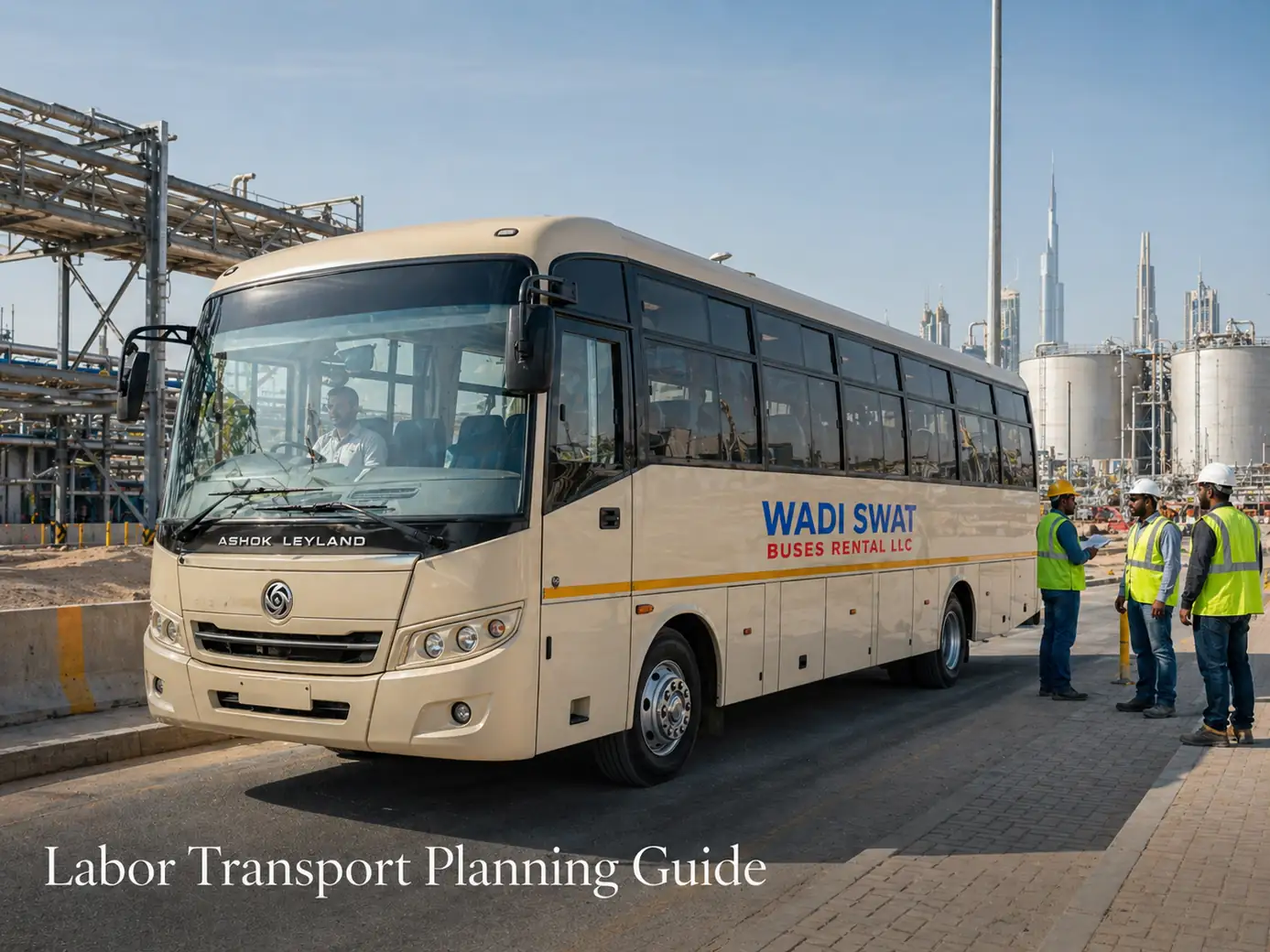
Who This Guide Is For — Labor Transport Planning Guide
The intended reader of Labour Transport Planning Guide is usually responsible for both coordination and approval. That person may need to balance passenger convenience, operational timing, procurement evidence and budget control. The guide therefore concentrates on shift release, camp loading, site induction, gate queues, route duration, rest and duty limits, attendance and emergency communication. It does not replace a route survey, written quotation or final availability confirmation; instead, it helps the buyer prepare those steps properly.
Labour Transport Planning Guide is most useful for contractors, industrial employers, camp managers and project teams arranging workforce movement between accommodation and sites. The decision becomes clearer when the request is treated as an operating problem rather than a search for a vehicle name. A buyer should identify the journey purpose, the people affected and the point at which transport success will be measured. That creates a practical boundary for this guide and prevents unrelated service features from controlling the decision.
Reader and decision context — Labor Transport Planning Guide
- Decision owner: contractors, industrial employers, camp managers and project teams arranging workforce movement between accommodation and sites
- Operating context: shift release, camp loading, site induction, gate queues, route duration, rest and duty limits, attendance and emergency communication
- Evidence boundary: vehicle registration, capacity, maintenance, driver documents, route schedule and contingency process
- Desired output: a written, comparable decision