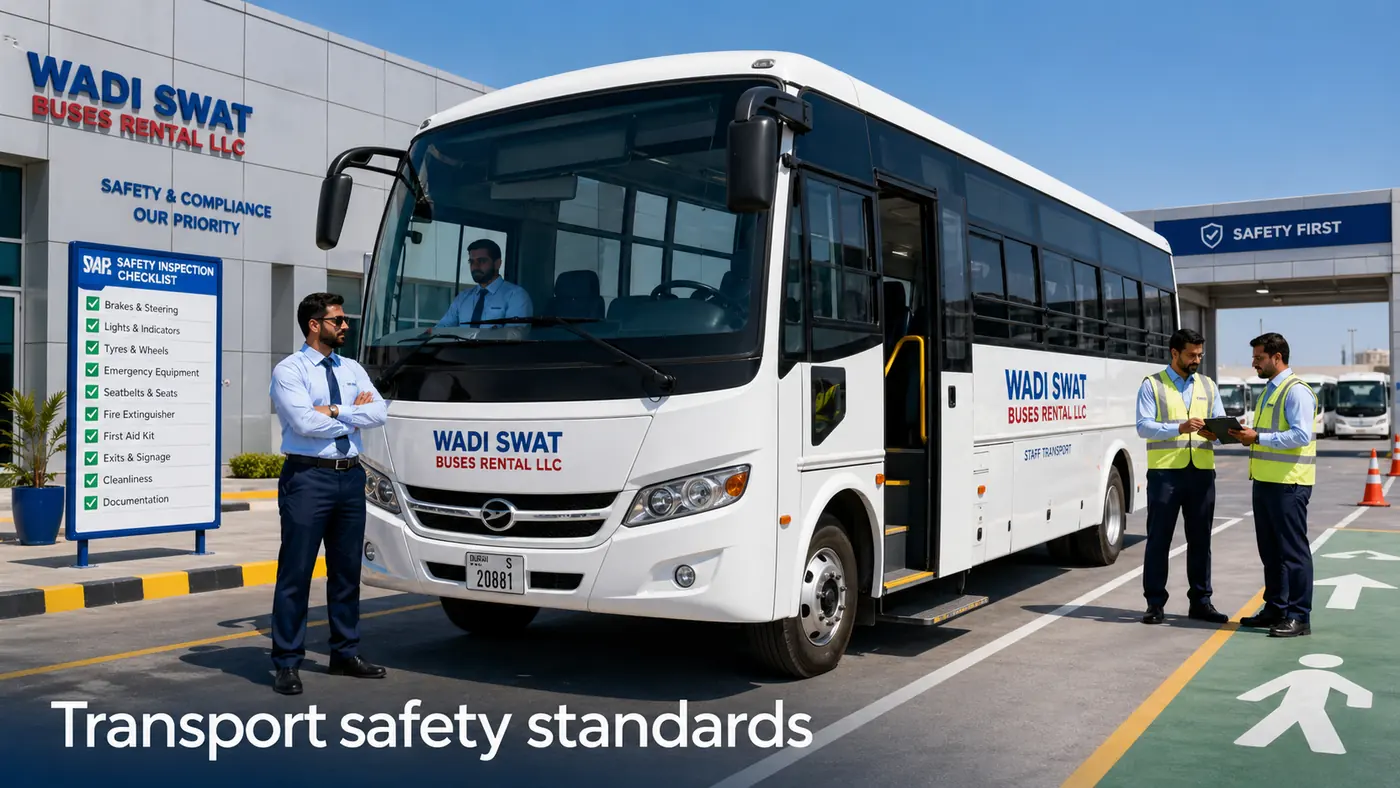
Safety Standards
Safety should never appear as empty marketing language on a transport website. It should be visible in how the company manages vehicles, screens and prepares drivers, maintains operating discipline, plans passenger movement, and approaches service reliability in practical day-to-day conditions. This page explains the safety standards that sit behind Wadi Swat Buses Rental LLC’s transport support across Dubai and the UAE so visitors can evaluate trust through operational logic, not only through claims.
Built to give buyers a clearer trust signal before they move into quotation or booking discussion.
Why This Page Matters
Buyers often hear broad statements such as safe, reliable, and professional, but those words only become meaningful when supported by practical standards. A strong trust page should explain what safety looks like in the real operation: driver screening, vehicle checks, fleet condition, passenger handling, and service consistency.
This page therefore works as one of the strongest trust anchors on the site because it turns generic reassurance into a more concrete operational picture.
What Buyers Usually Want to Know
- How drivers are prepared and screened
- How fleet condition is maintained
- What passenger safety measures exist
- How service reliability connects to safety
- Whether the operator follows structured standards
Safety Should Be Visible in the Operation, Not Hidden Behind Generic Claims
In passenger transport, safety is not one single action. It is the result of multiple standards working together. A vehicle may look presentable, but if driver preparation is weak, timing is badly planned, or inspection routines are inconsistent, the overall service still falls short. In the same way, a driver may be experienced, but if the fleet condition is not managed properly, passengers are still exposed to avoidable risk and uncertainty.
That is why this trust page is built around operational proof rather than broad slogans. It is here to help commercial buyers, institutions, project teams, and group organisers understand how safety should be evaluated in a professional transport company. The goal is not to sound impressive. The goal is to show the practical areas where discipline matters most.
The Main Standards Behind Safer Passenger Movement
Driver Standards
Safer transport begins with the people operating the service. That includes screening, route discipline, professional conduct, and readiness for structured passenger movement.
Fleet Condition
Vehicle safety is shaped by inspection logic, maintenance attention, operating condition, and how seriously the fleet is managed over time.
Passenger Measures
Passenger safety is not only about the vehicle itself. It also depends on boarding logic, route handling, service supervision, and the seriousness of day-to-day execution.
Operational Reliability
Reliable service is a safety issue too. Poor coordination, unclear timing, and weak route planning can create avoidable problems even before the journey begins.
Driver Training and Screening Matter
One of the clearest trust signals in any transport business is how seriously it treats the people behind the wheel. A professional operator should not rely on casual assumptions around driver capability. Buyers want to know that the company understands the importance of driver readiness, route behaviour, professional standards, and the discipline needed for organized passenger movement.
For a deeper look at this topic, visitors can review Driver Training and Screening, where this trust area can be explored in more detail.
Why It Affects Buyer Confidence
- Drivers influence both safety and client experience
- Professional route behaviour reduces avoidable risk
- Better screening strengthens long-term trust
- Prepared drivers support more stable daily operations
- Consistent driver quality improves commercial confidence
Fleet Safety Depends on Inspection Discipline and Maintenance Standards
In fleet-managed passenger transport, safety is strongly connected to vehicle condition. That means inspection routines, preventive maintenance thinking, general operating fitness, and the seriousness with which the company handles fleet care over time. Buyers who are evaluating a transport company for staff movement, airport support, corporate shuttle planning, or workforce routes often want proof that the company is fleet-managed rather than simply vehicle-supplied.
This is especially important in the UAE market, where route conditions, daily usage, passenger volumes, and time-sensitive movement demand a more responsible approach to fleet upkeep. Vehicles used for organized passenger transport should reflect more than surface presentation; they should reflect a system of care, checking, and operating attention that supports safer service in practice.
Passenger Safety Measures Should Be Clear
Passenger safety is often discussed too generally. In reality, it should be connected to how passengers are received, how boarding and movement are handled, how the route is controlled, and how the company treats safe service as part of normal operations rather than as an afterthought.
Buyers who want a more detailed page on this area can review Passenger Safety Measures.
What This Means in Practice
- Orderly movement rather than chaotic boarding conditions
- Better route awareness and handling during service
- Greater comfort for business and group passengers
- Stronger confidence for institutions and companies
- Safer overall service perception from start to finish
Service Reliability Is Also Part of Transport Safety
Safety is often treated as separate from reliability, but the two are closely linked. Weak route planning, unclear dispatch logic, poor timing discipline, and inconsistent service handling can create avoidable pressure and confusion. Those issues may begin as operational problems, but they often turn into safety concerns when movement becomes rushed, unstructured, or poorly coordinated.
That is why safety should not be judged only by the vehicle or the driver in isolation. It should also be judged by how stable and dependable the overall service feels. Buyers who want more detail on that side of the trust picture can review Service Reliability Standards.
Why Compliance and Operating Discipline Strengthen Trust
A professional passenger transport company should be understood as a managed operator, not as an informal transport arrangement. That distinction matters because it shapes how seriously the service handles drivers, vehicles, schedules, route structure, and passenger care. Buyers looking for a licensed transport provider, an insured fleet service, or a more compliance-led operator are usually looking for signs that the company behaves like a real transport business with standards, not like a casual booking source.
The language of compliance, screening, inspection, and operating discipline matters because it reflects seriousness. It helps commercial buyers feel more confident that the company understands the responsibilities attached to organized passenger movement across Dubai and the UAE.
How Safety Can Be Seen in a Stronger Transport Operation

Driver discipline and professional route behaviour are part of safer and more stable passenger movement

Fleet condition, inspection attention, and maintenance standards are central to safer vehicle-led service delivery

Passenger care is strengthened when service coordination, boarding logic, and operational control are handled properly
Trust Pages Help Serious Buyers Decide More Confidently
Many transport websites speak about trust, but fewer explain why a buyer should believe the claims. That is why a page like this matters. It gives visitors a stronger reason to trust the company before they request a quotation, especially when they are comparing operators, evaluating internal risk, or making a decision that affects employees, guests, workers, or group passengers.
A strong safety standards page does not exist only for search engines. It exists because commercial buyers often need operational confidence before they commit. When trust is clearer, the next step becomes easier and the service decision feels more professional and less uncertain.
Want to Discuss Your Requirement With Confidence?
If safety, service quality, and operational discipline matter to your organisation, the next step is to share your movement requirement with the team so the discussion can move from general trust signals to the actual service fit for your route, passenger type, and schedule.
This page is here to make one point clear: trust in transport should come from visible standards. When you are ready, use the quotation or contact paths above and move forward with clearer information and stronger confidence.
Need help with Safety Standards?
Operational Safety, Driver Standards, Fleet Inspection, and Passenger Protection Trust & Compliance Page Safety Standards Safety should never appear as empty marketing language on a transport website. It should be visible in how the company manages vehicles, screens…
WADI SWAT BUSES RENTAL LLC