
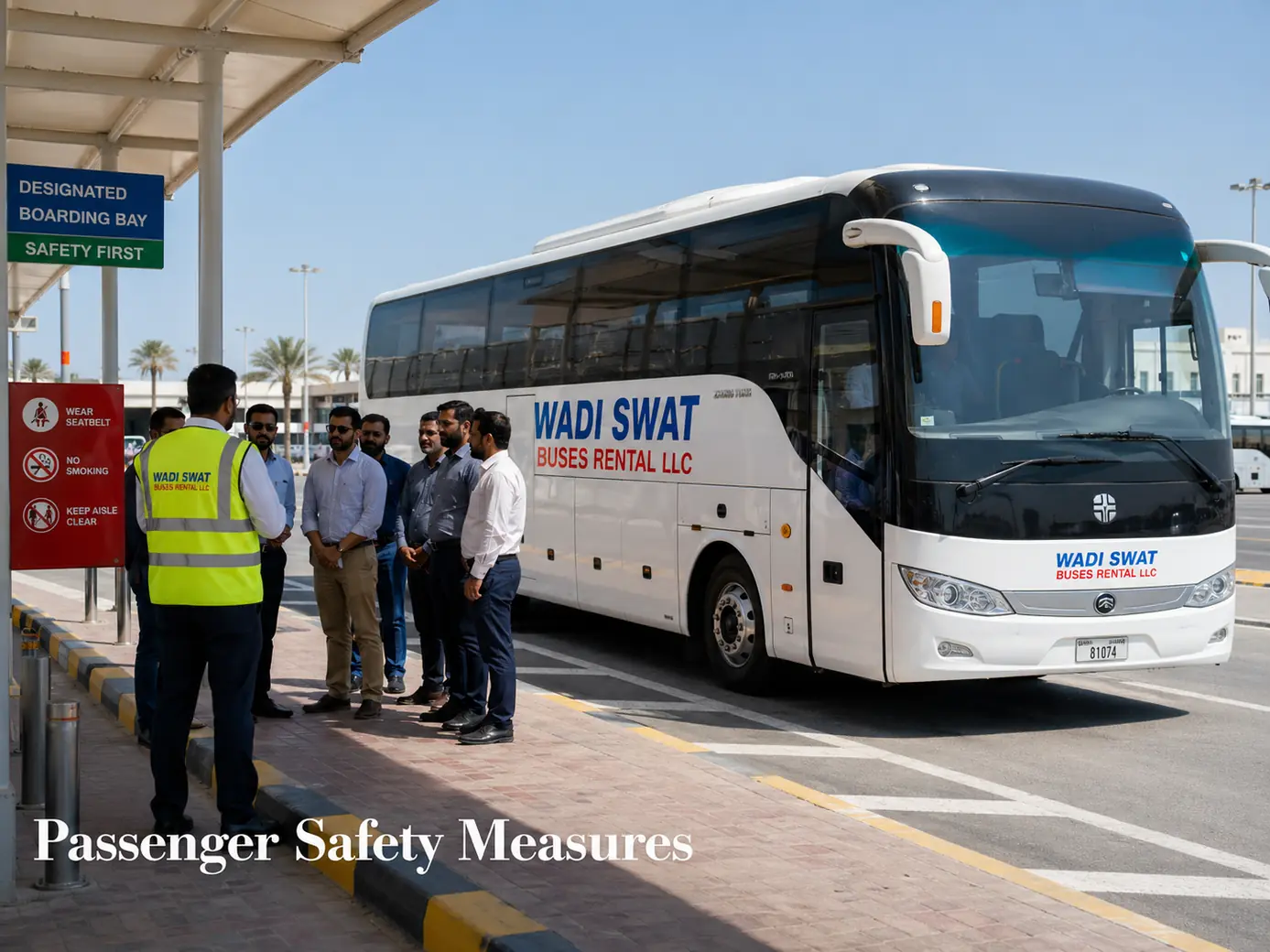
What the Standard Covers — Passenger Safety Measures
Responsibility is practical rather than symbolic: the driver controls the vehicle, the coordinator manages the group, and passengers follow confirmed safety and conduct instructions. This allocation helps the service start with accurate locations, timings and passenger needs, while keeping vehicle, driver and dispatch decisions within the operator's controlled process. For Passenger Safety Measures, this point is applied to safe pickup points, orderly boarding, seating, seat-belt use where fitted, luggage, behaviour, children or assisted passengers and emergency communication and recorded within review stage 1.3 for the confirmed assignment.
Applicable operations — Passenger Safety Measures
A useful definition separates the standard, the evidence and the operating action. The standard explains what should be controlled; the evidence shows what was recorded; and the action is what the team actually does before, during or after service. Confusing those three layers can lead to roadside boarding, standing or moving while unsafe, blocked aisles, unmanaged luggage and distracting the driver. For Passenger Safety Measures, this point is applied to safe pickup points, orderly boarding, seating, seat-belt use where fitted, luggage, behaviour, children or assisted passengers and emergency communication and recorded within review stage 1.4 for the confirmed assignment.