
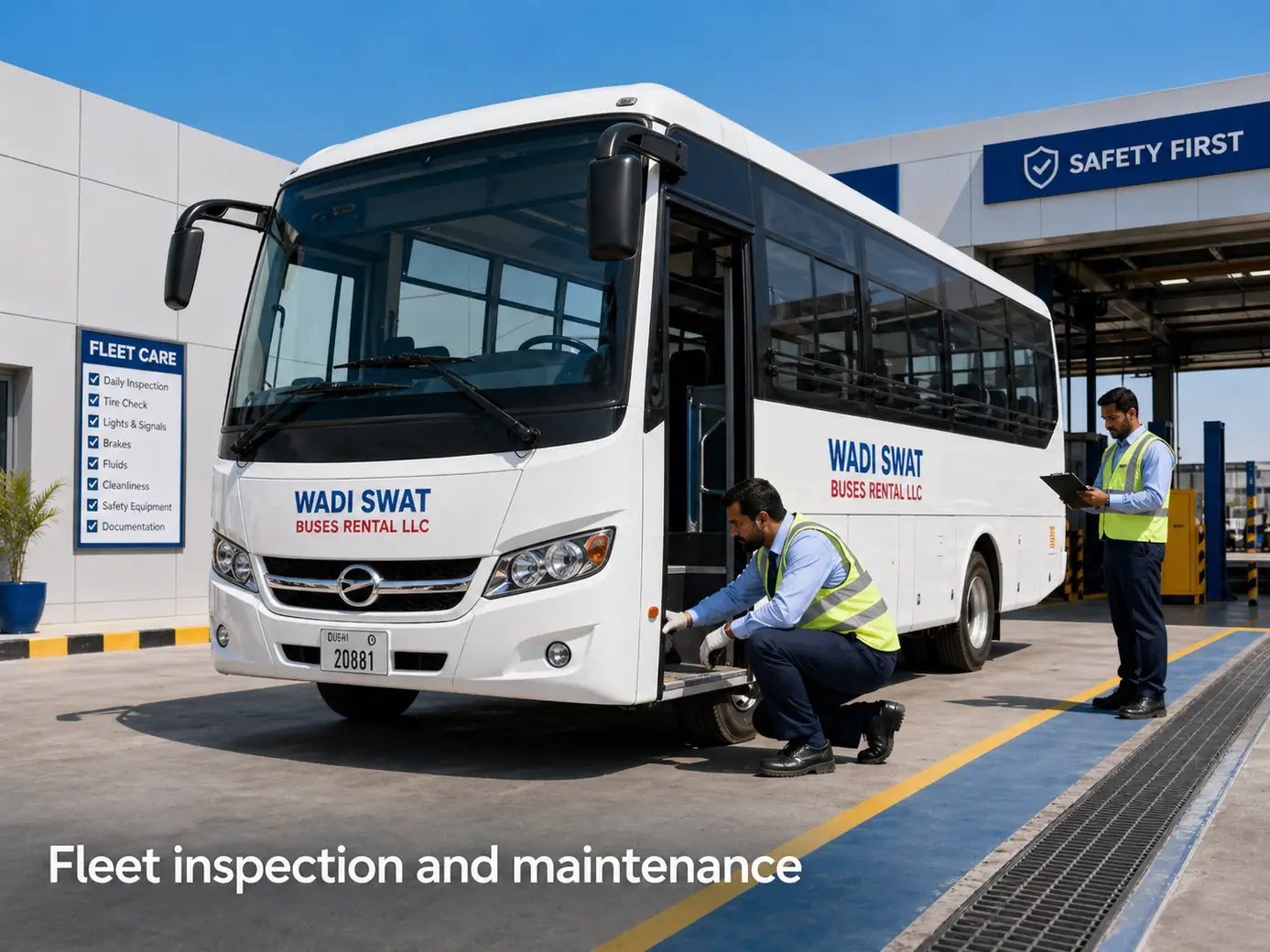
What the Standard Covers — Fleet Inspection Standards
Responsibility is practical rather than symbolic: the inspection role records findings and operations prevents dispatch when a material defect has not been resolved or controlled. This allocation helps the service start with accurate locations, timings and passenger needs, while keeping vehicle, driver and dispatch decisions within the operator's controlled process. For Fleet Inspection Standards, this point is applied to exterior and interior condition, tyres, lights, visibility, access, safety equipment, defects, cleanliness and release to service and recorded within review stage 1.3 for the confirmed assignment.
Applicable operations — Fleet Inspection Standards
A useful definition separates the standard, the evidence and the operating action. The standard explains what should be controlled; the evidence shows what was recorded; and the action is what the team actually does before, during or after service. Confusing those three layers can lead to informal verbal checks, repeated defects, incomplete close-out and dispatching a vehicle whose condition is not suitable for the assignment. For Fleet Inspection Standards, this point is applied to exterior and interior condition, tyres, lights, visibility, access, safety equipment, defects, cleanliness and release to service and recorded within review stage 1.4 for the confirmed assignment.