Labor Transport Sajaa
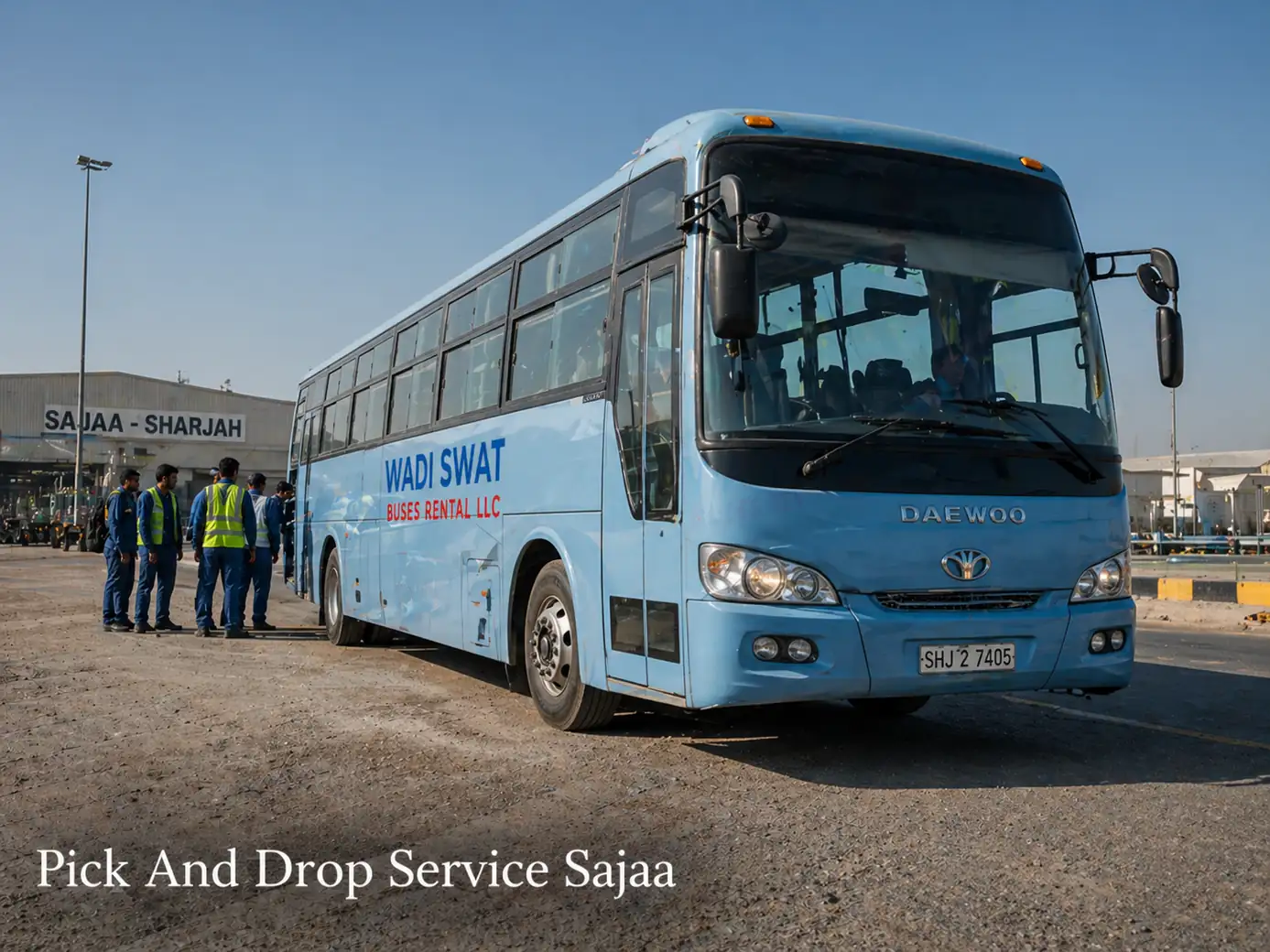
Labor transport Sajaa is structured for warehouse-cluster demand, camp-to-site movement and recurring worker transport across one of Sharjah’s key industrial zones.
Sajaa worker routing built for warehouse clusters
Focus on warehouse and industrial traffic, worker camps and route practicality.
Bus deployment planned for warehouse-cluster volume
contractors, site managers, industrial employers, camp operators, logistics teams and companies moving workers on fixed daily schedules
Reliable support for Sajaa industrial routes
Sajaa benefits from route discipline, high-capacity deployment and transport plans that reflect real industrial timing instead of generic city assumptions.
20-1000+ workers across camp, site and industrial shift routes
Recurring transport fit based on real seat planning and daily route structure.
Camp-to-site, multi-stop worker route, industrial corridor and shift-based return movement
Planned around pickup flow, multi-stop movement and access realities.
Early-shift, late-shift, split-shift, overtime-support and return-wave scheduling
Suitable for peak starts, staggered arrivals and recurring route timing.
Comparison + Vendor Selection
Sajaa warrants a standalone page because its industrial-cluster logistics, warehouse access and worker-routing needs are different from broader Sharjah transport demand.
Monthly contract, site-term agreement or long-term worker transport arrangement
High-capacity worker movement with route discipline, shift continuity and practical industrial execution
Camp-to-site worker transport
Sajaa shows steady demand from contractors, industrial operators, camps, warehouses and employers running fixed worker shifts.
High-volume shift movement
Transport in Sajaa often depends on industrial access roads, gate procedures, long corridors, shift changes and high-capacity loading periods.
Industrial route planning around Sajaa
Operational success normally comes from camp-based assembly, site sequencing, gate-ready arrivals and bus allocation that fits worker waves.
VIP movement, executive hospitality, tourist trips and low-volume ad hoc rides
Worker Transportation Sharjah, Labor Transport Sharjah or Labor Transport Jebel Ali may be more suitable where warehouse access, industrial timing or high-volume worker movement is the main priority.
Sajaa Labor Transport for Industrial Cluster Demand
Sajaa labor transport should speak directly to warehouse demand, industrial-road movement and camp-linked worker routing. Buyers in this zone are usually looking for a page that reflects how the area really operates, not generic labor-transport language.
Who This Service Suits Most
It is mainly suited to contractors, industrial operators, warehouse employers, site managers and camp-linked teams moving workers on repeat industrial schedules.
Where It Creates the Strongest Value
The strongest use cases are camp-to-site worker transport, industrial corridor movement, shift-based routing and repeated labor transport serving warehouse or project operations.
When Another Model Is More Appropriate
If the demand is mainly executive, guest-facing or low-volume casual transport, this page will not be the right fit.
How Sajaa Labor Routes Usually Take Shape
Route design normally begins with worker origin, destination pattern, industrial-road practicality, loading order and the most sensible way to handle shift-linked travel at scale.
Managing Shift Pressure and Daily Flow
Good labor transport is usually a timing problem before it is a bus problem. The schedule has to support departure waves, return timing and loading discipline from the start.
Fleet Fit for Sajaa Worker Transport
The fleet should reflect worker volume, corridor length, warehouse access and loading pattern. A well-matched bus plan keeps the movement efficient without making the route harder to control.
How Pricing Usually Works in Sajaa
Route detail drives labor pricing here. Worker headcount, industrial access, trip length, shift structure and repeat frequency all influence the commercial model.
Why Wadi Swat Works for Sajaa Worker Movement
Buyers usually value providers that understand daily pressure on industrial routes. Practical planning, cleaner coordination and reliable route discipline are what keep the operation usable.
Industrial Operating Standards and Daily Confidence
A credible service standard is visible in coordination, driver discipline and response quality. The service becomes easier to manage when route planning, communication, driver standards and day-to-day continuity are handled in a commercially clear way.
RTA-Aware Planning
Commercially aware route planning with access realities, load suitability and practical operating discipline
Service Discipline
Professional driver allocation, punctual reporting, route familiarity and service discipline suited to recurring transport
Operational Safety
Safe boarding, disciplined routing, sensible stop design and practical loading-point control throughout the daily operation
Daily Continuity
Consistent scheduling, route stability, responsive coordination and continuity planning for repeated transport demand
Recurring Booking Logic
Flexible recurring booking structure with room for route review, capacity changes and timetable adjustment as demand evolves
What Buyers Need to Consider in Sajaa
Sajaa buyers usually need local guidance that reflects warehouse concentration, industrial-road access and repeated worker movement between accommodation and operational sites. The page should help them understand why warehouse-cluster transport requires a different route mindset from general labor movement.
Local Demand
Sajaa shows steady demand from contractors, industrial operators, camps, warehouses and employers running fixed worker shifts.
Access and Timing
Transport in Sajaa often depends on industrial access roads, gate procedures, long corridors, shift changes and high-capacity loading periods.
Staging Logic
Operational success normally comes from camp-based assembly, site sequencing, gate-ready arrivals and bus allocation that fits worker waves.
Location Strength
Sajaa benefits from route discipline, high-capacity deployment and transport plans that reflect real industrial timing instead of generic city assumptions.
Labor Transport Sajaa FAQs
Sajaa transport buyers normally want practical answers on warehouse-linked worker routes, loading order and the route logic needed for industrial movement.
How are labor buses usually planned for Sajaa industrial roads and warehouse zones?
Route design is usually centered on warehouse access, industrial traffic timing, accommodation origin and the safest or fastest way to move workers at scale.
Which bus sizes are best for Sajaa worker transport requirements?
The right size depends on workforce density, but the priority is usually practical capacity that keeps loading orderly without oversupplying the route.
Can Sajaa labor transport cover different site gates and timing windows?
Yes. One service can be split by gate or shift if the movement pattern requires more than a single straight run.
What should a buyer provide before asking for a Sajaa labor quote?
It helps to share worker numbers, camp location, site destination, timing structure, service days and any industrial access conditions.
Is this suitable for long-term worker movement rather than occasional site visits?
Yes. It is mainly designed for recurring labor logistics and not for occasional passenger transport.
What usually affects route efficiency in Sajaa the most?
Route efficiency often depends on industrial road reality, stop density, loading speed and how accurately the shift plan has been translated into transport timing.
Plan Labor Transport Sajaa With a Route That Actually Works
For Sajaa labor routes, begin with the warehouse or site location, worker count and shift window. That gives the quote a stronger operational base from the start.
WADI SWAT BUSES RENTAL LLC