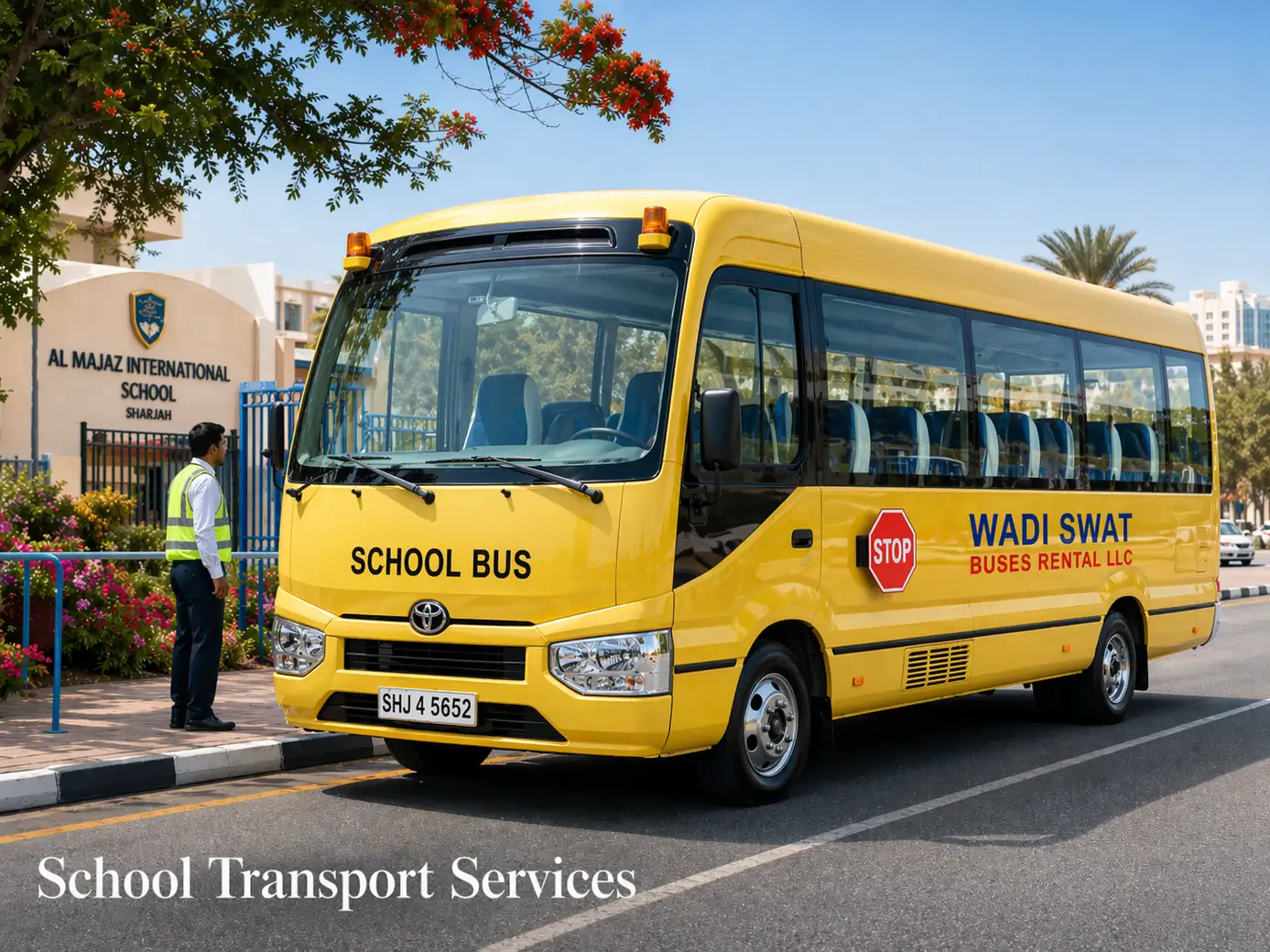
School Transport Services
School Transport Services for Student Pickup, Drop and Route Planning
🚌When students must reach school safely and on time every day, school transport needs clear route control, dependable timing and calm coordination. Swat Transport supports schools, education groups and administrators that need driver-included school buses for student pickup and drop-off, approved stop planning, inter-campus movement and recurring academic transport across Dubai and the wider UAE.
🎒The strongest school route starts with practical details: student count, approved pickup points, school arrival window, dismissal timing, stop sequence, supervision expectations, bus capacity and service term. A well-planned school transport setup protects timetable discipline, reduces daily coordination pressure, supports parent-facing confidence and gives school management a clearer basis for approval.
What Was Fixed Before Rebuilding This School Transport Page
The old school transport content had the right service idea, but it still sounded too generic in places. It talked about the page, the buyer, and the category instead of speaking directly to schools and administrators. The new version changes that completely. It focuses on the real school-transport decision: approved stops, student count, school timing, route control, supervision expectations, school-gate access, bus size and recurring academic service.
The rebuild also applies the latest internal-linking direction. The content now links naturally to School Bus Fleet, Bus Rental Rates, FAQs and Trust Standards, Request a Quote, Contact Us, safety information, area coverage and fleet review pages. The language is written for commercial and school-administration intent, not for a catalogue of vehicles.
School transport services, school bus fleet, student pickup and drop-off, route planning and recurring academic transport are used where they serve the client.
The content explains the exact planning details schools need before comparing bus size or quote basis.
The visual system follows the current SwatTransport page direction with a wide layout and controlled image usage.
What School Transport Services Need to Get Right Every Day
School transport is not a casual passenger movement. It is a repeated education route where timing, safety, coordination and trust matter every day. Schools need students collected from approved points, moved in a suitable bus, and delivered within a clear arrival window. Parents expect a dependable routine. Administrators need less daily confusion. The route therefore has to be planned as a controlled school-day system, not as a loose transfer.
A strong route starts with the approved stop list. The school should know where students will gather, which side of the road is suitable, what time the bus can safely reach each point, and whether the sequence still protects the school arrival window. If the stops are unclear, the route becomes difficult for drivers, parents and school staff. If the timing is unrealistic, even the correct bus may still underperform.
School transport also needs a practical communication structure. One school coordinator, one transport contact and one clear route basis make the service easier to manage. The goal is not only to move students. The goal is to reduce uncertainty around daily arrival, dismissal, stop changes, student counts and route adjustments.
- Confirm approved pickup points and exact school-gate drop-off area.
- Share student count by stop, not only the total route number.
- Confirm school start time, dismissal timing and any split-session requirement.
- State whether the service is monthly, term-based, annual or activity-based.
- Review bus size according to route access, student count and boarding time.
- Agree how route changes, parent updates and school coordination will be handled.
School Bus Options Should Match Student Count, Stop Pattern and Timing Pressure
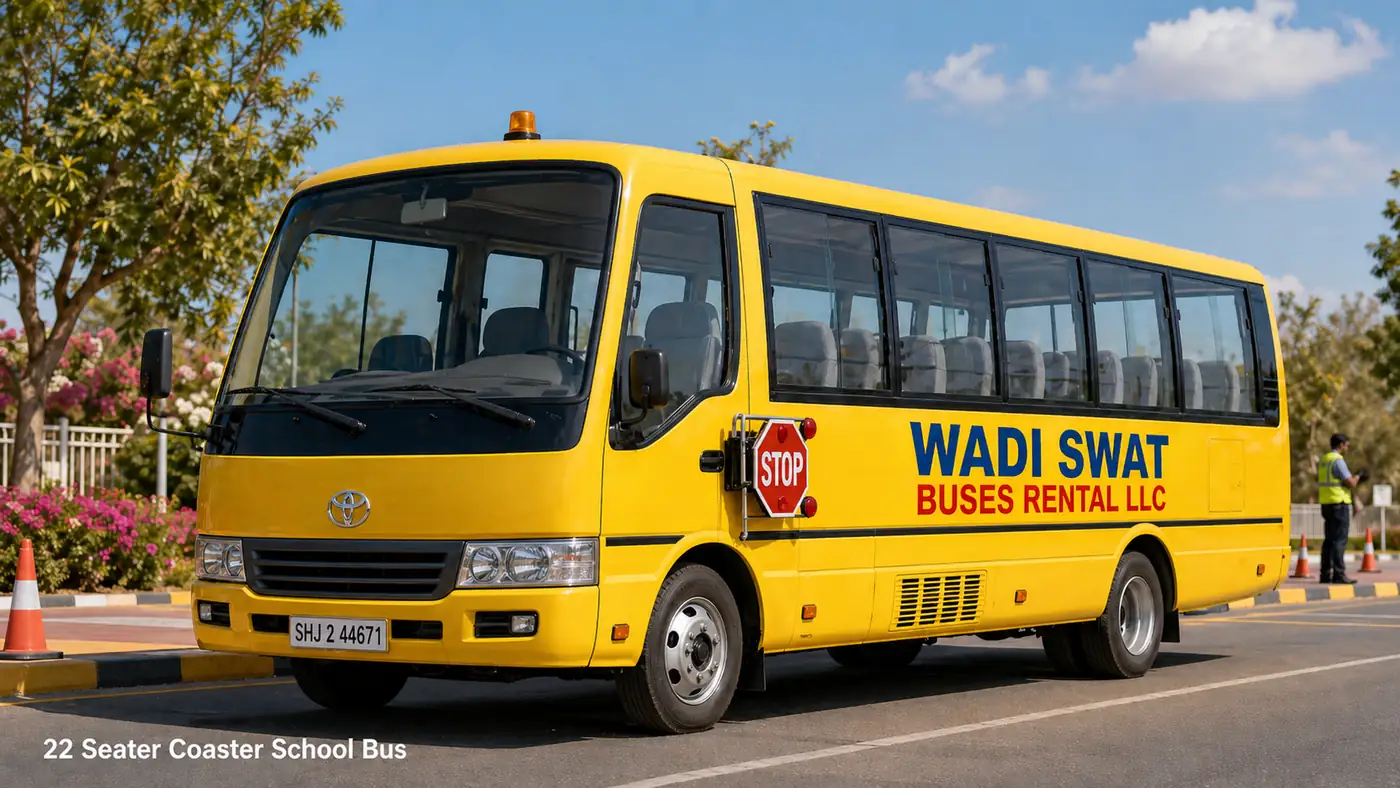
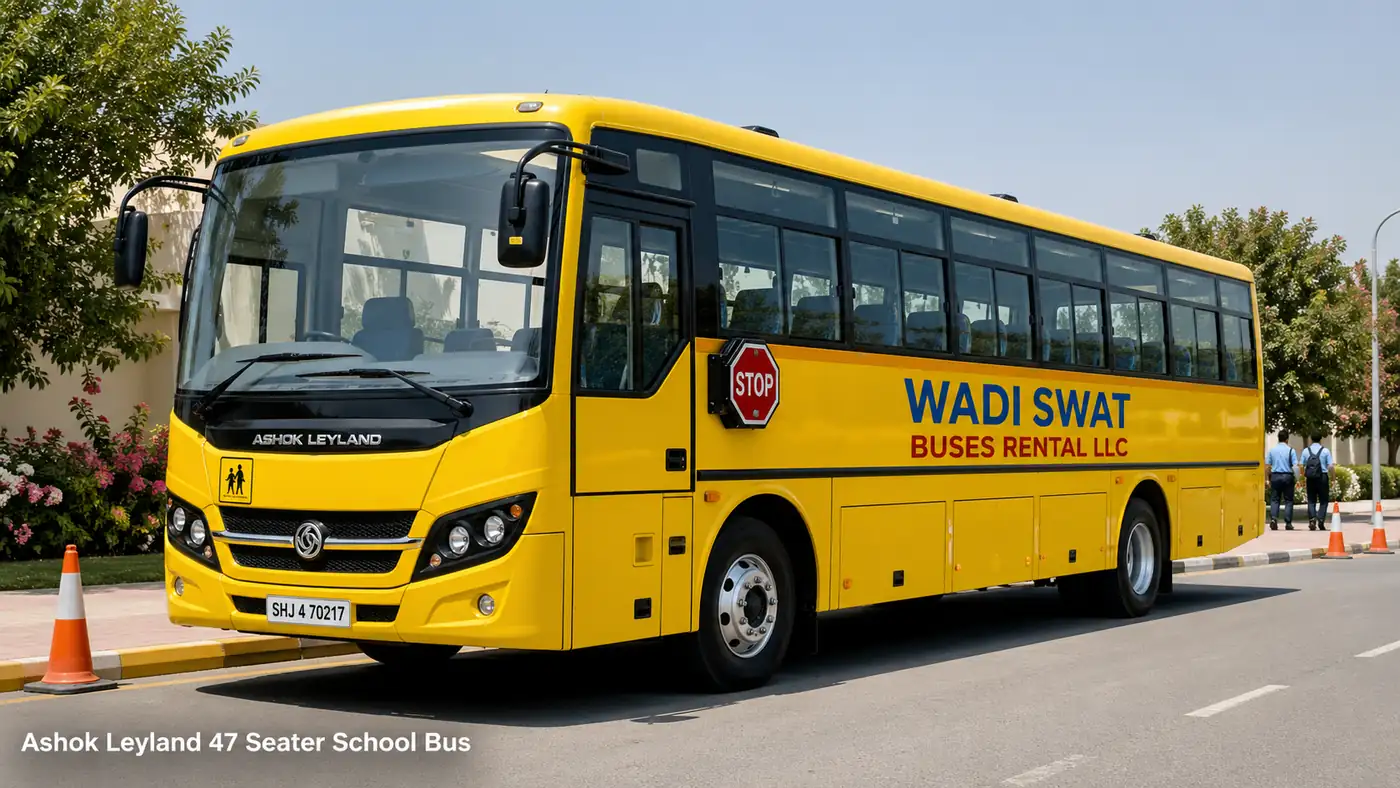
The right school bus is not automatically the biggest bus available. It is the bus that fits the route, student count, approved stop pattern, school-gate access, expected supervision and daily timetable. A small route may work better with a 22 or 26 seater bus. A larger route may need a 47–60 or 63–71 seater school bus if the stops and school access can support the vehicle size.
Swat Transport can support schools that want to compare School Bus Fleet options with route practicality, timing discipline and cost in mind. The final decision should be based on the whole operating picture: student count, stop sequence, road access, boarding time, arrival target and recurring service period.


A strong fit for smaller routes, compact student groups, educational trips or controlled pickup patterns where a larger bus is not necessary.
Useful when the school needs slightly more passenger room while keeping route handling practical for residential pickup points.
Well suited for higher-volume student routes when boarding time, school access and recurring timetable control are planned properly.
How a School Route Takes Shape Before Pricing
Approved Stops Should Be Clear Before the Quote
Area names are not enough for school transport. The school should share the actual pickup points, approved stopping side, estimated student count at each stop and the required arrival time. A route covering Dubai, Sharjah, Ajman or Abu Dhabi can change significantly when the exact stop order is reviewed.
If the stop list is still changing, the quotation can still be discussed, but the school should know that timing and price may need final confirmation after the route is fixed. A clean stop list protects the schedule and avoids daily driver calls.
Start Time and Dismissal Windows Control the Route
School transport should work backward from the required arrival time. The route must allow enough time for boarding, traffic, school-gate approach and student handover. Dismissal timing also matters because students may leave in one group, separate grades or activity-based waves.
Where timing is strict, route discipline becomes more important than adding extra stops for convenience. A route that looks helpful on paper can become unreliable if it tries to serve too many points before the school bell.
How School Transport Pricing Should Be Compared
Price comparison becomes useful only when every quotation is based on the same route. One provider may assume one-way movement, another may include return service, and another may price a different school bus category. Before comparing numbers, confirm the same stop list, same school timing, same bus size, same service days, same term period and same supervision scope. That is the only fair way to review Bus Rental Rates for a school route.
School transport cost is normally affected by route distance, number of stops, bus size, service days, daily duty time, term or annual duration, waiting expectations, additional activity movement and any school-specific coordination requirement. Passenger count matters, but it does not explain everything. The same student count can create different cost if the stops are spread across several areas or if the school requires a tighter arrival window.
| Quote factor | Why it matters commercially | What the school should send |
|---|---|---|
| Student count and bus size | Controls whether a smaller school bus, mid-size bus or large school bus is the best route option. | Total student count, expected growth, preferred bus direction and count by pickup point. |
| Approved stops | Stop count and stop order can change timing, duty hours and bus suitability. | Map pins, neighborhood names, pickup sides and any restricted stopping points. |
| School timing | Start time and dismissal time determine whether the route is realistic. | First pickup target, required arrival, dismissal timing and activity return notes. |
| Service period | Monthly, term-based and annual routes have different commercial commitments. | Start date, service days, academic term or annual service period. |
| Supervision and communication | School policies and handover expectations can affect how the service is managed. | Coordinator details, parent communication rules and any school-specific instructions. |
Who Benefits Most From School Transport Services
Schools, Education Groups and Student Route Coordinators
School transport is strongest for institutions that need recurring student movement rather than one-time passenger transfer. This includes schools, education groups, academic operators, transport coordinators and parent-facing administrators who need route discipline, timing control and dependable student pickup and drop-off.
The service is also useful when the school wants fewer daily transport problems. Once the route is approved, students know where to gather, drivers know the stop order, and the school has a clearer routine for timing, capacity and communication.
When Another Service May Fit Better
If the requirement is not school-led, a broader page may be more useful. For non-school passenger groups, review Private Group Transport. For regular office or staff commuting, review Staff Transport Services. For simple recurring pickup and drop without student-route rules, Daily Pickup and Drop Service may fit better.
A clear route purpose protects the school from booking the wrong service category. School transport should be selected when the main requirement is student movement, approved stops, academic timing and daily route control.
School Transport Across Dubai, Sharjah, Ajman, Abu Dhabi and the UAE
School transport demand in the UAE is shaped by residential communities, school zones, traffic corridors, morning arrival windows and dismissal timing. Dubai routes may involve Jumeirah, Al Barsha, Dubai Marina, JLT, Business Bay, Deira, Mirdif, Dubai Silicon Oasis, Dubai South or other high-demand areas. Sharjah and Ajman routes may involve cross-emirate timing, residential clusters and school-gate pressure. Abu Dhabi routes may involve longer timing windows and more careful route planning.
For wider planning, schools can review UAE Coverage, Fleet Overview and broader Bus Rental UAE information before finalizing a route. The quote becomes stronger when the school shares exact locations instead of only area names.
Best planned with exact stops and realistic morning travel time.
Traffic exposure should be considered before approving stop count.
Timing and return scope need clear written approval.
Route review supports capacity, cost and daily service control.
What Builds Confidence in School Transport Services
School transport trust is built through practical details, not slogans. A school wants to know that the route can operate on time, the bus size fits the student count, the driver understands the route, the communication path is clear and the service scope is written properly before approval. Safety language is important, but it should be supported by route discipline, stop control and realistic school-day planning.
Swat Transport supports school transport enquiries by reviewing the route, matching a suitable school bus direction, clarifying the timing, and helping the school understand the quote basis. Schools can also review Safety, FAQs and Trust Standards and Contact Us before final approval. Any official school transport requirement or institution-specific safeguarding policy should be confirmed directly by the school before service starts.
Service is planned around route execution, student timing and practical passenger movement.
Confirmed school contacts reduce confusion during pickup, dismissal and route changes.
The bus should fit student count, route access, timing and stop structure.
Review broader service information when internal approval needs more support.
How to Request School Transport Without Losing Time
The fastest route to a useful quote is a practical message, not a generic enquiry. Send the number of students, pickup points, school location, required arrival time, dismissal return time, service days, bus preference, term duration and coordinator contact. Add any school-gate note, parent communication rule or supervision expectation that affects the route.
Once the route basis is available, the team can suggest a suitable bus direction, explain price drivers, and help you decide whether a 22 seater, 26 seater, 47–60 seater, or 63–71 seater school bus makes more sense. For internal approval, use the Request a Quote form or contact the team directly through Contact Us.
“We need school transport for 38 students from [approved pickup areas] to [school gate], Monday to Friday, first pickup around 6:20 AM, school arrival before 7:20 AM, return at 2:45 PM, term-based service needed. Please quote with suitable school bus size, driver, route basis and timing assumptions.”
How Morning Pickup and Afternoon Drop-Off Should Be Controlled
Morning Pickup Should Protect the School Arrival Window
The morning school route should be planned around the school bell, not around a vague pickup estimate. The first pickup point, student boarding time, road conditions, stop order and school-gate approach all affect whether the route feels calm or rushed. A school should avoid overloading one route with too many stops if that route cannot reach the campus within a reliable arrival window.
For parent-facing confidence, pickup times should be realistic and easy to communicate. The route should also allow for safe boarding, sensible driver waiting time and clear responsibility at each stop. When the morning route is structured properly, schools reduce late arrivals, repeated phone calls and last-minute route confusion.
Afternoon Return Needs Its Own Timing Plan
Afternoon drop-off is not always the reverse of the morning route. Dismissal queues, school exit controls, late student release, after-school activities and traffic changes can affect the return. A school transport plan should therefore confirm where the bus will wait, when students will board, who will coordinate the movement, and whether the same group returns every day.
For larger routes, the return may need a different stop order or a separate timing note. If the school has multiple dismissal times, the transport plan should state which students are included in each movement. This protects the route from becoming unclear after the service starts.
What School Administrators Should Confirm Before Service Starts
School transport approval becomes easier when the school, transport coordinator and decision-maker are reviewing the same written scope. A clear scope should show the bus category, student count, pickup points, school location, arrival time, return time, service days, term period, route assumptions and communication contacts. This is especially important when the final approval has to pass through school administration, finance, operations or parent-facing communication.
Schools should also confirm what is included and what is outside the quoted scope. A regular home-to-school route may not automatically include sports trips, exam-day timing changes, after-school activity returns or sudden extra stops. When these items are discussed early, the school can plan budget and communication more confidently.
Share total number and expected changes so the bus size is not selected from an outdated estimate.
Exact stops help the driver plan boarding and help the school explain route timing clearly.
Academic calendar, holidays and service days should be clear before monthly or term pricing is compared.
Agree how route changes, new students, missed pickup notes and timing updates should be requested.
How Schools Can Keep the Route Practical After Launch
A school route can look correct at approval stage and still need small practical adjustments after it starts. Real boarding time, school-gate traffic, parent arrival behavior, road works, new student additions and dismissal delays can all affect the route. A professional school transport setup should make space for controlled review rather than random daily changes.
The best approach is to keep the approved route stable, then review any repeated issue with facts: which stop is causing delay, how many students board there, whether the pickup side is practical, whether the school arrival target is still realistic and whether the bus size still suits the group. Small route improvements can protect punctuality without confusing parents or students.
School transport works best when every change has a reason. Add stops carefully, remove delays where possible, keep parents informed through the school’s chosen communication process, and protect the agreed arrival and dismissal windows.
Frequently Asked Questions About School Transport Services
These answers support schools, education groups and administrators comparing student pickup and drop-off, bus size, stop control, timing, supervision expectations and recurring academic transport service.
What details should I send for an accurate school transport quote?
Send the student count, approved pickup and drop-off points, school start time, dismissal time, route area, service days, expected term or annual duration, preferred bus size, supervision expectations, and one responsible school contact. A useful school transport quote depends on route reality, not only the number of students. When the stop list, gate access, timing windows, and service frequency are clear, the bus size, driver schedule, and commercial basis can be reviewed much more accurately.
Which school bus size is best for a daily student route?
The best school bus size depends on student count, stop pattern, road access, school gate timing, and how many students need to arrive in the same window. A 22 seater school bus can suit smaller routes or compact groups. A 26 seater school bus gives a little more room for moderate student movement. Larger 47 to 60 or 63 to 71 seater school buses can suit higher-volume routes when access, loading time, and school arrival flow can support the larger vehicle.
Can school transport be arranged for monthly, term-based, or annual service?
Yes, recurring school transport is normally strongest when the route is defined for a term, semester, academic year, or agreed monthly period. Recurring service gives the school, parents, and transport team a stable operating structure. The final arrangement should still confirm student numbers, stop points, timing, holidays, off-days, route changes, and communication responsibilities so the service does not depend on daily improvisation.
How is school transport different from private group transport?
School transport is tied to student movement, school-day timing, stop control, safeguarding expectations, and a repeated education route. Private Group Transport is broader and can suit families, guests, tourist groups, or private passenger movement where school-specific controls do not apply. If the core requirement is student pickup and drop under a school schedule, School Transport Services is the more suitable category.
Can one school route include multiple approved stops?
Multiple stops can be reviewed when the pickup order, student count at each stop, stop safety, and school arrival target are clear. Too many stops can make a route look convenient but weak in daily timing. A better route groups nearby stops carefully, avoids unnecessary detours, keeps boarding simple, and protects the required school arrival window. Exact map pins and approved stopping sides are very helpful during planning.
What affects school transport pricing most?
The main price factors are bus size, route distance, number of stops, daily duty time, school start and end timing, number of service days, term or annual duration, supervision scope, and whether the route needs one-way, return, or additional activity movement. Two routes with the same number of students can price differently if one route has more stops, longer waiting time, tighter school-gate access, or a different vehicle requirement.
Can school transport support inter-campus movement?
Inter-campus movement can be reviewed when the school shares the campus locations, student count, timetable, transfer frequency, and supervision expectations. These routes often need tighter timing because students may be moving between academic sessions, activities, or different parts of the school network. The bus plan should protect punctuality, safe boarding, and clear handover points at both campuses.
Can the same school bus support activities and educational trips?
Activity or educational-trip support can be reviewed separately from the daily route. The school should share the destination, date, passenger count, departure time, return time, teacher or coordinator contact, and any special timing instruction. Daily school routes and occasional activity trips should not be mixed without confirming availability, because the bus and driver may already be committed to regular pickup and drop-off service.
How should a school decide between one large bus and smaller buses?
One large bus can be efficient for high-volume routes when pickup points are concentrated and school access can handle a bigger vehicle. Smaller buses can work better for narrow roads, separated residential clusters, split timing, or routes where students come from different zones. The best choice is the one that protects student safety, reduces waiting, keeps the arrival window realistic, and gives the school a clear operating cost.
Can school transport be planned across different UAE areas?
School transport can be reviewed across Dubai, Sharjah, Ajman, Abu Dhabi, and other UAE areas when the route details are practical and the timing is realistic. Cross-area routes need careful review because traffic exposure, start time, distance, and return timing can affect the bus plan. The school should share exact pickup zones, school location, service days, and required arrival time before comparing prices.
What makes a school route dependable after service starts?
Dependability comes from a confirmed stop list, realistic pickup sequence, suitable bus size, disciplined driver reporting, clear school coordination, and a communication path that parents or administrators can rely on. A good school route does not depend on guesswork each morning. Students know where to board, the driver understands the sequence, and the school knows what timing and capacity have been agreed.
Should schools confirm supervision and safety expectations before approval?
Yes. Supervision and safety expectations should be discussed before approval because different schools may require different handover processes, communication rules, boarding support, or route-control procedures. The transport quote should not make unsupported safety promises. It should clearly explain what is included, what the school will manage, and what needs separate confirmation under the school’s own policy and applicable UAE requirements.
What should be included in the final approval before service starts?
Final approval should include the student count, pickup and drop-off list, bus type, service days, first pickup time, school arrival target, dismissal return time, route zones, contact persons, supervision scope, quote period, price basis, and any school access instruction. If a route is still changing, the approval should state what is fixed and what remains subject to review.
Can schools request a route review before confirmation?
For larger routes, new school locations, difficult access points, or mixed residential clusters, a route review is sensible before confirmation. A route review can help clarify stop order, bus size, turning space, school gate timing, and expected travel duration. It also gives the school a better basis for comparing the quote internally instead of judging by vehicle name alone.
How early should I request school transport services?
Request school transport as early as possible when the service is recurring, the route involves several stops, the student count is high, or internal approval is required. Early planning gives more time to confirm vehicle availability, route practicality, school timing, and communication responsibilities. Short-notice requests can still be reviewed, but route quality is usually stronger when the details are shared early.
Need Help Planning School Transport Services?
Share the student count, approved stop list, school location, arrival target, dismissal timing, service days and preferred bus direction so the school route and quote basis can be reviewed properly.