Managed shuttle routes

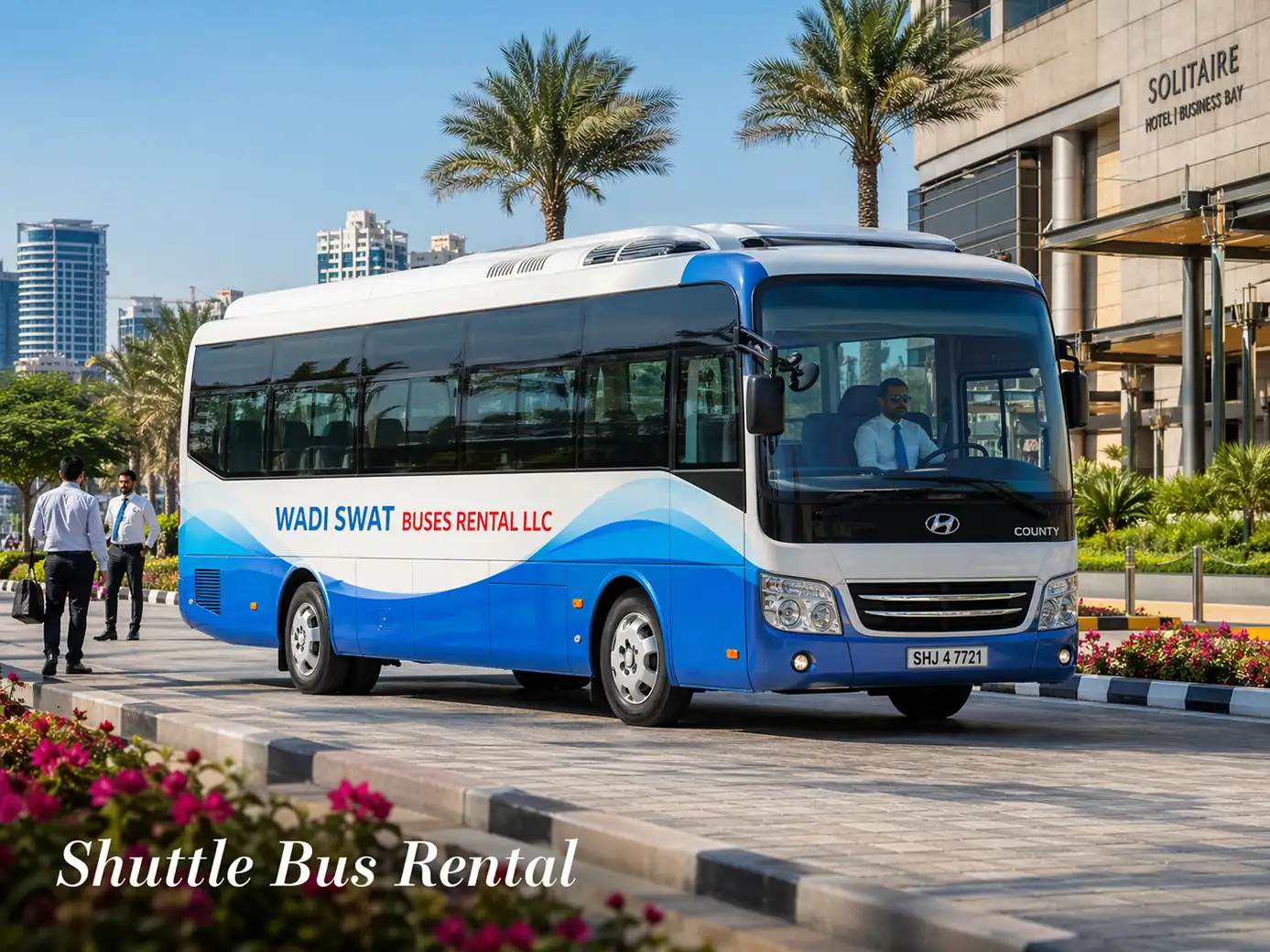
Shuttle Bus Rental

Shuttle bus rental for regular routes works best when the movement is defined as an operation, not simply as a request for a vehicle. Confirm who will travel, where passengers will assemble, the reporting deadline, the return pattern and how often the service repeats. With those facts, the route, capacity, duty hours and commercial responsibilities can be reviewed together and recorded in a clear written scope.

01Route pattern02Peak passenger load03Operating window04Written responsibilities
Shuttle bus rental service for regular passenger routes in the UAE
A purpose-built shuttle service for repeatable passenger movements
01Route pattern02Peak passenger load03Operating window04Written responsibilities

Shuttle Bus Rental for Regular Routes: Service Options and Best Uses

A shuttle arrangement can cover a single coordinated movement, a daily pickup-and-drop schedule or a longer recurring contract. The important distinction is the pattern of travel. A practical service has identifiable passenger groups, agreed meeting points and a timetable that can be repeated without daily improvisation. It may connect accommodation with offices, industrial facilities, campuses, hotels, venues or managed communities. Before selecting a bus, the planner should understand the purpose of the route, the normal and maximum passenger load, the number of operating days and the return requirement. This service hub explains those decisions at UAE level while leaving specialist needs—such as airport, event or dedicated staff transport—to their own approved pages.

1.1

One-Time, Daily and Contract Requirements — Shuttle Bus Rental

A one-time shuttle is normally built around a defined date, boarding point, destination and return window. A daily route needs more: repeatable stops, an attendance rule, a stable reporting target and enough margin for normal traffic variation. A monthly or longer contract also requires an operating calendar, commencement date, change-control process and clarity on whether the vehicle remains available between journeys. Split shifts, weekend duties and seasonal movements should be identified at the quotation stage. Treating every recurring movement as a separate last-minute trip makes capacity and driver planning less reliable, so the service pattern should be agreed before deployment.

Service patterns — Shuttle Bus Rental

  • One trip, recurring route or contract
  • Operating calendar and commencement date
  • Vehicle position between journeys
  • Waiting and additional-trip rules
  • Named route coordinator
1.2

Passenger Groups and Trip Purposes — Shuttle Bus Rental

Regular shuttle routes can serve employees, project teams, residents, students, hotel guests or organised private groups when the passengers can follow a common timetable. The service is most effective when travellers use sensible meeting points and one coordinator manages absences or changes. It is less suitable for unrestricted door-to-door collection from widely dispersed locations. The brief should also identify luggage, equipment, child or mobility support, presentation expectations and any separate passenger groups that should not share the same journey. These points influence stop design, vehicle category and the amount of boarding time needed.

Suitable use cases — Shuttle Bus Rental

  • Passenger purpose and grouping
  • Common meeting-point discipline
  • Luggage, tools and accessibility
  • Required comfort and presentation
  • Process for attendance changes

Vehicle Capacity and Selection — Shuttle Bus Rental

Capacity planning should begin with the busiest expected movement rather than an average headcount. A smaller van may suit a direct low-volume transfer, a minibus may serve a compact multi-stop loop, and a larger bus or coach may be appropriate when passengers board from controlled gathering points. The decision also depends on luggage, tools, accessibility, journey length and the available turning or waiting space. Stating a category and capacity range is usually more accurate than promising a particular make or model before the route and fleet availability are checked. The goal is a vehicle that can complete the duty safely and efficiently—not merely one that has enough seats on paper.

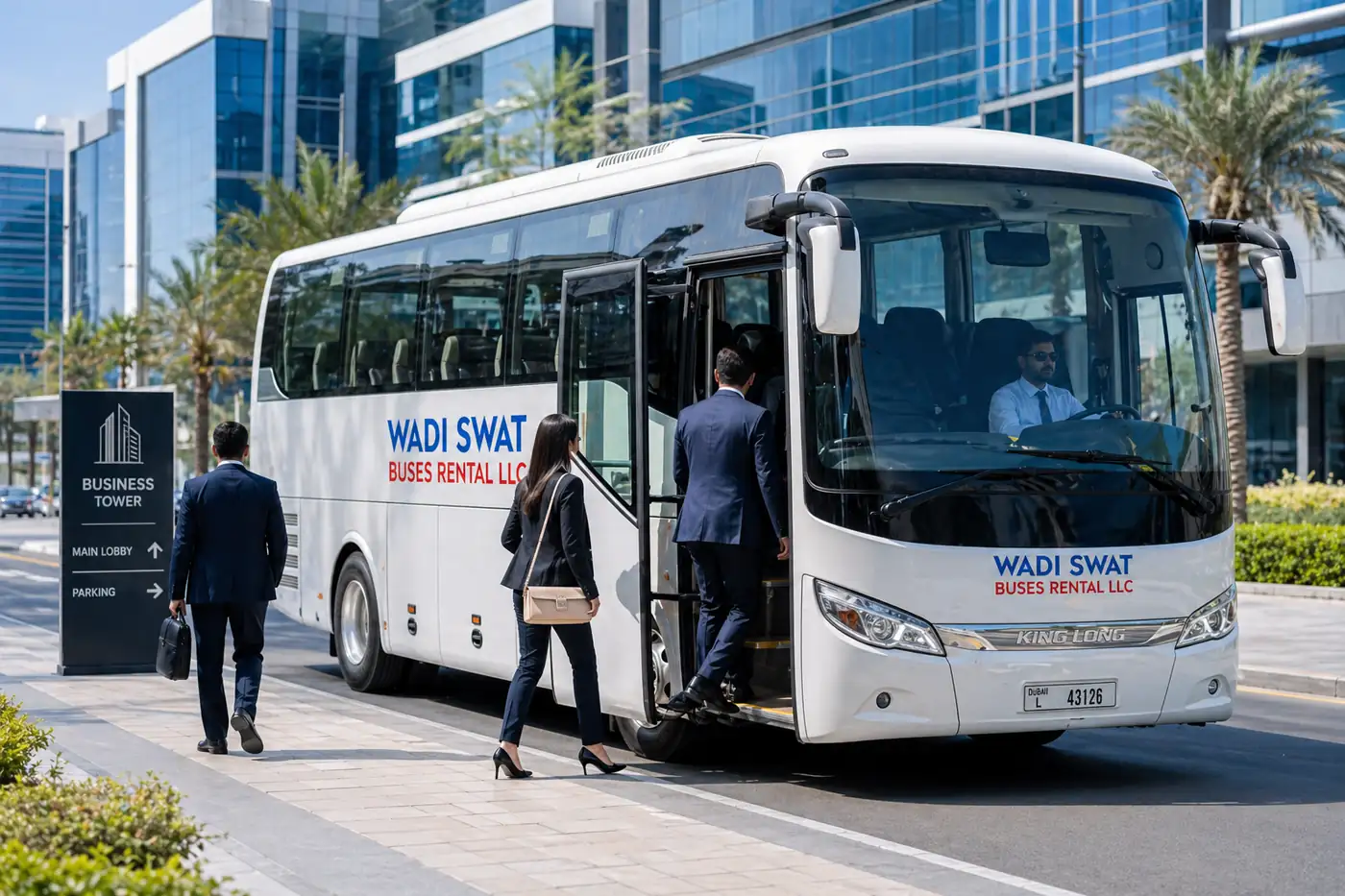
Corporate shuttle bus supporting organised passenger movements
A shuttle category selected for the real passenger load and access conditions
2.1

Vans, Minibuses, Buses and Coaches — Shuttle Bus Rental

Vehicle categories solve different operating problems. Passenger vans support small direct groups and locations with limited access. Minibuses offer a useful balance between capacity and manoeuvrability for compact loops. Full-size buses can move concentrated loads efficiently when boarding points and parking are suitable, while coaches may be considered for longer journeys or higher comfort expectations. The maximum load, not only the average attendance, should guide the capacity decision. A small contingency may be sensible where headcount changes regularly, but excessive spare capacity can add access and operating difficulties without improving the service.

Available categories — Shuttle Bus Rental

  • Normal and maximum headcount
  • Van, minibus, bus or coach category
  • Access and turning restrictions
  • Capacity margin for real demand
  • Availability at confirmation
2.2

Seating, Luggage, Comfort and Access — Shuttle Bus Rental

Seat count is only one part of suitability. The planner should confirm luggage volume, aisle and boarding needs, air-conditioning expectations, journey duration and whether the vehicle can safely enter, turn and wait at every location. Tools or bulky items may reduce usable passenger space. A gate, basement entrance or narrow residential street can rule out an otherwise suitable bus. For longer duties, passenger comfort and rest expectations carry more weight; for short urban loops, efficient boarding and dependable capacity may matter more. These checks prevent a vehicle from being technically large enough but operationally wrong.

Vehicle fit — Shuttle Bus Rental

  • Boarding layout and aisle needs
  • Luggage or equipment volume
  • Air-conditioning and journey duration
  • Legal waiting and parking space
  • Site entrance dimensions
Route operationsShuttle Bus Abu Dhabi

Route, Timing and Operating Plan — Shuttle Bus Rental

The route plan converts addresses and times into a workable duty. Exact map pins are needed for every pickup and destination, together with the required arrival time and a realistic boarding allowance. Stops should follow the direction of travel and should not force unnecessary backtracking. A return movement may need a different sequence because passenger distribution and traffic conditions change later in the day. Waiting rules, late-passenger handling, toll roads, parking restrictions and site access must be considered before the timetable is approved. A shuttle that looks simple on a map can become unreliable when these operating details are left undefined.

Route planning for recurring and event shuttle services
Stops, reporting time and route constraints reviewed before launch
3.1

Pickup, Destination, Stops and Waiting — Shuttle Bus Rental

Every stop should have a precise map pin, a safe boarding position and a named time. The schedule is best built backwards from the required destination arrival, allowing for passenger boarding and a realistic operating buffer. The late-passenger rule should be written so the driver and coordinator make consistent decisions. If the bus waits at the destination, the permitted waiting period and parking location must be known. Return trips should be planned separately rather than assumed to be the exact reverse of the morning route, because traffic flow and passenger drop patterns may differ.

Duty structure — Shuttle Bus Rental

  • Exact pins for every stop
  • Required arrival and departure times
  • Boarding allowance and late rule
  • Separate outbound and return sequence
  • Approved waiting location
3.2

Traffic, Parking, Tolls and Permits — Shuttle Bus Rental

Tolls, paid parking, permit lead times and access approvals can change both the route and the commercial scope. Controlled sites may need driver details, vehicle documents or a gate pass before the first day. Hotels, towers, venues and industrial facilities may restrict where a large vehicle can stand. The customer should disclose these controls early, while the operator should confirm whether the proposed pickup point is lawful and practical. Where traffic is variable, the timetable should use a realistic buffer and an escalation process for delays that threaten the reporting deadline.

Route constraints — Shuttle Bus Rental

  • Tolls and paid parking
  • Gate passes and permit lead time
  • Safe passenger loading position
  • Traffic buffer for the duty
  • Delay communication method
Commercial clarityOffice Bus Service

Pricing, Inclusions and Responsibilities — Shuttle Bus Rental

A meaningful quotation describes the whole duty. Price can be affected by route distance, dead mileage, passenger capacity, operating days, duty span, waiting time, contract duration, tolls, parking, permits and additional trips. The written offer should separate included operating items from client responsibilities and optional charges. It should also explain how overtime, extra mileage or a new stop will be assessed. This approach protects both sides from comparing rates that cover different scopes. No fixed amount should be inferred until the actual route, timing and availability have been reviewed.

4.1

What Affects the Quotation — Shuttle Bus Rental

The commercial calculation starts with the complete duty rather than a simple kilometre rate. Distance, number of stops, operating calendar, duty hours, waiting, peak passenger load and vehicle class all matter. Dead mileage before the first pickup and after the last drop may also be relevant. More than one shift, a long gap between trips or an additional driver can change the operating model. The quotation should state its validity period and remain subject to availability until accepted, because the required vehicle and duty window must be reserved for the agreed start date.

Commercial factors — Shuttle Bus Rental

  • Route distance and dead mileage
  • Duty span and operating days
  • Waiting, shifts and contract length
  • Vehicle category and peak load
  • Quotation validity and availability
4.2

Fuel, Driver, Mileage and Additional Charges — Shuttle Bus Rental

The offer should say whether the driver, fuel, maintenance, insurance and agreed replacement support are included. It should separately address tolls, parking, permits, excess mileage, overtime, extra trips, meals or accommodation where the duty makes them relevant. A change in passenger volume may require another capacity; a new stop may extend distance and duty time; prolonged waiting may affect driver hours. Defining how such changes are measured and authorised makes invoice review easier and avoids disagreement after the service has started.

Items to confirm — Shuttle Bus Rental

  • Driver, fuel and maintenance scope
  • Insurance and replacement terms
  • Extra mileage and overtime
  • Parking, tolls and permits
  • Approval of route variations
Booking and continuityAirport Transfer FAQ

Booking, Changes and Support — Shuttle Bus Rental

Confirmation becomes faster when the enquiry arrives as a complete route brief. Include the start date, service duration, operating calendar, pickup and destination pins, reporting and return times, normal and maximum passenger numbers, luggage, access restrictions and the responsible coordinator. The final scope should state how changes are submitted and approved, how material delays are communicated and what continuity arrangements apply if the assigned vehicle becomes unavailable. A controlled process is especially important for recurring work because informal daily changes can gradually turn a practical route into an unworkable one.

5.1

Information Needed for Confirmation — Shuttle Bus Rental

A useful enquiry includes exact coordinates, not broad area names. Provide the first service date, operating days, required arrival and return times, passenger count by trip or shift, luggage details and the expected contract length. Identify difficult entrances, security procedures, parking rules and the person who can approve daily operational decisions. If the passenger load varies, share both normal and maximum figures. Photos of a restricted gate or loading area can help the assessment. The more complete the route brief, the fewer assumptions need to be built into the quotation.

Enquiry checklist — Shuttle Bus Rental

  • Start date and service duration
  • Pickup and destination coordinates
  • Passenger count by movement
  • Access and security requirements
  • Client decision-maker
5.2

Breakdowns, Delays and Replacement Planning — Shuttle Bus Rental

Service continuity should be agreed before launch. The scope needs an operational contact, an escalation path and a practical approach to breakdowns or unexpected vehicle unavailability. A substitute may be a different make or model, but it should satisfy the required capacity and duty conditions. Material delays should be reported with an estimated impact, not only a generic message. Repeated late running should lead to a review of pickup discipline, stop order or departure time. Temporary diversions, additional trips and passenger changes should be approved through the nominated coordinator.

Service continuity — Shuttle Bus Rental

  • Operations contact and escalation
  • Substitute-capacity requirement
  • Delay impact updates
  • Temporary-change approval
  • Review of recurring issues
Written operating scope
Turn the Route Brief Into a Written Shuttle Scope

Share the real passenger pattern first. The transport team can then review route feasibility, capacity, duty hours, access and commercial responsibilities as one coordinated service.

Passenger countPickup and destination pinsDates and timingsOperating daysWaiting and access notesContract duration
Before you confirmFAQ
Questions Customers Ask Before Confirmation

These answers cover the practical decisions that should be settled before a regular shuttle route is priced and confirmed.

01What is Shuttle Bus Rental for Regular Routes best suited for?

It is suited to a passenger movement that can be expressed as a clear route: agreed pickup points, a destination, a reporting window and a repeatable or pre-planned schedule. It may cover a single organised transfer, a daily loop or a longer contract. The service is particularly useful where groups can board at common meeting points and one coordinator can manage changes. Final suitability still depends on capacity, access, timing and vehicle availability, which are confirmed in the written scope.

02Which vehicles can be used for Shuttle Bus Rental for Regular Routes?

A passenger van, minibus, full-size bus or coach may be selected. The choice depends on the normal and peak headcount, luggage, trip length, comfort requirement, boarding conditions and access at every stop. The quotation should normally confirm a category or capacity rather than guarantee a specific model before availability is checked. A vehicle must be able to enter, turn, wait and load passengers safely, not only provide the required number of seats.

03What information is required to quote Shuttle Bus Rental for Regular Routes?

Provide the date or start date, operating days, exact pickup and destination pins, required arrival and return times, passenger count, luggage, number of stops, waiting requirement and expected duration. Also identify tolls, parking, permits, gate approvals and the client coordinator. For a recurring route, include the contract period and any shift-by-shift change in passenger numbers. These details allow the duty to be assessed without relying on assumptions.

04What affects the price of Shuttle Bus Rental for Regular Routes?

The rate can be influenced by vehicle capacity, total route distance, dead mileage, number of stops, duty hours, waiting, operating days, contract duration, tolls, parking, permits and additional trips. Driver arrangements and the agreed continuity or replacement scope can also matter. Because the combination is different for every duty, the final amount should be issued in writing after the route, schedule and availability are reviewed.

05Are permits, parking or access approvals needed for Shuttle Bus Rental for Regular Routes?

They may be required, depending on the pickup area, destination, facility and relevant authority. A controlled compound, hotel, tower, venue or industrial site may request vehicle and driver details or a gate pass before access. Paid parking or a designated bus loading bay may also apply. These requirements should be disclosed early and assigned clearly in the quotation; approval remains subject to the site or authority responsible.

06How are changes, delays or replacement vehicles handled for Shuttle Bus Rental?

Changes should be reviewed against distance, timing, passenger load, vehicle capacity and driver duty before being accepted. The named coordinator should approve additional trips, new stops or temporary diversions. The quotation or contract should also state the communication and substitution approach if the planned vehicle becomes unavailable. A replacement may differ in model but should meet the agreed operating need. Repeated delays should trigger a route review instead of informal daily adjustments.