Safety FAQ
Get answers about transport safety in the UAE, including driver standards, fleet inspection, passenger safety, route discipline, compliance, and service.
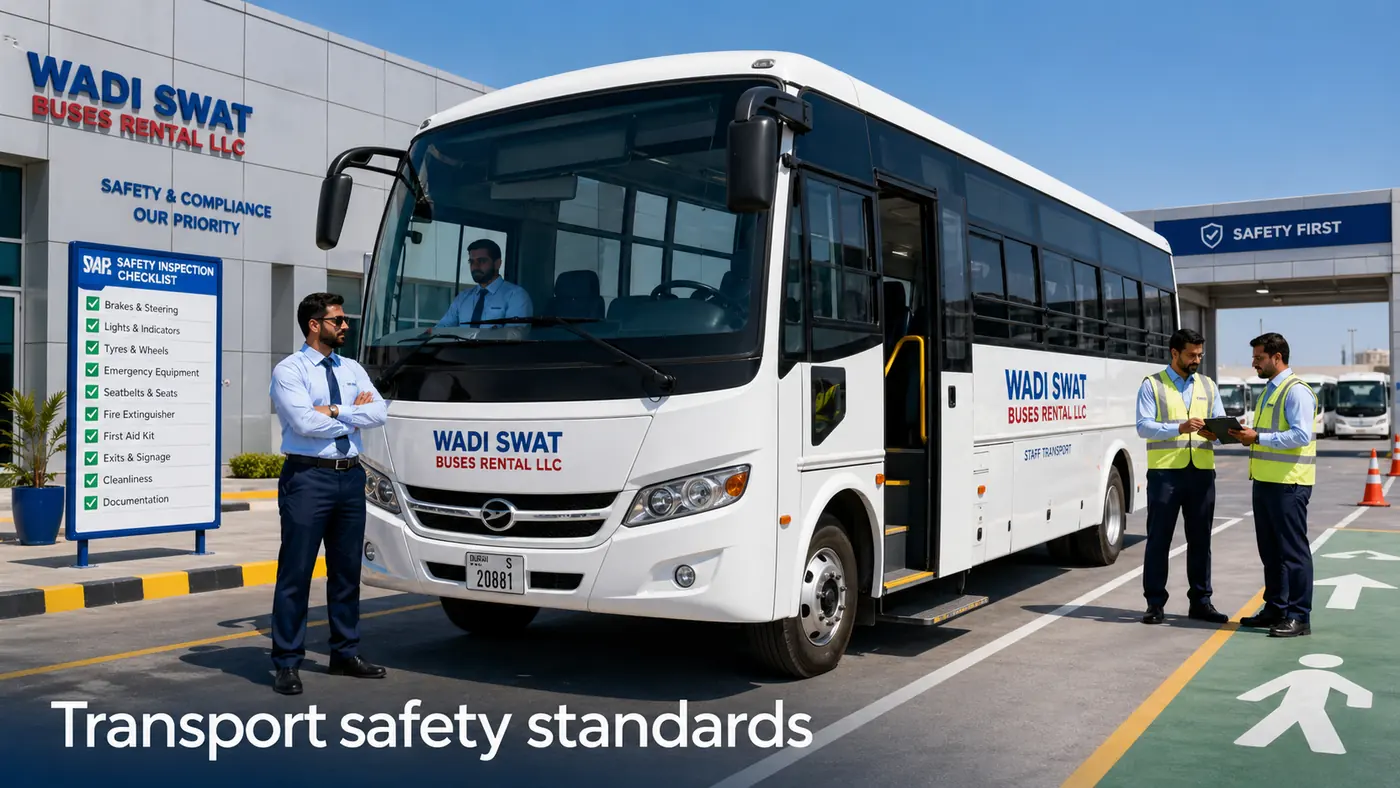
Safety and trust questions often sit at the center of the transport decision, especially when the movement involves employees, families, airport passengers, industrial routes, or event guests. Buyers usually want practical reassurance, not vague promises.
This FAQ helps readers focus on what reliable transport looks like in real use. It connects maintenance thinking, driver standards, operating discipline, and service confidence in a clearer and more useful way.
Important related topics
These phrases define the page scope and the questions answered below.
safety faqtransport safety questionsfleet maintenance answersdriver screening supportinsurance and compliance faqservice reliability questionstrust and safety answerssafety questions
Trust Check
Practical answers around reliability and operating confidence
This page helps buyers review safety, maintenance, driver standards, and service reliability in a more grounded way before moving ahead.
Confidence Role
A trust-focused FAQ for safer transport decisions
Its purpose is to replace generic reassurance with clearer thinking around maintenance, driver standards, reliability, and operational confidence.
Corporate buyers, HR teams, procurement teams, family-group planners, airport-transfer users, event organizers, and anyone checking transport standards before moving forward
Maintenance awareness, driver-standard questions, insurance context, reliability expectations, and moving into trust pages or the quote path with more confidence
Move into Safety Standards, Insurance Coverage, Corporate Profile, Fleet FAQ, or the quote/contact path with a clearer trust brief
Core Trust Questions
Common safety questions before transport is approved
These first questions usually appear when the buyer wants reassurance that the service is being reviewed properly before passengers are moved.
The most useful questions usually cover vehicle condition, maintenance approach, driver standards, insurance context, service reliability, and how the route or passenger type affects the transport setup.
Yes. Airport movement, recurring staff transport, industrial routes, family trips, event transport, and longer intercity journeys can each place different practical demands on the service, which makes disciplined maintenance and review important across vehicle categories.
Because punctuality, route discipline, passenger handling, real-world judgment, and service consistency are influenced by the people operating the transport as much as by the vehicle itself.
Practical Confidence
Questions about reliability, insurance, and next steps
Once the buyer understands the broad trust issues, the next questions usually focus on operational confidence.
Yes. Buyers often want a clearer picture of operational responsibility, service discipline, and the wider trust context before they move forward, especially on airport, staff, industrial, or event-related transport.
Useful signals usually include the quality of route understanding, the clarity of the commercial discussion, how practically the service questions are answered, and whether the provider addresses operating details rather than only surface claims.
The best next step is usually to review the relevant trust, safety, fleet, or service pages linked from here, then move into direct contact or a quote discussion once the requirement and the trust questions are both clearer.
Vehicles and Drivers
What buyers often want clarified about the people and vehicles behind the service
These questions help readers think more practically about safety, maintenance, and driver standards before they rely on surface-level reassurance.
Questions around condition, maintenance approach, service suitability, and how the route affects the transport setup are usually more useful than very broad trust language alone.
Yes. Airport transfers, recurring staff routes, industrial movement, family trips, and event transport can each place different practical demands on the service, which is why journey context matters in safety discussions.
Because route discipline, passenger handling, punctuality, and service consistency depend on the people operating the journey as much as on the vehicle itself.
The tone may differ, but the real issues remain practical: how the service is operated, how reliable it feels, and whether the provider addresses operating detail with confidence instead of vague promises.
Yes. Buyers usually gain better confidence from clear operating answers, realistic route understanding, and practical explanations than from generic claims that say very little about real transport standards.
Operations and Reliability
Questions about how trust shows up in everyday transport performance
Once the broad safety topic is clear, buyers usually want to understand what operational confidence really looks like in practice.
Useful signals often include clear route understanding, sensible service guidance, realistic timing discussion, and answers that reflect practical operation rather than polished but empty reassurance.
Recurring movement often places repeated demands on the same service pattern, so disciplined review and operational consistency become especially important when routes run over time.
Yes, if trust and operating confidence are important to the decision. Many buyers want clearer context around service responsibility and professional handling before moving forward.
Very often. Multi-stop movement, industrial access, airport timing, event handling, and heavier passenger coordination can all raise the practical importance of reliable transport execution.
It is both. Formal standards matter, but confidence also comes from how clearly the route is understood and how realistically the service is discussed in relation to the actual journey.
Buyer Confidence
What helps a reader move from caution into informed trust
These final questions help buyers decide what to review next once the main safety concerns have been explored.
The most useful next step is usually the safety, insurance, fleet, or relevant service pages that match the route type, followed by direct contact if the trust questions are becoming more specific.
Absolutely. Many buyers do that, especially when the journey involves families, employees, airport movement, events, or recurring transport where reliability matters more than a quick number.
A credible discussion usually reflects the route, passenger type, timing pressure, and service pattern in practical language rather than hiding behind broad claims that could apply to any provider.
Share the movement type, what confidence issue matters most, and the basic route outline, and the next page or discussion can be shaped in a more useful and practical way.