 WADI SWAT BUSES RENTAL LLC
RAKEZ Transport Guide for Employee Movement, Access and Route Planning
Employee Transportation, Corporate Shuttle, Ras Al Khaimah, Fleet Categories, Request a Quote
RAKEZ buyers can use this page to understand how controlled access, internal movement, and mixed business-industrial demand shape the next transport decision.
Handles controlled-access business and industrial routing
RAKEZ is influenced by controlled access, employee timing, internal business movement, industrial activity, and transport plans that need to fit a managed mixed-use operating environment.
Helps RAKEZ buyers match controlled-access movement with the right route structure
Employee Transportation Solutions, Corporate Shuttle Services, Staff Transport Services, Labor Transport Services
Useful before RAKEZ movement is reduced to one shuttle or one staff pattern
RAKEZ page that deserves its own slot because controlled entry, mixed industrial-business demand, and internal movement create a distinct transport case.
How Access and Workforce Planning Usually Work in RAKEZ
Route pressure, access conditions, and pickup structure usually matter here before any vehicle comparison does. Many buyers know they need movement in or through RAKEZ but still need help narrowing whether the route is better treated as a shuttle, transfer, workforce route, guest movement, or a more specific local access problem.
By doing that first, the page becomes more helpful for planning, comparison, and internal linking across the wider site. That makes the RAKEZ page stronger when it explains access conditions, timing pressure, and service fit before the quote stage.
Why RAKEZ Needs a Dedicated Free-Zone Page
RAKEZ needs a dedicated free-zone page because employee routes, security entry, gate timing, business access, and route discipline create a different planning environment from wider industrial or city pages.
Who This Free-Zone Page Helps Most
RAKEZ employers, HR teams, business-zone operators, logistics-linked firms, route planners, and workforce coordinators who need controlled-access transport structured around real employee movement.
Which Business and Workforce Situations This Page Clarifies Best
RAKEZ is strongest here when entry rules, employee timing, controlled access, internal business movement, and dependable workforce transport all need to be understood before the buyer commits to one narrow service path.
Which Services Usually Match Free-Zone Movement Here
RAKEZ generally works best when the buyer moves onward into Employee Transportation Solutions, Corporate Shuttle Services, Staff Transport Services, or Labor Transport Services after clarifying whether the movement is workforce-led, business-facing, or mixed-use.
How Movement Usually Works Around RAKEZ
RAKEZ works through controlled access, employee arrival windows, internal business timing, industrial relevance, and route dependability inside a managed mixed-use environment. The correct transport choice comes from understanding entry logic and operating flow together. Free-zone access roads, industrial corridors, business-entry routes, intercity links, and workforce movement lanes all influence the final service structure.
What Usually Drives Demand in RAKEZ
RAKEZ is influenced by controlled access, employee timing, internal business movement, industrial activity, and transport plans that need to fit a managed mixed-use operating environment.
Vehicle Fit for RAKEZ Business and Industrial Routes
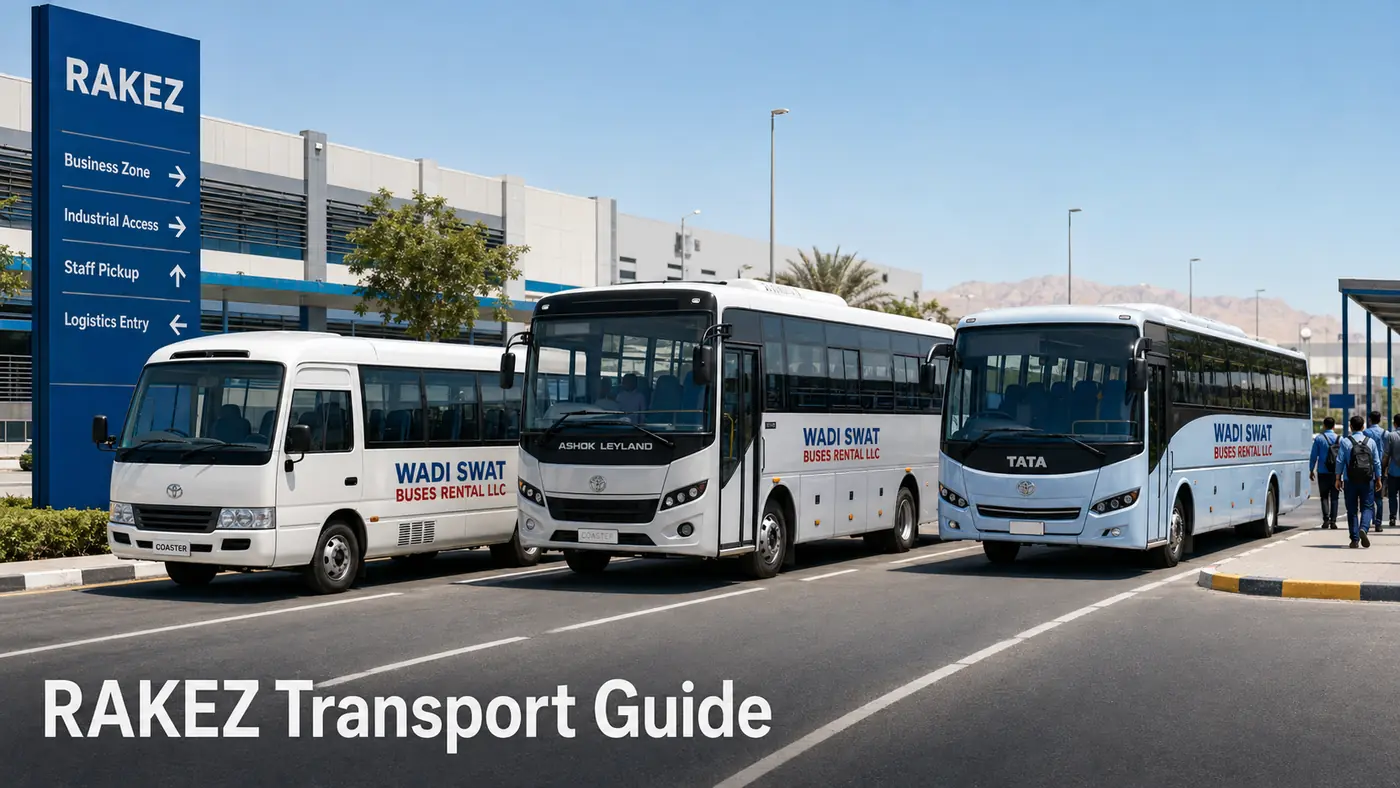
RAKEZ should have fleet chosen through controlled access, employee volume, internal movement, route spread, and the mix of industrial and business travel inside the zone. Minibuses work for moderate demand, staff buses serve recurring movement well, and labor buses become more efficient once workforce scale rises.
Toyota Coaster 30 Seater Mini Bus
Useful where city movement needs a tighter footprint, practical access, and smaller-group flexibility.
Ashok Leyland 50 Seater Staff Transport Bus
A strong fit for mixed district movement, airport runs, hotel transfers, and medium group transport.
TATA 67 Seater Labor AC Bus
More practical once the route becomes recurring, higher-volume, industrial, or workforce-led.
What Makes RAKEZ Route Planning Different
What makes this page useful is that rAKEZ route planning becomes more dependable when entry procedures, employee timing, gate-side staging, and pickup structure are mapped before the service is quoted.
Traffic and access reality: free-zone access roads, industrial corridors, business-entry routes, intercity links, and workforce movement lanes
Pickup and staging logic: Usually built around employee pickup clusters, gate-side staging, controlled entry points, and route starts that have to respect site access rules.
Parking and entry constraints: Security entry, gate controls, waiting limits, access authorization, and on-site staging rules can all shape the final route.
Top RAKEZ Pages to Explore Next
After the RAKEZ page, the strongest next-step pages are Ras Al Khaimah, Hamriyah Free Zone, and JAFZA because each one narrows the route logic further and helps the buyer move from a broad local brief into a more specific operating environment.
How to Plan the Right RAKEZ Quote
The fastest way to get the right RAKEZ quote is to share passenger count, route or corridor, pickup and drop pattern, timing window, service frequency, luggage or equipment needs, and whether the movement is office-, airport-, hotel-, event-, industrial-, or workforce-led. Once that brief is clear, service fit and fleet direction become much easier to confirm.
Why This RAKEZ Page Should Win Buyer Trust
From a buyer point of view, that matters because a strong RAKEZ page wins when it explains access pressure, timing reality, service fit, and route practicality before it pushes the buyer toward one fleet option. That makes the page more commercially useful, more linkable, and far more trustworthy than a generic location summary.
Not best-fit services: destination-led guest transport, hotel-only movement, and broad emirate pages where free-zone entry reality is not the main issue
Trust, Route Practicality and Service Standards
Commercial credibility improves when trust on the RAKEZ page comes from practical route explanation, realistic local access logic, descriptive internal links, and planning guidance that reflects how transport actually behaves on the ground rather than repeating broad location filler.
Explore the Most Relevant Supporting Pages
Use these pages to move from city-level planning into the right service, area, fleet, or FAQ layer.
Frequently Asked Questions About RAKEZ Transport Planning
These answers are designed to help buyers understand how RAKEZ movement logic, service choice, route planning, and local access reality affect the final transport decision.
How should a buyer start planning transport around RAKEZ?
Start with the real movement brief for RAKEZ: route or corridor, passenger count, timing, pickup and drop pattern, service purpose, and any access, luggage, staging, or comfort requirements. Once those details are clear, the right service direction and fleet fit become much easier to confirm.
When is this RAKEZ page more useful than a service page?
Use the RAKEZ page first when you still need to understand the local movement logic. Move to a narrower service page when the route purpose is already clear, or to a more specific nearby area page when one district, corridor, or venue clearly dominates the movement.
What kind of transport services most often match RAKEZ?
The services most often connected with RAKEZ are Employee Transportation, Corporate Shuttle, Staff Transport, and Labor Transport. The best fit depends on whether the movement is route-led, transfer-led, workforce-led, guest-led, or anchored by a very specific local access pattern.
Why is local route logic especially important in RAKEZ?
Because routes in RAKEZ are shaped by more than distance alone. Access rules, timing windows, pickup structure, staging pressure, corridor behaviour, and service purpose can all change whether a route will work smoothly in practice.
Is the best vehicle here chosen mostly by passenger count?
No. Passenger count matters, but route shape, access conditions, stop density, timing pressure, luggage or equipment needs, and service style matter just as much. Fleet should follow the brief rather than be chosen too early.
What should be shared first to get an accurate quote for RAKEZ?
The most useful details are passenger count, route or corridor, pickup and drop structure, reporting or departure time, return timing, service frequency, luggage or equipment needs, and any access or staging restrictions that affect RAKEZ in practice.
Need Help Planning Transport in RAKEZ?
Tell us the route, corridor or area, passenger count, timing, service purpose, and any access or staging issues so we can help you narrow the right transport direction for RAKEZ before you commit to the wrong page or the wrong vehicle.