
How Booking Works
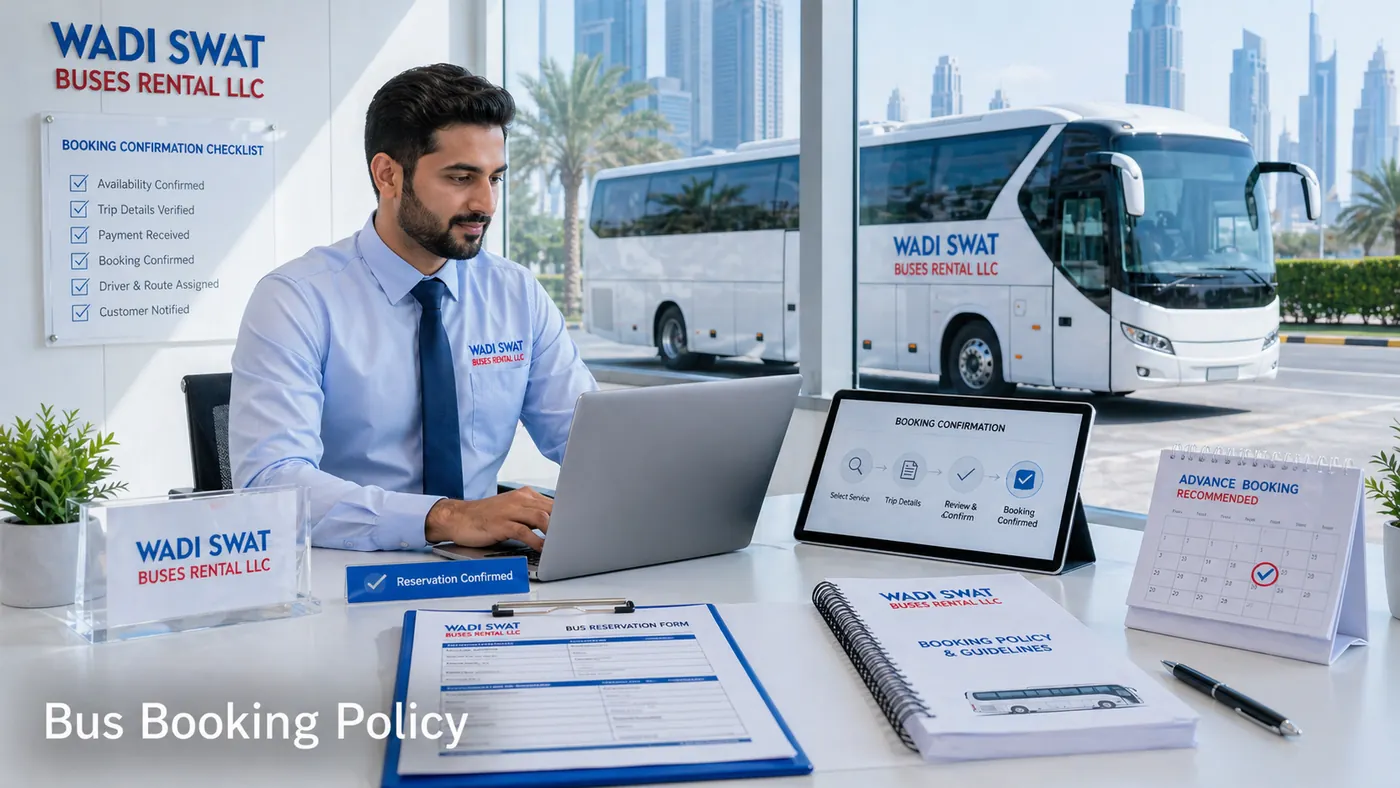
A reliable booking starts with a complete transport brief. The route, timings, passenger and luggage totals, service frequency, access conditions and required support must be clear before the vehicle can be assessed.
The team then reviews route feasibility, fleet fit, duty hours, inclusions, exclusions and current availability before issuing a written quotation or confirmation.
A request is not treated as fully confirmed until the agreed commercial and operating details are accepted through the approved written process.
1. Send Details
Provide route, schedule, passengers, luggage and frequency.
2. Review
Check vehicle fit, access, duty conditions and availability.
3. Confirm
Approve the written scope, price, terms and responsibilities.
4. Operate
Coordinate the duty using the confirmed route and escalation process.
Step 1: Send the Complete Transport Brief
The booking brief must contain enough detail to calculate the real duty and avoid assumptions about passengers, stops, timing or access. The section defines the page purpose and separates confirmed information from details that require route-specific verification.
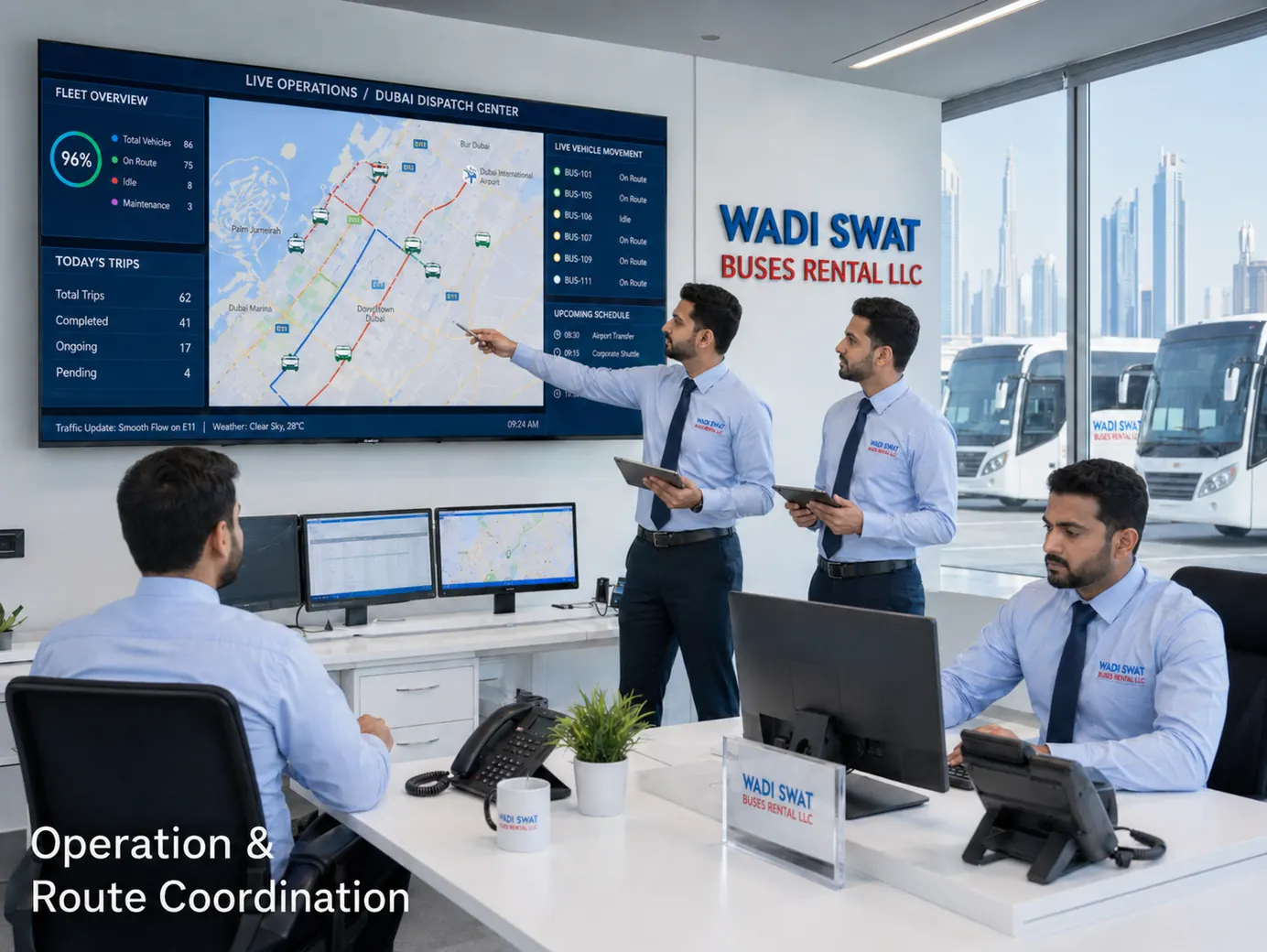
Route, Schedule and Passenger Details
Required booking inputs
Route, Schedule and Passenger Details is assessed through required booking inputs. The relevant facts should be specific, current and supported by the approved service scope or company record.
Luggage, Stops and Access Conditions
Operational constraints — How Booking Works
Luggage, Stops and Access Conditions addresses operational constraints — how booking works. Any item that depends on availability, route conditions, permits, price or third-party approval must be confirmed before commitment.
Review UAE Transport Coverage where the requirement extends into this closely related service.
Review SWAT Transport Corporate Profile where the requirement extends into this closely related service.
Step 2: Route and Vehicle Review
The assessment stage checks route feasibility, suitable capacity, operating hours, permits, parking, tolls and any special requirements. The decision should reflect the passenger group, operating environment and the practical result the customer needs.
Duty Feasibility and Timing
Traffic, access and driver hours
Duty Feasibility and Timing is assessed through traffic, access and driver hours. The relevant facts should be specific, current and supported by the approved service scope or company record.
Vehicle Capacity and Availability
Best-fit allocation
Vehicle Capacity and Availability addresses best-fit allocation. Any item that depends on availability, route conditions, permits, price or third-party approval must be confirmed before commitment.
Compare 20-34 Seater Minibuses when passenger capacity, luggage, comfort or route access affects the vehicle choice.
Step 3: Written Quotation and Clarifications
The written quotation should identify the vehicle category, service schedule, inclusions, exclusions, validity and change conditions. Clear responsibilities, current evidence and written change control reduce avoidable operating risk.
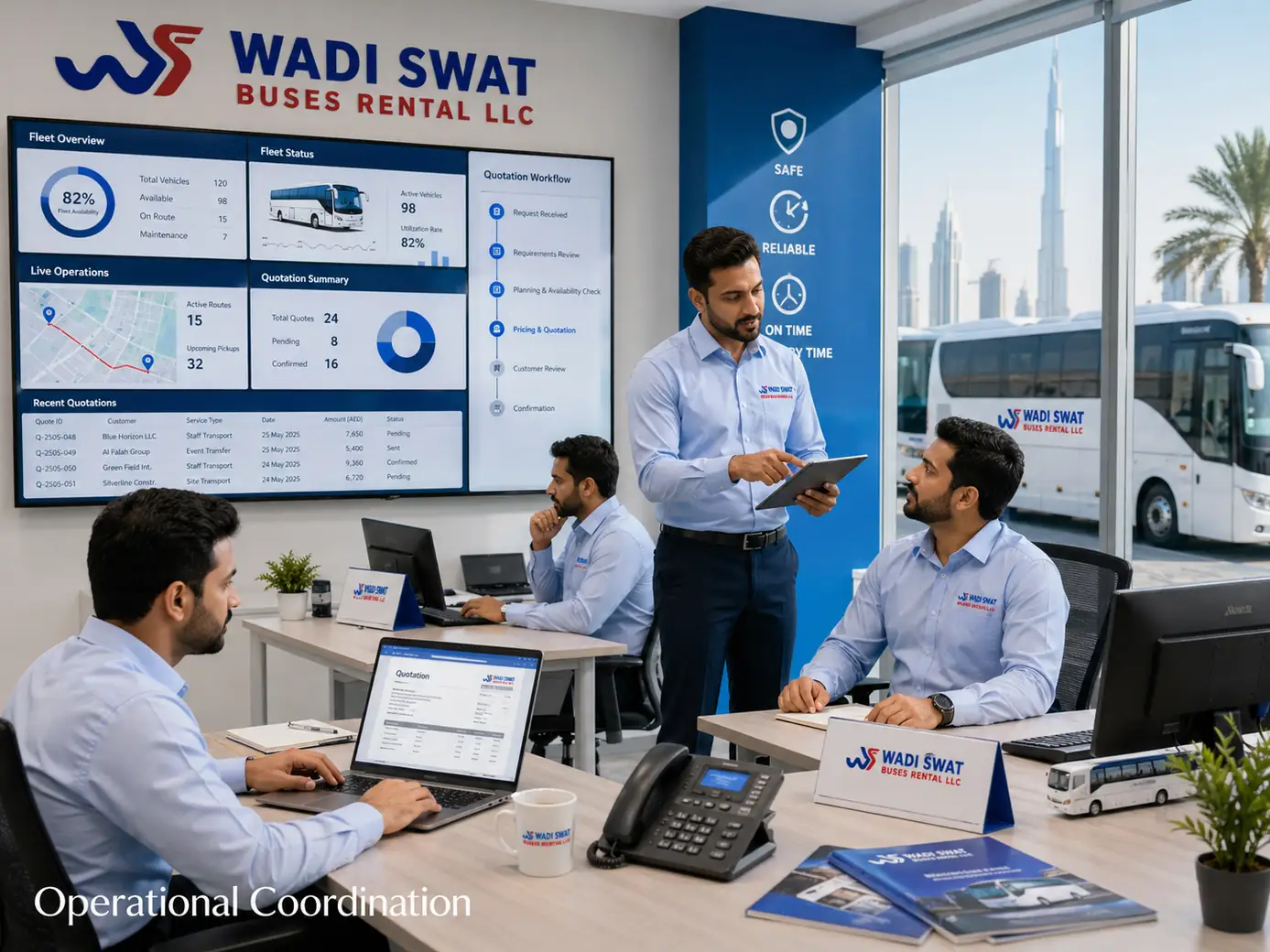
Inclusions, Exclusions and VAT
Commercial scope
Inclusions, Exclusions and VAT is assessed through commercial scope. The relevant facts should be specific, current and supported by the approved service scope or company record.
Validity, Payment and Approval
Booking conditions
Validity, Payment and Approval addresses booking conditions. Any item that depends on availability, route conditions, permits, price or third-party approval must be confirmed before commitment.
Step 4: Confirmation and Operations Handover
Confirmation requires acceptance through the approved channel together with any payment, purchase-order, contract or documentation requirement. The service should be compared on suitability, documentation and continuity as well as commercial cost.
Driver, Vehicle and Contact Details
Pre-duty communication
Driver, Vehicle and Contact Details is assessed through pre-duty communication. The relevant facts should be specific, current and supported by the approved service scope or company record.
Pickup Verification and Service Monitoring
Duty execution
Pickup Verification and Service Monitoring addresses duty execution. Any item that depends on availability, route conditions, permits, price or third-party approval must be confirmed before commitment.
Changes, Cancellations and Support
Before the duty, final operational details are shared and any change should be communicated early so its effect can be reassessed. The final action is to provide complete information and obtain a written record that matches the actual requirement.

Route or Timing Amendments
Repricing and availability
Route or Timing Amendments is assessed through repricing and availability. The relevant facts should be specific, current and supported by the approved service scope or company record.
Breakdowns, Delays and Escalation
Continuity process
Breakdowns, Delays and Escalation addresses continuity process. Any item that depends on availability, route conditions, permits, price or third-party approval must be confirmed before commitment.
Use Executive Transport Booking Guide for the related requirements, planning checks or customer guidance.
Use How to Choose the Right Bus Size for the related requirements, planning checks or customer guidance.
Answers are based on the planned page scope; route-specific and commercial details still require written confirmation.
What information is available on the How Booking Works page?
The booking brief must contain enough detail to calculate the real duty and avoid assumptions about passengers, stops, timing or access. Answer the exact utility purpose of the page. Tailor the answer specifically to How Booking Works. Confirm route-dependent facts, availability, price and responsibilities in the current written quotation or approved company record.
How does this page help with transport planning for How Booking Works?
The assessment stage checks route feasibility, suitable capacity, operating hours, permits, parking, tolls and any special requirements. Connect the page to a real reader decision. Tailor the answer specifically to How Booking Works. Confirm route-dependent facts, availability, price and responsibilities in the current written quotation or approved company record.
Where can a reader request further information for How Booking Works?
The written quotation should identify the vehicle category, service schedule, inclusions, exclusions, validity and change conditions. Point to the approved contact or quotation process. Tailor the answer specifically to How Booking Works. Confirm route-dependent facts, availability, price and responsibilities in the current written quotation or approved company record.
Use these planned links to continue to the correct service, fleet, area, guide or trust page.