
Event Transport Faq
Event Transport FAQ
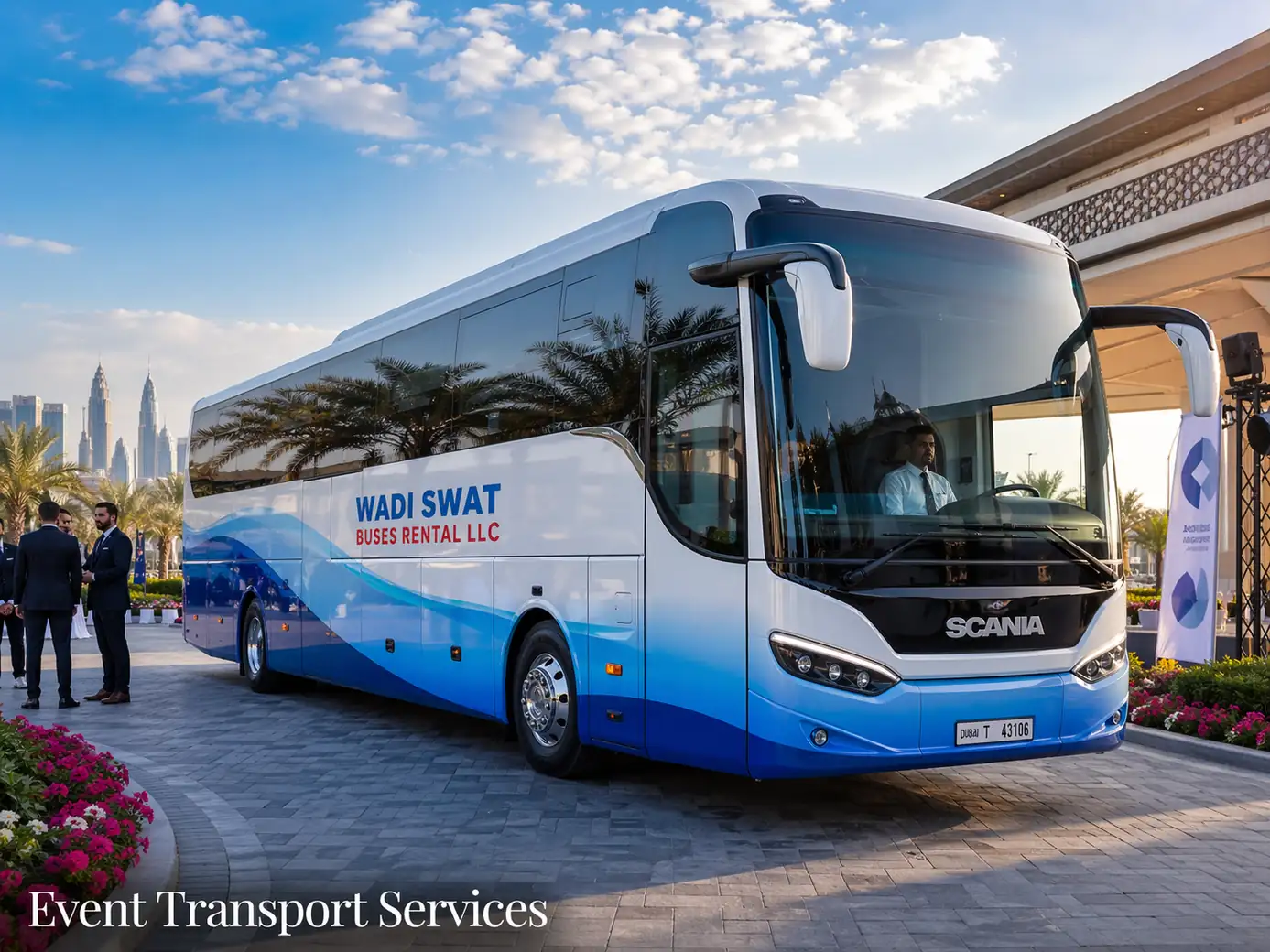
Event transport starts working properly when guest flow, venue access, shuttle structure, and return timing are understood early. Without that clarity, the transport model can look fine on paper but fail under live event pressure.
This FAQ gives planners a more practical way to think about event movement. It helps connect guest arrivals, VIP handling, venue rules, and shuttle logic before those details turn into last-minute problems.
Clearer answers before the quote stage
Structured for planners who need early clarity on guest flow, shuttle logic, venue access, VIP movement, hotel connections, and return timing before event transport is finalized.
Where readers usually go after this
Event Transport Services, Exhibition Shuttle Services, Expo City Dubai, Dubai World Trade Centre
What this page is helping resolve
Useful for venue, exhibition, and guest-movement enquiries where timing windows, shuttle structure, access rules, and return flow need to be understood early.
Common questions before event transport is finalized
These first questions usually appear when the planner knows the venue and guest movement need but still needs clarity on how the transport should be organized.
What information helps you plan event transport properly?
The most useful details usually include the venue, event date, guest volume, arrival window, return timing, pickup origins, VIP requirements if any, and whether the transport is one-way, return, looping, or hotel-linked.
Are event shuttles different from normal group transport?
Yes. Event transport usually depends more heavily on timed arrivals, venue access, guest flow, return batching, and staging logic than a normal group trip, so the movement often needs tighter planning.
Can one event-transport plan include VIP guests and general attendees?
It can, but the structure usually needs to reflect different arrival expectations, comfort levels, and timing priorities so that the transport setup stays smooth for each passenger group.
Questions about access, return timing, and next steps
Once the broad event shape is known, buyers usually want to know how real venue conditions affect the transport plan.
Do venue access rules affect the vehicle choice?
Yes. Drop zones, parking limits, coach access, shuttle turnarounds, and holding areas can all influence which vehicle categories and route structure are most practical for the venue.
How should return movement be planned after an event?
Return planning usually works best when the expected finish window, guest release pattern, batching needs, and any split return logic are understood in advance rather than left to the last minute.
What should I share before requesting an event-transport quote?
The best starting brief usually includes the venue, pickup origins, expected guest count, timing windows, whether VIP movement is involved, and whether the transport needs fixed arrivals, return runs, looping support, or hotel links.
How event movement should be structured before shuttle details are fixed
These questions help planners think about guest volume, arrival waves, venue rules, and the overall movement pattern before they lock the transport format too early.
Should event transport be planned around the venue schedule or the pickup schedule first?
The venue schedule usually sets the real boundary because guest movement has to serve arrival windows, registration, stage times, or show openings. Pickup planning then needs to work backward from that reality.
Can one event need several transport layers at once?
Yes. It is common to have general guest movement, VIP handling, hotel links, exhibitor travel, and return batching all inside one event brief. Those layers should be described early rather than treated as one simple shuttle.
Do venue rules change how shuttles should be designed?
Absolutely. Drop zones, access windows, coach limits, holding areas, and turnaround practicality can all change what kind of shuttle structure actually works on event day.
Is a looping shuttle always better than fixed arrival runs?
Not necessarily. Looping can work well for some venues, while other events need fixed scheduled movements. The best format depends on guest flow, waiting areas, timing pressure, and venue access.
Should guest transport and staff transport for the same event be treated separately?
Often yes, because guest-facing movement and event-operations movement can have different timing, presentation, and route priorities even when they are linked to the same venue.
Questions about what kind of vehicles and timing structure fit event movement
Once the venue and guest pattern are clearer, buyers usually want to understand how fleet choices and time pressure affect the transport design.
How much does event timing affect the fleet choice?
It can affect it a lot. A vehicle that looks fine on paper may be too slow, too large, or too inflexible if the arrival window is tight or the venue handling is more restrictive than expected.
Can smaller vehicles be better than one larger coach for event transport?
Yes, especially when guests are moving in waves, access is tight, or the venue cannot absorb large arrivals efficiently. The most practical fleet mix often comes from event flow rather than total headcount.
Does hotel-linked event movement need its own planning logic?
Usually yes. Once guests are coming from hotels, the movement starts to depend on check-in patterns, guest grouping, pickup discipline, and how the hotel side connects with the venue window.
How should return transport be handled if the event end time is uncertain?
It is better to build the return around a realistic release range rather than one exact minute. Events often finish in waves, and return planning works better when that is recognized upfront.
Can event transport work across more than one venue in the same program?
It can, but a multi-venue movement brief should be handled carefully because sequencing, holding time, and passenger regrouping become much more important than in a single-venue plan.
What helps the event buyer move toward a stronger transport brief
These final questions help the planner prepare a more usable request before pricing, fleet review, or schedule confirmation begins.
What details should I share first for an event-transport enquiry?
Venue, event date, guest volume, arrival window, pickup origins, any hotel links, VIP needs, return pattern, and whether the service is one-way, return, or loop-based are usually the most useful starting details.
Should I describe attendee movement and VIP movement in one brief or separately?
It is usually better to identify them separately inside the same brief, because they often require different service tone, timing discipline, and transport handling.
What if I do not know the exact guest count yet?
You can still begin the discussion with a realistic working range. A sensible band is more useful than waiting too long for a final number when the transport logic is already becoming clear.
What should I do next if the venue and timings are already mostly fixed?
The most useful next step is usually the Event Transport Services page, the relevant venue page if one exists, and then the quote path once the transport brief is strong enough to review properly.
Where this page fits in the wider site
Links in: Main FAQ hub, Event Transport Services, Venue pages, Guides, Fleet FAQ
Related themes: event shuttle planning, guest movement answers, venue transport support, exhibition logistics guidance, pickup coordination
What readers usually need next
Event Transport Services, Exhibition Shuttle Services, Expo City Dubai, Dubai World Trade Centre
Want to turn the event requirement into a cleaner transport plan?
Tell us the venue, guest volume, timing window, pickup structure, and whether the movement needs shuttles, VIP handling, hotel links, or return batching, and we will help you shape a more workable event-transport plan.