 WADI SWAT BUSES RENTAL LLC
How to Reduce Staff Transport Delays on Recurring Routes
This guide helps buyers in Dubai and the UAE make a better decision on how to reduce staff transport delays by focusing on the practical issues that shape transport fit, not just the first option that appears workable.
Use it to narrow the right vehicle, route, pricing or service direction before moving into a detailed quote discussion with Wadi Swat Buses Rental LLC.
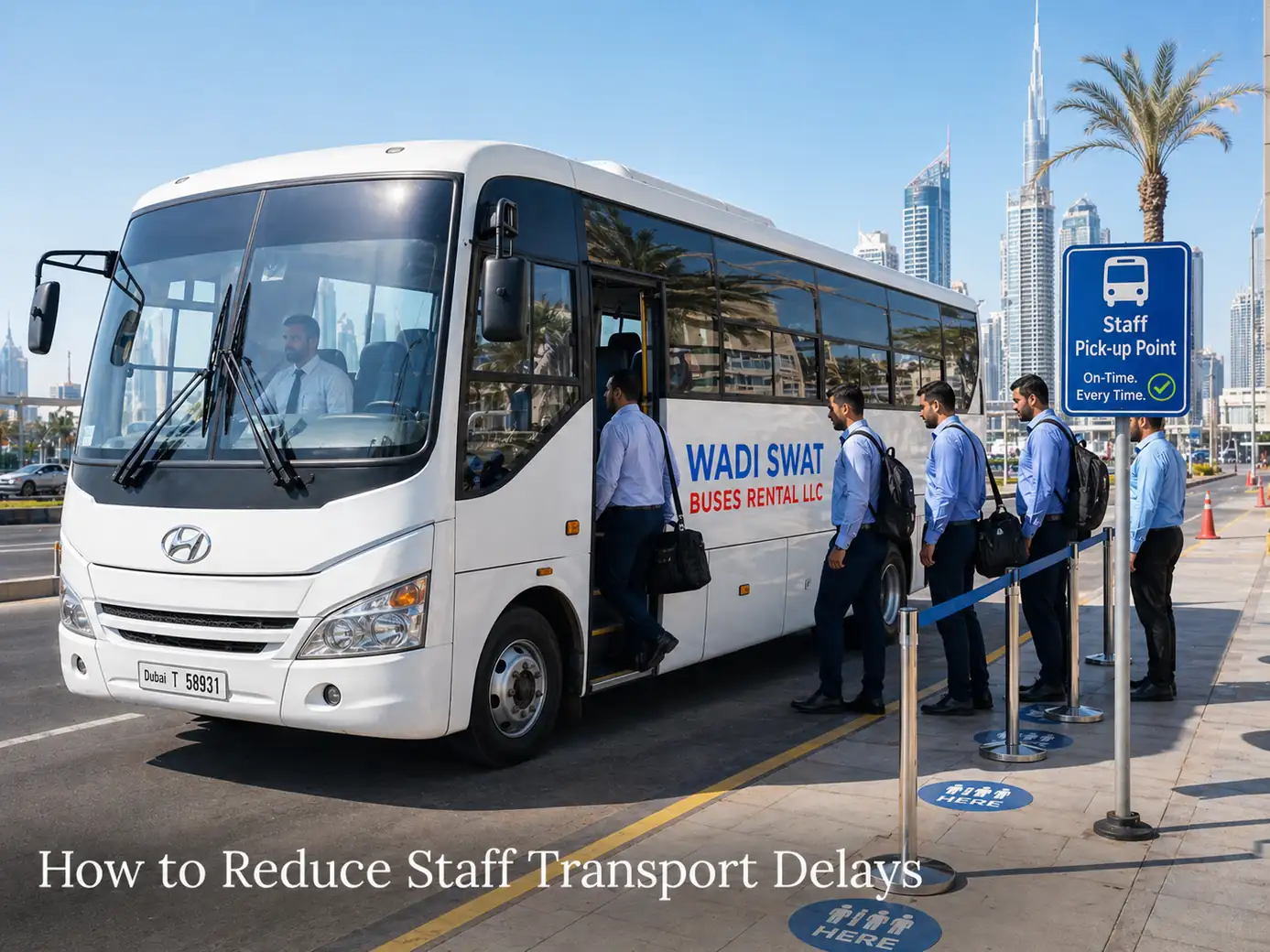
Find the route issue behind the repeated delay
Help buyers identify the main causes of delay and redesign the route or service logic so recurring staff movement becomes more stable over time.
Looks at delay reduction through route structure, stop discipline and timing control rather than treating every delay as a simple scheduling complaint.
Find the route issue behind the repeated delay
Guide focused on reducing recurring transport delays through better route structure, timing discipline, stop design, access planning and service control.
Improve timing discipline without overcomplicating the route
HR teams, office admins, operations managers and site coordinators trying to improve the reliability of recurring employee or workforce routes that already exist.
Strengthen daily reliability before the problem becomes normal
Delays usually come from route-design issues, unrealistic timing, poor grouping, weak stop control or access friction rather than from the driver or vehicle alone.
Looks at delay reduction through route structure, stop discipline and timing control rather than treating every delay as a simple scheduling complaint.
Best combined with daily pickup-and-drop planning, staff transport pages, monthly contract planning and business-district transport content.
How to Reduce Staff Transport Delays on Recurring Routes
How to Reduce Staff Transport Delays is written for buyers who want a clearer way to think through how to reduce staff transport delays before they compare providers, vehicle categories or quotations. In many UAE transport decisions, the main mistake is starting with the wrong question and then trying to correct the route, fleet or budget later.
This guide brings the decision back to the essentials: trip purpose, movement pattern, route reality, timing pressure, passenger profile and the operational conditions that usually determine whether the transport plan will actually work in practice.
Who This How to Reduce Staff Transport Delays Is For
It is most useful for hr teams, office admins, operations managers and site coordinators trying to improve the reliability of recurring employee or workforce routes that already exist. and other buyer-side teams who need a clearer planning view before approving transport. It becomes especially valuable when the requirement is genuine but the right route, vehicle, service level or commercial path is not yet fully defined.
Where to Start and What to Compare First
It helps buyers work out which planning issue matters first for how to reduce staff transport delays, whether that is vehicle category, route structure, trip timing, service level, passenger fit, commercial scope or the most relevant page to review before a quote is requested.
The Practical Factors That Usually Change the Decision
A strong decision on how to reduce staff transport delays usually depends on a small number of variables. Buyers get better results when they identify those variables early instead of comparing transport options on surface-level assumptions.
What Buyers Commonly Get Wrong About How to Reduce Staff Transport Delays
This guide is strongest when it helps buyers avoid the planning habits that lead to weak routes, poor fit or unclear quotations. Those habits usually appear before the provider conversation even starts.
A Better Way to Use This Guide
Begin with the planning issue that is most likely to shape the final result. Once that issue becomes clearer, use the relevant fleet, service or pricing pages to review the execution fit in more detail. This order usually produces a better shortlist and a more useful quote request.
Starting with a preferred vehicle before clarifying the requirement
Avoiding this usually leads to a clearer transport decision and a more useful shortlist.
Comparing options without defining the trip structure properly
This often creates confusion between what sounds right and what actually fits the requirement.
Moving to price too early without confirming operational fit
Fixing this early usually improves vehicle choice, route planning and quoting accuracy.
Why How to Reduce Staff Transport Delays Matters in Dubai and the Wider UAE
Across the UAE, transport planning is often shaped by route practicality, access limits, peak-hour timing, luggage or boarding realities, destination spread and service expectations rather than headline price alone. Dubai adds even more pressure in business districts, airport corridors, event zones and mixed urban routes, so buyers benefit when the planning logic is clear before they request pricing.
When It Makes Sense to Leave the Guide and Ask for Pricing
Once the trip purpose, approximate passenger volume, route pattern, timing expectation and preferred vehicle band are already clear, the next useful step is usually a direct quote request or the service page most closely linked to the requirement.

Pages Worth Reviewing After This Guide
Once the planning question is clearer, the next useful step is usually to review the matching fleet, pricing or service page. These links help buyers move from broad research into pages that explain execution fit, vehicle options, pricing direction and quote readiness in more practical detail.
Frequently Asked Questions About How to Reduce Staff Transport Delays
These FAQs answer common buyer questions around how to reduce staff transport delays so the next step is clearer before a quote is requested.
What is the main purpose of this how to reduce staff transport delays?
It helps buyers understand the planning issues behind how to reduce staff transport delays so they can compare options more accurately before moving into a service or quote discussion.
Who usually benefits most from this how to reduce staff transport delays?
It is most useful for buyer-side teams who need a clearer decision framework before they approve transport, shortlist vehicles or compare quotations.
Does this guide replace speaking to your transport team?
No. The guide improves planning clarity first, then makes the commercial discussion more accurate and more efficient.
Is this guide relevant only in Dubai?
No. It is written for UAE transport buyers, although Dubai route realities and operating pressure are important parts of the planning context.
When should I move from this guide to a quote request?
Usually when the trip pattern, passenger range, service level and likely vehicle band are already clear enough to discuss pricing with confidence.
What page should I review after this guide?
That depends on the requirement, but the most useful next pages are usually the related fleet, service, pricing or quote pages listed here.
Use This Guide, Then Move to the Page That Matches the Requirement
Start with the question this guide solves best. Once the route, fleet direction, pricing logic or service fit becomes clearer, move into the most relevant related page or request a quote with stronger confidence.