
Trust & Compliance

Safety Standards for Safer, More Controlled Transport Decisions

Review the practical safety controls that support passenger protection before, during and after service.

This page explains how safety shows up in daily operations, not just in broad statements or checklist language.

Commercial Investigation + TrustMid to Late FunnelHigh-conversion safety proof page
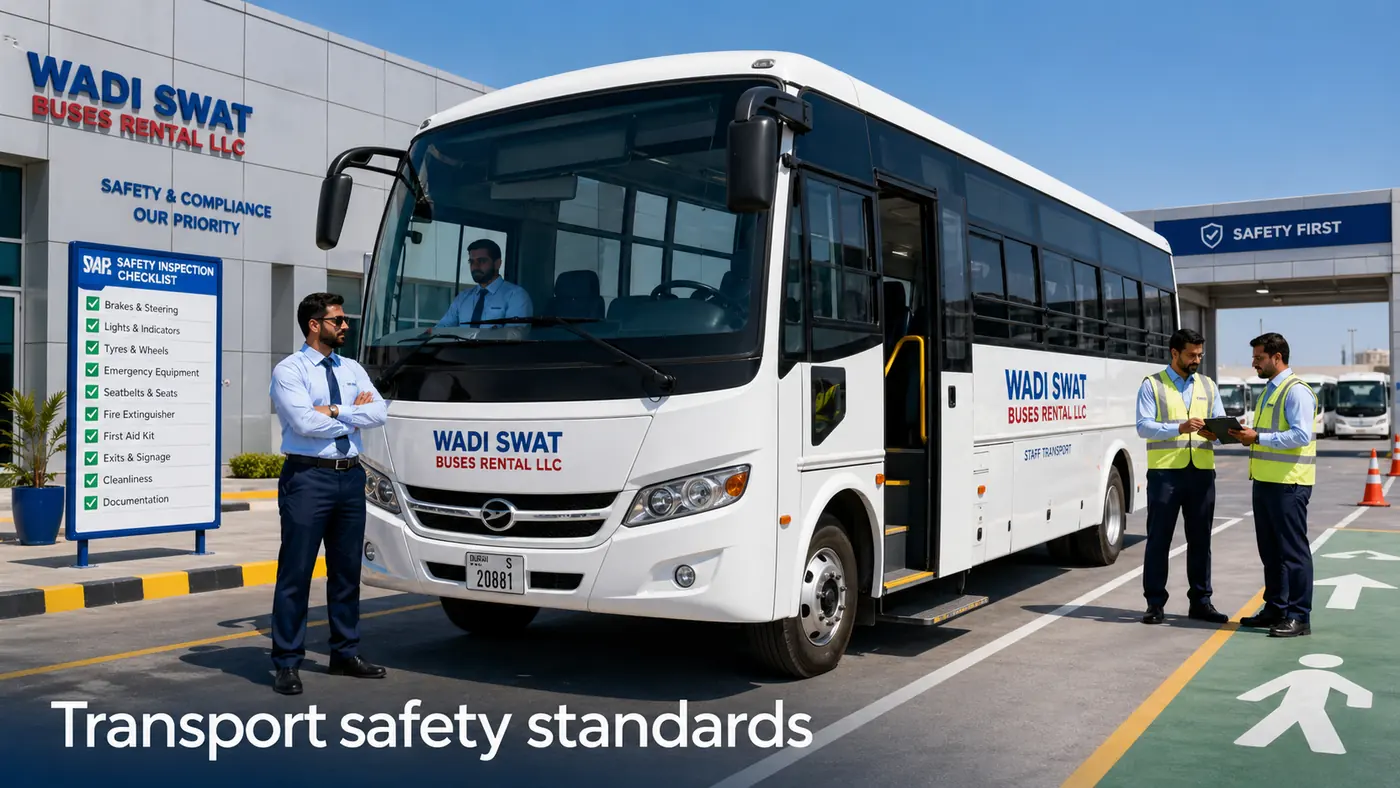
Safety Standards hero image showing passenger transport safety, controlled fleet movement, and operational readiness
Passenger safety and operating-control visual supporting safer UAE transport decisions
Primary Trust Angle

Passenger protection supported by route controls, disciplined operating practices and journey-readiness checks.

Buyer Risk Concern

A buyer does not want safety to depend on vague assurances or ad-hoc decisions once service has started.

Operational Proof

Driver discipline, trip-readiness checks, safe boarding logic, controlled service delivery and clear operating expectations.

Relevant Buyer Types

Schools, corporate buyers, staff-transport buyers, procurement teams and private group organisers

Overview

Safety Standards

If safety is the first question you need answered before booking, this page gives you a clearer view of the practical controls that support safer transport delivery.

Buyers often hear the word safety long before they see the processes behind it. This page is designed to close that gap. It explains how protective thinking should show up in route control, driver discipline, fleet checks and the service environment so you can judge the operation more confidently.

Why This Page Matters

Why buyers check safety before they check price

Safety is often the first filter in transport selection because a low rate means very little if the operation feels loosely controlled. This page helps you review whether safety is being handled as a daily discipline rather than a marketing promise.

What This Page Proves

What this page proves

This page proves that safety is being handled through visible controls rather than left as generic brand language. It shows how the operation approaches prevention, journey discipline and passenger protection in a structured way.

How It Works

Where safety standards show up in real operations

Practical safety appears in preparation, boarding, route control, driver conduct, passenger management, and journey discipline. This page is designed to show how those layers work together instead of treating safety as a single checklist item.

Buyer Confidence

What gives a buyer more confidence

Confidence improves when a buyer can see that safety is treated as a repeated operating discipline. Clear route control, safer boarding logic, service checks and trained staff all reduce the feeling that important decisions are being improvised on the day.

Review Path

Four steps for turning operating proof into a clearer commercial decision

01

Identify the main risk

Choose the issue that could materially affect safety, continuity, responsibility or service confidence.

02

Review the right proof

Read the controls and operating process relevant to the scope instead of relying on broad statements.

03

Connect it to the journey

Compare the proof with the route, passengers, timing, access, fleet and booking pattern.

04

Write the requirement

Place the relevant responsibilities, controls, change process and escalation expectations into the quote or contract.

Trust FAQs

Questions buyers ask before relying on this operating proof

Use these questions to connect the proof with the real service scope before making a commercial decision.

01

What makes a safety page credible?

A credible safety page explains how protection is applied in practice through driver discipline, trip checks, journey control, and passenger-facing safeguards instead of relying on broad claims.

02

Should I review driver and inspection pages after this one?

Yes. Safety becomes easier to trust when you also review who is operating the service and how vehicles are checked before they go into service.

03

Can this page help before approving school, staff, or group transport?

Yes. It is especially useful when the buyer needs reassurance that passenger protection is built into the service before approving movement for staff, students, guests, or private groups.

04

How should safety standards be reviewed alongside pricing?

Review the operating proof before comparing rates. Price is easier to assess when the service scope, route conditions, responsibilities and expected controls are already clear; this page should support that review rather than act as a price claim.

05

Is safety standards relevant to monthly and contract transport?

Yes. It is particularly useful for recurring work because the buyer needs a repeatable operating standard, not a one-time promise. The exact requirement should still be written into the quotation or contract.

06

What evidence or operating details should a buyer request?

Ask for evidence relevant to the actual scope, such as driver discipline, trip-readiness checks, safe boarding logic, controlled service delivery and clear operating expectations.. The appropriate documents and level of detail depend on the service, route, vehicle, contract and applicable requirements.

07

Does this proof page replace route and service planning?

No. Trust and compliance review should be combined with the exact pickup and drop locations, passenger profile, schedule, access restrictions, fleet fit and commercial scope.

08

How does this page help procurement, HR or administration teams?

It turns the concern—A buyer does not want safety to depend on vague assurances or ad-hoc decisions once service has started.—into practical questions that can be used during shortlisting, scope review and contract discussion.

09

Which supporting page should be reviewed next?

Review Driver Training and Screening first, then continue to Passenger Safety Measures if it addresses the next risk in your decision. The linked proof pages are intended to answer different questions rather than repeat the same content.

10

What should be included in the quote brief after this review?

Include pickup and drop points, dates and times, duty hours, passenger and luggage counts, stops, access notes, vehicle preference, booking pattern and any trust or compliance requirements that must be reflected in the written scope.

Prepare Your Quote

Share the route details once. Get a clearer vehicle recommendation and written quotation.

Accurate journey information helps the team review the route, match the vehicle and define the operating scope before commercial terms are finalised.

Not sure which vehicle fits?

Send the journey details first. The suitable fleet direction can then be reviewed before the quotation is prepared.

01

Route and stops

Pickup, destination, boarding points, drop-off points and any planned stops.

02

Date and schedule

Service date, departure and return times, duty hours and expected waiting.

03

Passenger count

Confirmed passenger numbers and any variation between trips, shifts or days.

04

Luggage and access

Luggage volume, parking, gates, permits, loading rules and site restrictions.

05

Vehicle and comfort

Van, minibus, staff bus or luxury coach—or ask the team to recommend the fit.

06

Booking pattern

One-time journey, weekly service, monthly contract or recurring transport.

Ready to prepare the transport brief?Provide the route, timing, passengers, access notes and booking pattern.
Next Step

Review the safety proof, then take the next step

Use this page to confirm how safety is handled in practice, then move to the proof page that answers your next question or contact the team if you are ready to discuss your service requirement.