
Booking Policy
Bus Booking Policy for Quotations, Reservations, and Confirmed Transport
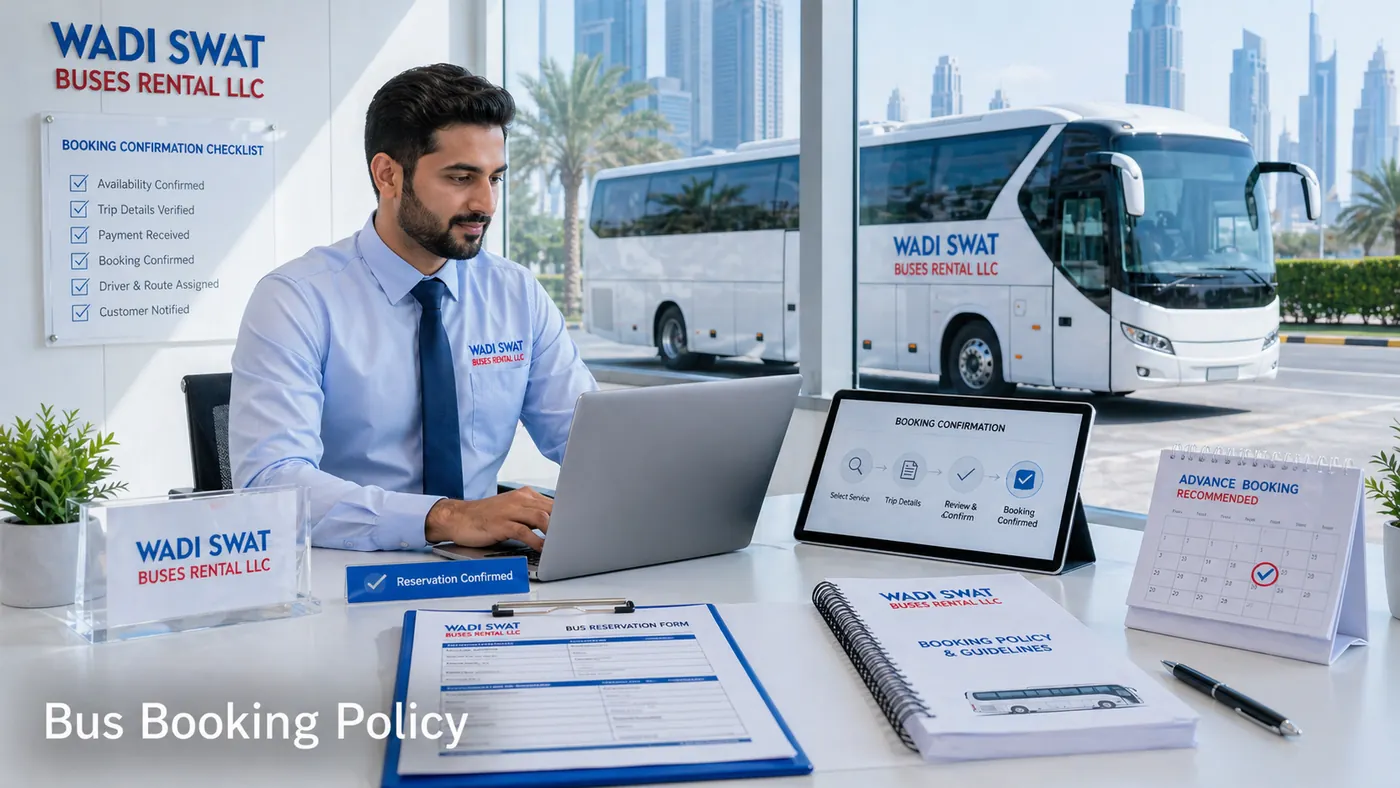
Written to be practical, clear, and conversion-safe for clients who want to know how the booking process works before they proceed.
This booking policy page is designed to explain how transport enquiries usually move from the first request stage into a confirmed booking with Wadi Swat Buses Rental LLC. Rather than using overly legal language as the first layer, this page focuses on the practical side of the reservation process so clients can understand what information is normally needed, what helps a request move faster, and when an enquiry becomes an actual confirmed service arrangement.
For many buyers, the booking stage is where uncertainty appears. They may already know the likely route, service type, dates, or passenger count, but still want clarity around what counts as an enquiry, what counts as a reservation request, what counts as a confirmed booking, and how changes or follow-up details are usually handled. This page is intended to reduce that uncertainty.
Because transport requirements vary, the booking path can sometimes differ slightly depending on service type, timing, and operational complexity. Even so, the general goal stays the same: to make the movement from quotation interest to confirmed transport more understandable, more organized, and easier to manage for both the client and the service team.
Quote to Booking Clarity
Helps explain how transport interest normally moves into a real confirmed service arrangement.
Practical, Not Overly Legal
Designed to be readable and useful before clients move into deeper legal terms and formal conditions.
Business-Friendly Guidance
Useful for organized passenger movement, corporate mobility, group transport, and charter requests.
Supportive Next Step
Built to reduce hesitation and help serious buyers proceed with more confidence.
Why Buyers Often Review Booking Rules Before Proceeding
Transport is not always booked the same way as a simple one-click purchase. Many passenger movement requirements depend on route details, passenger volume, service timing, type of use, and operational context. That means a serious booking often starts with an enquiry or quotation stage rather than an instant fixed confirmation.
This is why a practical booking policy helps. It gives clients a clearer picture of how the reservation process usually works, what information is typically needed, and when a request becomes solid enough to be treated as a confirmed booking rather than an early expression of interest.
If you want a more step-by-step explanation of the client journey beyond this policy page, you can review our How Booking Works page.
How a Transport Request Usually Moves Toward Confirmation
Stage 1: Initial Enquiry
The process often begins with a quotation or availability request supported by basic details such as service type, date, route, and passenger count.
Stage 2: Booking Review
Once the requirement becomes clearer, the request may move into a more specific reservation stage where timing, route logic, and service fit are reviewed more carefully.
Stage 3: Confirmed Booking
A booking is generally treated as confirmed only when the required details, approvals, and booking conditions are properly aligned for the service to proceed.
What Normally Helps a Reservation Move Faster and More Clearly
Useful Information to Provide Early
- Service date or date range
- Pickup and drop-off locations, even if still approximate
- Expected passenger count or likely vehicle size needed
- Type of movement such as staff shuttle, charter, event, airport, or project transport
- Whether the requirement is one-time, recurring, multi-day, or contract-based
Why This Matters
Clearer early details usually make the reservation process easier because they reduce guesswork, improve service-fit decisions, and help both sides move toward a more realistic booking discussion. The less uncertainty around the requirement, the easier it becomes to understand whether the request is still exploratory or ready to move toward confirmation.
Why Earlier Requests Usually Create a Better Booking Experience
Advance booking is usually helpful because it creates more room for service review, operational planning, and client-side coordination. That does not mean every requirement must be booked far in advance, but earlier requests generally make it easier to assess availability, align the service properly, and reduce last-minute uncertainty.
In practice, advance booking needs can differ depending on the route, service type, movement scale, and operational timing. A simpler request may move faster, while a more complex corporate or group transport requirement may naturally need more discussion before confirmation.
Why a Booking FAQ Layer Helps Before the Final Decision
Many visitors need practical clarification before they move forward. They may want to understand how reservation timing works, what details are usually required, or what kind of changes might affect the booking path. That is why a booking policy page works best when it is supported by a question-and-answer layer rather than trying to answer every scenario inside one document.
If you want answers to common reservation questions before proceeding, you can review our Booking FAQ page.
Why Booking Changes Should Be Reviewed as Early as Possible
Booking changes are easier to manage when they are communicated early and clearly. Adjustments to dates, route logic, passenger count, timing, or service duration can affect how a booking is handled, especially when the request is already moving toward confirmation or has progressed beyond an early quotation stage.
If your concern relates specifically to cancellations, postponements, or refund-related questions, you can review our Cancellation & Refund Policy page for that part of the support framework.
Where This Practical Policy Connects with the Formal Legal Layer
This page is meant to explain the practical booking process in a readable and business-friendly way. It is not intended to replace the formal legal and contractual framework that may apply to confirmed services, commercial arrangements, or binding terms related to a booking.
If you want the broader legal framework, you can review our Terms and Conditions page. If you want the more booking-specific legal layer, you can review our Booking Terms page.
How Most Serious Buyers Move Forward After Reviewing the Policy
Once a client understands how the enquiry and reservation path generally works, the next useful step is usually to either move into a quotation request or ask for clarification on any booking-related uncertainty that remains. That creates a cleaner path toward a realistic transport discussion rather than leaving the requirement in an unclear early stage.
If you still need direct clarification before moving ahead, you can use our Contact Us page to speak with the team.
Ready to Move from Booking Questions to a Practical Transport Request?
If you now understand the general booking path and are ready to move beyond the policy stage, the most practical next step is to begin with a proper quotation request. That gives the team the details needed to review the service in a more realistic and organized way.