 WADI SWAT BUSES RENTAL LLC
 +971 54 388 6682
Labor Transport FAQ
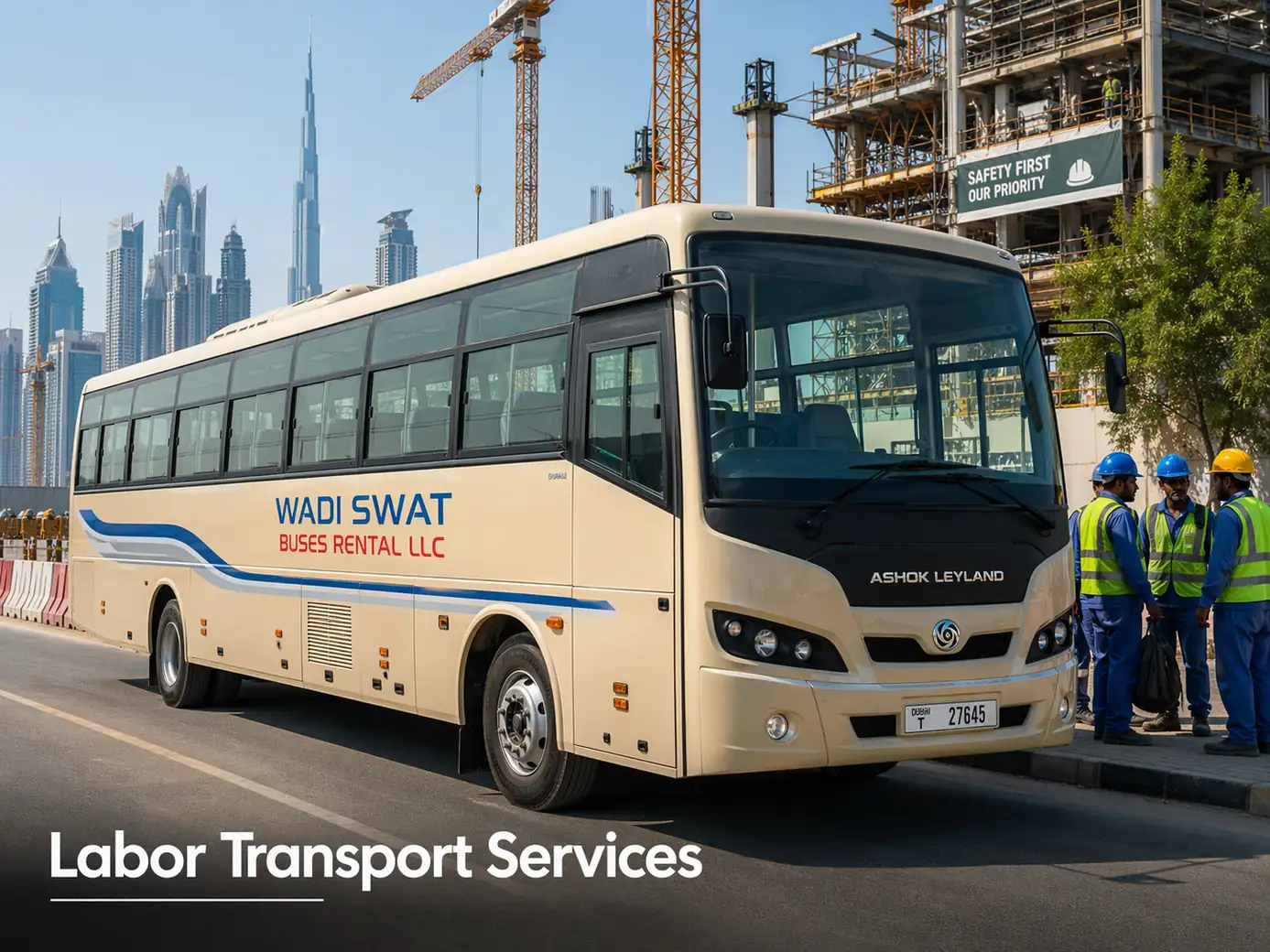
Labor transport is usually assessed through operational reality rather than generic passenger questions. Camp origins, site arrival times, shift waves, bus capacity, and route discipline all affect whether the movement will work well in practice.
This page helps workforce planners, site managers, and procurement teams look at labor movement through the right lens. It connects route logic, bus fit, and industrial timing so the next discussion starts from a stronger brief.
Clearer answers before the quote stage
Focused on workforce movement where camp origins, shift waves, site timing, bus suitability, and route discipline need to be understood before labor transport is discussed seriously.
Where readers usually go after this
Labor Transport Services, Camp-to-Site Labor Transport, Labor Bus categories, Safety support
What this page is helping resolve
Focused on workforce and industrial transport enquiries where camp origins, site access, shift timing, and higher-capacity movement need clearer explanation before quoting.
Questions that usually come before labor transport is set up
These first questions usually appear when the buyer is trying to understand how worker movement should actually operate before asking for pricing or fleet allocation.
How does labor transport usually differ from general bus rental?
Labor transport is usually built around recurring worker movement, camp origins, site destinations, shift timing, larger passenger bands, and route discipline. That makes it much more operational than a general one-time charter.
What matters most in a camp-to-site labor route?
The key issues are usually the camp location, site arrival deadline, worker count, pickup sequence, route efficiency, and how stable the movement is across days or shifts. Those details shape the right bus type and service structure.
How do I know whether the route needs a high-capacity labor bus?
That usually depends on headcount, shift waves, road practicality, stop count, and whether the movement needs fewer larger vehicles or more flexible smaller runs. The answer often comes from route efficiency, not just total workers.
Questions about bus type, timing, and setup
Once the route shape is clearer, most buyers then ask how the practical service choice should be made.
Is AC or non-AC bus choice only about price?
No. Price matters, but route length, climate exposure, worker comfort, duty pattern, and project requirements can also affect whether AC or non-AC movement is more suitable.
Can one labor-transport service support multiple shifts?
Yes, but the service needs to be planned around real shift timing, turnaround practicality, route spread, and the number of workers moving in each wave rather than assuming all journeys behave the same way.
What details should I share before asking for a labor-transport quote?
The most useful details usually include camp and site locations, worker numbers, shift timings, operating days, pickup logic, project duration, and whether the movement is stable or likely to change across the contract.
How labor movement is usually structured before buses are assigned
These questions help buyers understand how camp origins, worker volume, and site patterns should shape labor transport before capacity decisions are locked in.
Should labor routes be designed around camps or around site arrival deadlines first?
Site arrival deadlines usually anchor the planning because late workforce arrival can damage operations quickly. From there, camp origins and pickup structure are arranged in the most practical sequence.
How do I know whether one route is too large for a single labor bus?
That depends on worker count, stop spread, shift timing, road practicality, and whether one larger movement would create too much delay. Sometimes efficiency comes from splitting the route rather than maximizing one bus.
Do labor routes always need the highest-capacity buses?
Not always. A very large bus only makes sense if the route, access conditions, and shift pattern support it. In some cases, smaller groupings create better punctuality and smoother loading.
Can one site requirement include both staff-style and labor-style movement?
Yes. Some operations involve supervisors, technical teams, and workers moving under different service conditions even when they share the same destination. Those distinctions should be explained early.
What makes a camp-to-site route more practical than a scattered worker pickup plan?
Camp-to-site movement is usually easier to stabilize because the passenger origin is more concentrated. Once workers are spread widely, route discipline, timing, and vehicle efficiency often become more complex.
Questions about daily movement under real operating pressure
After the route shape is clear, most buyers want to know how labor transport performs under industrial timing, site access, and repeated daily movement.
How important is gate timing in labor transport planning?
It is often critical because even a route with the right bus size can still underperform if site entry timing is not aligned properly. Gate pressure can change the practical timetable significantly.
Should labor routes be planned differently for day and night shifts?
Usually yes. Road conditions, turnaround pressure, worker release times, and site operating patterns can differ enough between shifts to justify different route logic.
Can waiting or standby time matter in labor transport?
Yes, especially when worker release timing is uncertain or site operations do not follow a perfectly fixed pattern. Those details should be discussed early because they affect service practicality.
What usually causes problems in recurring labor transport?
Common issues include unrealistic shift timing, overloaded stop patterns, poor camp grouping, unstable worker numbers, and route plans that ignore how industrial access works in practice.
Does route length matter more than worker count in some labor jobs?
Sometimes it does. A moderate worker group on a difficult or stretched route can be more operationally demanding than a larger group on a cleaner, shorter, and more stable movement pattern.
What buyers should prepare before moving into the quote stage
These final questions help project teams and workforce planners prepare stronger labor-transport briefs before pricing, allocation, or contract discussion begins.
What information improves a labor-transport quote request the most?
Camp origin, site destination, worker volume, shift pattern, operating days, expected contract duration, stop logic, and whether the route is stable or changing are usually the most useful starting details.
Should I mention site rules and project conditions in the first enquiry?
Yes. Access procedures, project environment, waiting realities, and operating discipline can all affect how the transport should be reviewed, even before pricing is discussed.
Can a labor route be reviewed even if the project is not fully mobilized yet?
It can, especially when the camp, site area, and expected shift pattern are already known. Early review can help avoid poor fleet assumptions before the movement begins.
What should I read next if the requirement is clearly industrial and recurring?
The most useful next step is usually the Labor Transport Services page, the relevant fleet-category pages for workforce buses, and the quote path once the operating brief is strong enough.
Where this page fits in the wider site
Links in: Main FAQ hub, Labor Transport Services, Safety FAQ, Fleet category pages, Guides
Related themes: workforce movement answers, camp-to-site planning, labor bus capacity guidance, shift-route support, industrial transport questions
What readers usually need next
Labor Transport Services, Camp-to-Site Labor Transport, Labor Bus categories, Safety support
Want to build a labor route that works in real operating conditions?
Give us the camp origin, site destination, worker volume, shift pattern, and route timing, and we will help you identify the labor-transport structure and bus band that best fits the operating reality.