Staff transport planned with clarity

Facilities Management Staff Transport

Facilities Management Staff Transport is planned for facilities-management technicians, cleaners, supervisors and support crews. The service combines route design, passenger capacity, shift timing, site access, daily communication and written responsibilities so movement between compounds, client buildings, maintenance sites and rotating service schedules can be managed as one controlled transport duty rather than a series of informal vehicle requests.

Route and stopsPassengers and capacityShift and timingAccess and parking
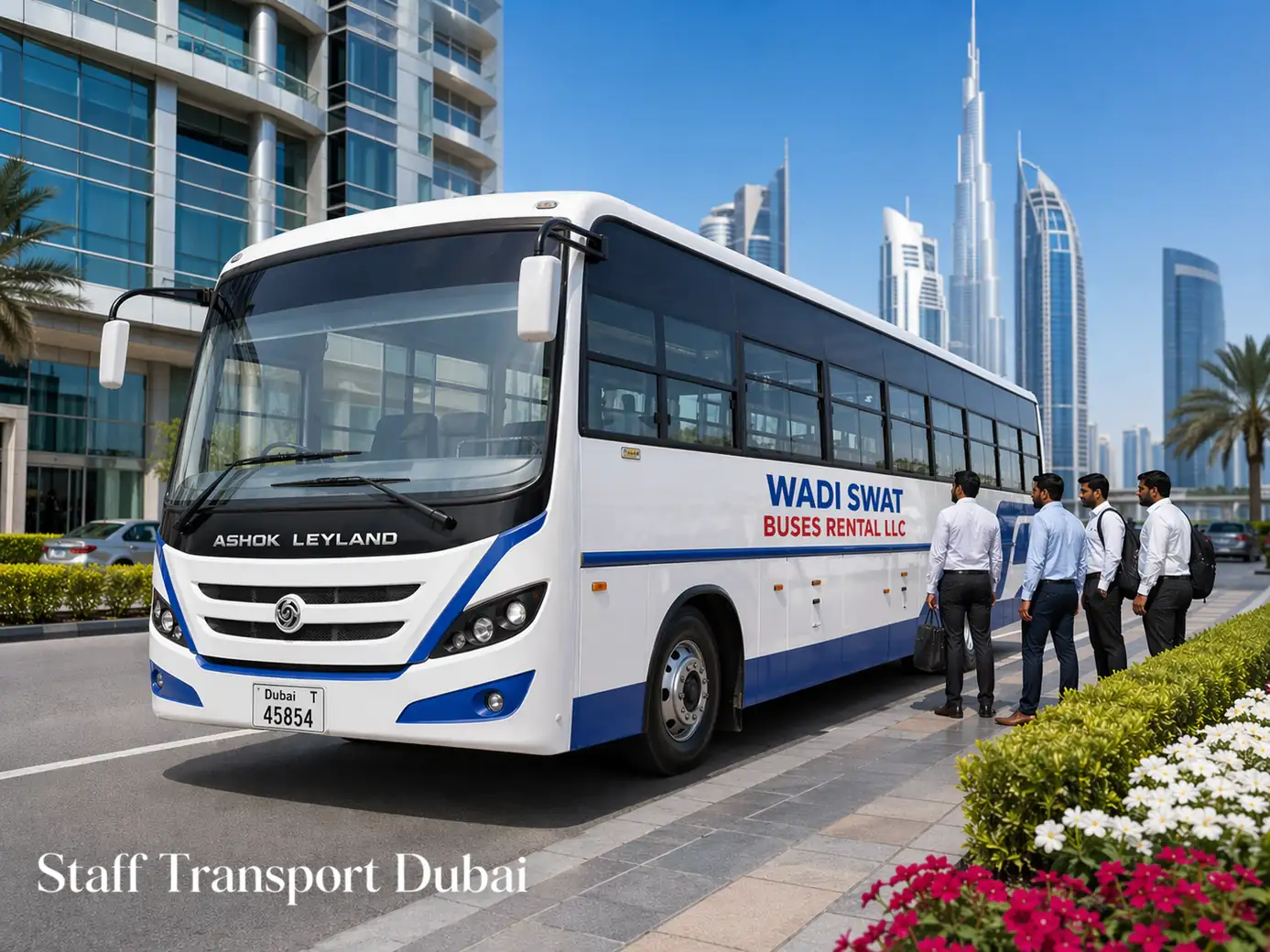
Staff transport Dubai
Facilities Management Staff Transport

distributed sites, tools, security access and urgent schedule changes without losing route control

Route planner
Organise the route before requesting a quotation

Choose the duty pattern, passenger range and service frequency to prepare a clear first enquiry summary.

📍 Route and stops🕒 Shift and timing👥 Passengers and capacity
Planning summary

01
Operating step

Facilities Management Staff Transport: Route and Service Scope

This section turns the requirement into a clear operational and commercial decision that can be reviewed before deployment.

Airport Staff Transport

Passenger, Shift and Site Requirements — Facilities Management Staff Transport

Facilities Management Staff Transport should begin with a clear definition of the travelling group and the result required at the destination. For this page, the typical users are facilities-management technicians, cleaners, supervisors and support crews. The transport plan should state whether the duty is daily, monthly, temporary or linked to a changing roster, because each pattern affects the route, vehicle capacity and communication method.

The operating context is movement between compounds, client buildings, maintenance sites and rotating service schedules. A useful scope records the service days, reporting time, return movement, authorised pickup areas and the contact person who can confirm absences or late changes. This prevents the vehicle from being managed through separate passenger messages and gives dispatch one approved version of the duty.

The buyer should also identify the non-negotiable outcome: punctual arrival, safe staff access, controlled attendance, fewer unplanned detours or continuity across several shifts. The page does not promise a result without route information; it explains what must be confirmed before the service can be quoted and started.

Who travels, when and where — Facilities Management Staff Transport

  • Passenger group and journey purpose
  • Operating days and shift pattern
  • Required arrival and return time
  • Named customer and dispatch contacts

Pickup Points, Stops and Required Arrival — Facilities Management Staff Transport

Pickup points for Facilities Management Staff Transport should be consolidated where practical, but never at the expense of passenger safety or site rules. Each point needs a precise map pin, a safe waiting position and a realistic time window. The stop order should follow the travel direction so repeated backtracking does not increase duty hours or make arrival unpredictable.

The route review should pay particular attention to distributed sites, tools, security access and urgent schedule changes without losing route control. Building entrances, industrial gates, staff parking, security checks and pedestrian movement can add time that does not appear in a simple map estimate. The customer should confirm which entrance may be used and whether the vehicle can wait, turn or load passengers there.

A stable route also defines the policy for late passengers, missed stops and temporary changes. Without a clear rule, one unplanned detour can affect every later pickup. The agreed operating sheet should show stop sequence, target times, safe loading points and the contact channel used when a passenger or site instruction changes.

Route structure — Facilities Management Staff Transport

  • Exact map pin and safe meeting point
  • Stop order in the direction of travel
  • Loading, turning and waiting conditions
  • Late-passenger and temporary-change rule
Accommodation
Pickup
Access
Worksite
Return
02
Operating step

Vehicle Capacity and Duty Planning — Facilities Management Staff Transport

This section turns the requirement into a clear operational and commercial decision that can be reviewed before deployment.

Luxury Bus Fleet UAE

Vehicle Size, Seating and Access — Facilities Management Staff Transport

Vehicle selection for Facilities Management Staff Transport starts with the passenger count on each trip, not the total number employed by the customer. A route may have different morning and evening loads, several shift waves or attendance variation during weekends and holidays. The capacity plan should therefore show the normal count, the expected peak and any approved standing or luggage restrictions.

Access conditions matter as much as seats. A van may suit a smaller team and restricted entrance, while a minibus or staff bus may provide better capacity for a consolidated route. The review should consider door access, step height, aisle movement, personal bags, climate expectations, journey duration and whether the vehicle can enter the nominated pickup and drop areas.

The quotation should confirm a capacity class and operational duty. It should not depend on an unsupported promise that one exact model will always be available. Where a model or special feature is essential, that requirement must be written and checked before confirmation.

Best-fit selection — Facilities Management Staff Transport

  • Actual count by trip or shift
  • Peak attendance and spare capacity
  • Access, turning and height restrictions
  • Comfort, bags and journey duration

Driver Hours, Waiting and Continuity — Facilities Management Staff Transport

A staff route is a complete driver duty, not only the distance between two pins. Reporting, vehicle preparation, pickup progression, loading, travel, site checks, waiting and return movement all contribute to the operating window. Tight schedules should allow for realistic traffic and security procedures rather than relying on the shortest map time.

For Facilities Management Staff Transport, continuity planning should account for distributed sites, tools, security access and urgent schedule changes without losing route control. If the route has several shifts, the timetable must show whether the same vehicle can complete every movement within legal and practical driver hours. If not, the plan may require a second duty, an adjusted timetable or a different stop structure.

Waiting time should be defined clearly. A short planned waiting period is different from keeping a vehicle on standby for hours. The written scope should also identify additional trips, overtime triggers and the procedure for requesting a permanent schedule change.

Operational feasibility — Facilities Management Staff Transport

  • Full driver-duty window
  • Traffic and gate-check allowance
  • Planned waiting versus standby
  • Additional-trip and overtime control
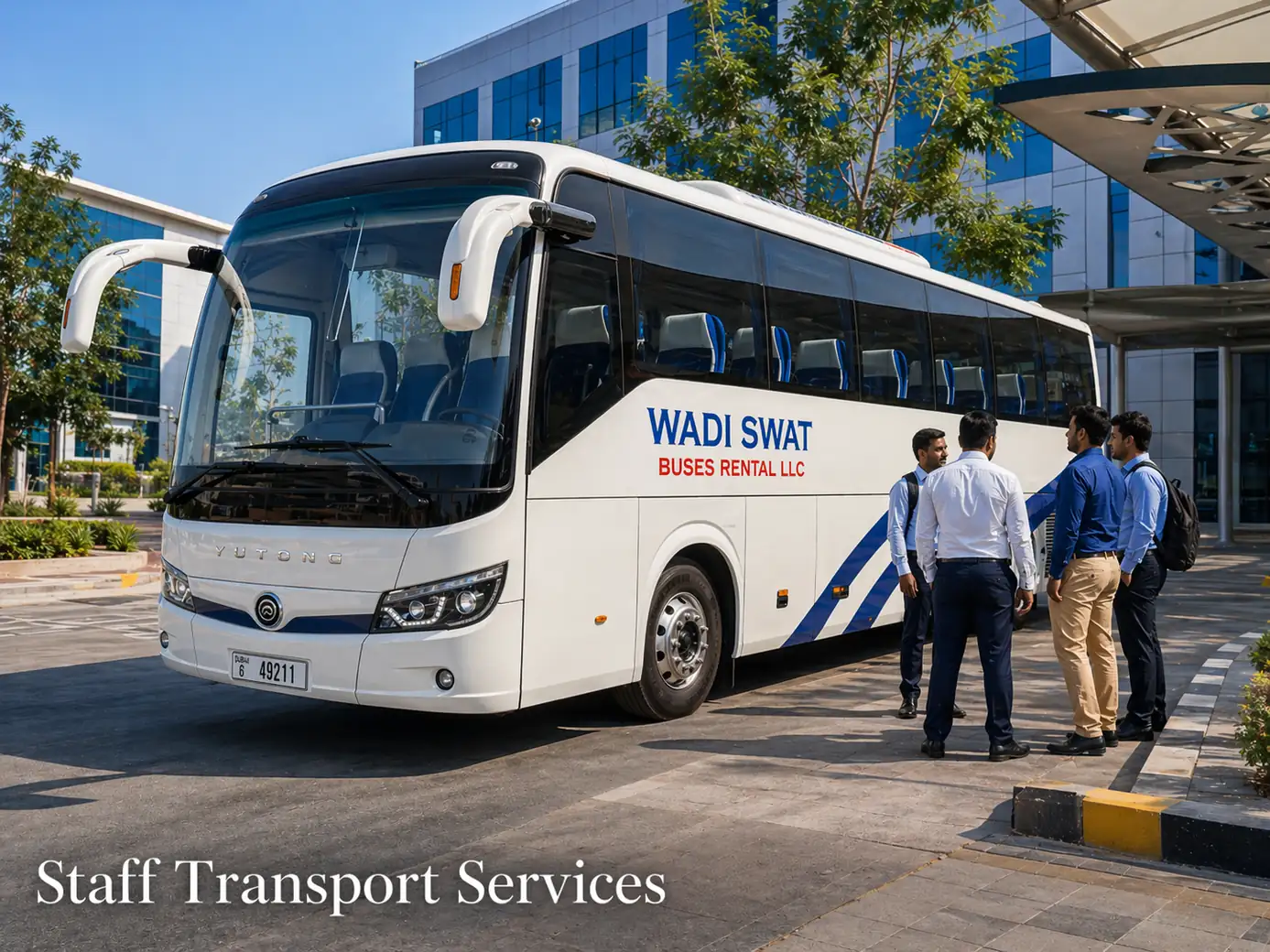
Staff transport services
Operating environment and service context
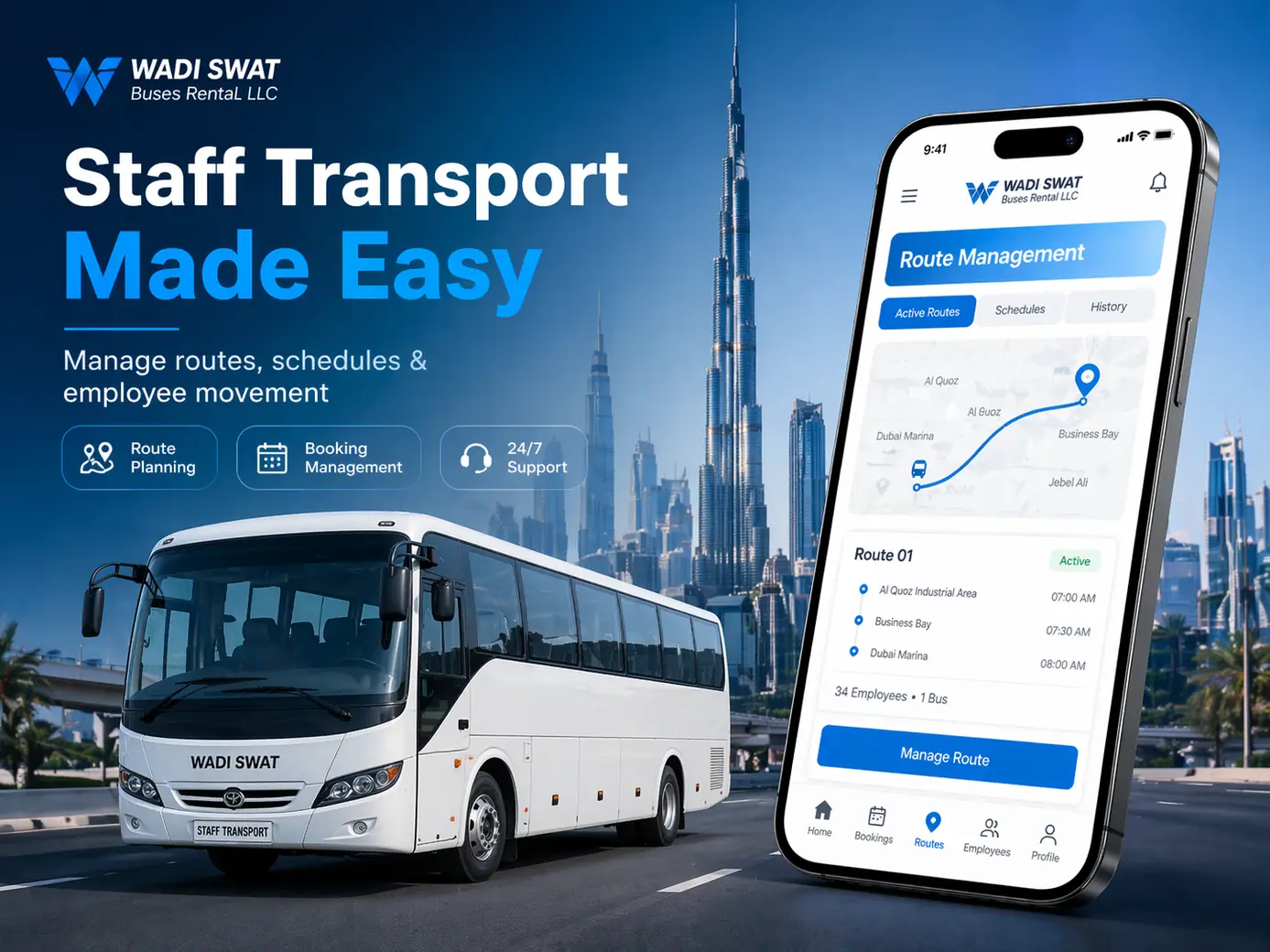
Bus rental Dubai app staff transport dashboard
Capacity and vehicle-fit review
03
Operating step

Daily Operations and Service Control — Facilities Management Staff Transport

This section turns the requirement into a clear operational and commercial decision that can be reviewed before deployment.

FAQ

Driver, Dispatch and Communication — Facilities Management Staff Transport

Daily control of Facilities Management Staff Transport requires one approved operating sheet and a simple communication hierarchy. The sheet should show the route, stop sequence, target times, passenger or roster reference, site contact and escalation number. The driver should not be expected to reconcile conflicting instructions from individual passengers while the duty is in progress.

The customer coordinator should provide attendance updates before the relevant cutoff time and report permanent changes through the agreed channel. Dispatch can then assess the effect on route length, capacity and driver hours. This approach keeps movement between compounds, client buildings, maintenance sites and rotating service schedules manageable even when the organisation has several departments or shift supervisors.

Service records may include departure confirmation, reported delays, route exceptions and approved changes. These records support practical review, but they should not be used to make unsupported claims about perfect punctuality. The objective is controlled communication and a clear basis for improvement.

Duty management — Facilities Management Staff Transport

  • Approved route and duty sheet
  • Attendance-update cutoff
  • Named escalation contacts
  • Record of delays and approved changes

Changes, Delays and Replacement Support — Facilities Management Staff Transport

A route change should be assessed before it is treated as permanent. Adding a pickup point, changing the workplace entrance or moving the reporting time can affect every later stop. The transport team should check the distance, traffic exposure, driver duty and vehicle suitability, then confirm any commercial or operational change in writing.

During a delay, passengers need one reliable update rather than several competing messages. The escalation process should identify who informs the customer, who contacts passengers and when the route is reviewed. Where a breakdown occurs, the priority is safe continuity and a suitable replacement arrangement under the contract, not an unqualified guarantee of an immediate identical vehicle.

Periodic review is especially useful where distributed sites, tools, security access and urgent schedule changes without losing route control. The review can compare the planned and actual stop sequence, identify repeated waiting or access problems and decide whether a timetable, meeting point or capacity adjustment would make the duty more stable.

Escalation process — Facilities Management Staff Transport

  • Assess route changes before approval
  • Single passenger-update channel
  • Safe breakdown escalation
  • Periodic route and capacity review
Duty sheetDocumented and agreed
Attendance updateDocumented and agreed
Route monitoringDocumented and agreed
Escalation and supportDocumented and agreed
04
Operating step

Pricing, Permits and Contract Responsibilities — Facilities Management Staff Transport

This section turns the requirement into a clear operational and commercial decision that can be reviewed before deployment.

Umm Al Quwain

What Affects the Quotation — Facilities Management Staff Transport

A commercial proposal for Facilities Management Staff Transport should be built from the confirmed duty. Distance is only one factor. The quotation may also reflect operating hours, service days, number of stops, waiting, vehicle capacity, tolls, parking, permits, additional trips, contract duration and any customer-specific requirement that changes normal deployment.

The route should be priced in the same form in which it will operate. A one-way morning movement is different from a return duty, a split shift or a vehicle kept available between trips. Where passenger numbers vary, the proposal should explain the capacity assumption and the process for reviewing a material increase.

A written quotation protects both parties by defining inclusions, exclusions, validity and responsibility. It should avoid unsupported public prices or vague all-inclusive promises. Any fuel, driver, accommodation, meals, overtime, toll, parking or permit treatment must be stated according to the approved commercial scope.

Distance, days, hours and extras — Facilities Management Staff Transport

  • Route distance and operating hours
  • Days, stops, waiting and extra trips
  • Capacity and contract duration
  • Tolls, parking, permits and exclusions

Customer and Supplier Responsibilities — Facilities Management Staff Transport

The customer and transport provider should each have clear responsibilities. The customer normally confirms passenger information, safe pickup access, site approvals, parking instructions and changes to the roster or route. The provider confirms the agreed vehicle class, driver deployment, standard operating documents, maintenance responsibilities and the continuity terms written into the contract.

For Facilities Management Staff Transport, site rules may be important because the duty involves movement between compounds, client buildings, maintenance sites and rotating service schedules. Gate passes, staff entrances, security lists or parking authorisation should be raised before the start date. A vehicle arriving without the required access information may be delayed even when the route itself is correctly planned.

Responsibilities for passenger conduct, luggage, prohibited items, damage, cleaning, waiting and unauthorised changes should also be understood. The page provides planning guidance; the signed quotation and contract remain the controlling commercial documents.

Permits, parking and access — Facilities Management Staff Transport

  • Passenger data and safe pickup access
  • Gate, parking and site approvals
  • Vehicle, driver and maintenance scope
  • Conduct, waiting and change responsibilities
DistanceHoursCapacityParkingPermitsExtras
05
Operating step

Onboarding and Booking — Facilities Management Staff Transport

This section turns the requirement into a clear operational and commercial decision that can be reviewed before deployment.

Employee Transportation JAFZA

Documents and Information Required — Facilities Management Staff Transport

A complete enquiry for Facilities Management Staff Transport should include every location as a map pin, the required arrival and departure times, service days, passenger numbers by shift, contract duration, expected waiting, site restrictions and the names of the customer coordinators. A roster or passenger range is useful where attendance changes from day to day.

Corporate and project work may require a purchase order, signed agreement, trade documents, gate-pass data or vehicle and driver details before deployment. These requirements should be identified during onboarding so that commercial approval and site access do not delay the planned start date.

The enquiry should separate confirmed requirements from preferences. For example, capacity, reporting time and access height may be mandatory, while a particular model or interior feature may be preferred but subject to availability. This distinction allows the provider to propose a workable option without weakening the essential duty.

Contract setup — Facilities Management Staff Transport

  • Map pins, stops and shift times
  • Passenger numbers and duration
  • Access, parking and document needs
  • Mandatory requirements versus preferences

Trial Route, Confirmation and Start Date — Facilities Management Staff Transport

A route survey or trial movement may be useful when the access point is unfamiliar, the stop sequence is uncertain or the timing is unusually tight. The purpose is to confirm feasibility, not to create a free operating period. Any trial scope, vehicle and commercial treatment should be agreed before it takes place.

After review, the customer should receive a written summary covering the route, capacity class, schedule, operating days, responsibilities, price basis and proposed start date. Final deployment depends on acceptance, documents, access approval and operational availability. The route should not begin on the basis of scattered messages that have not been consolidated.

Once Facilities Management Staff Transport starts, the first operating days should be monitored for stop timing, access and passenger communication. Small adjustments can be made through the agreed change process. Material additions, extra shifts or route expansion should be reassessed and confirmed in writing.

Deployment steps — Facilities Management Staff Transport

  • Survey or trial where justified
  • Written route and duty confirmation
  • Documents and access before start
  • Controlled review after deployment
1Route details
2Capacity review
3Written quotation
4Documents
5Deployment
Questions to settle before confirmation

Practical answers that help define the route, capacity, responsibilities and commercial scope.

Facilities Management Staff Transport is best suited to facilities-management technicians, cleaners, supervisors and support crews. It works when the customer can define the operating days, pickup areas, required reporting time, return timing and the person responsible for passenger updates. The service should be planned around movement between compounds, client buildings, maintenance sites and rotating service schedules, with a written route and duty scope rather than an informal vehicle request.

A van, minibus or larger staff bus can be considered after the actual passenger count for each trip is confirmed. The choice also depends on access height, turning space, personal items, comfort expectations, stop density and journey length. The written quotation should confirm the capacity class and service duty; a specific model should not be guaranteed before availability and route feasibility are reviewed.

Provide map pins for every pickup and drop point, passenger numbers by shift, required arrival and departure times, service days, return arrangements, waiting requirements, contract duration, site-access rules and the nominated coordinator. Also explain any expected variation in attendance, extra trips or roster changes so the route and vehicle requirement can be assessed accurately.

The price is affected by distance, operating hours, number of service days, vehicle capacity, stop density, waiting time, tolls, parking, permits, access restrictions, additional trips and contract duration. The quotation should state inclusions, exclusions and customer responsibilities in writing. A generic public rate is not a substitute for a route-based commercial review.

Permits, parking permissions or access approvals may be required where the route enters free zones, airports, industrial gates, secured buildings, malls, hospitals or managed properties. The customer should identify the site rules and approved pickup area, while the transport provider confirms the vehicle and driver documents that can be supplied under the agreed scope.

Changes should be sent through the agreed contact chain and reviewed before they become part of the permanent duty. A new stop, passenger increase or timing change can affect distance, driver hours and vehicle capacity. For delay or breakdown, the service-continuity process should cover escalation, passenger communication and a suitable replacement arrangement subject to the written contract and operational availability.

Prepare a staff transport enquiry that can be assessed properly

Send pickup points, shift times, passenger numbers, operating days and access conditions for a written review.

Airport Staff Transport