
How To Reduce Delays In Daily Pickup And Drop Routes
How to Reduce Delays in Daily Pickup and Drop Routes for Better Transport Planning
Get a clearer answer to how to reduce delays in daily pickup and drop routes before you choose a vehicle, compare pricing, or move into a live quotation.
This article is written for UAE buyers who need a practical decision, not generic advice. Use it to understand fit, route logic, service type, and the best next page to visit.
How to Reduce Delays in Daily Pickup and Drop Routes | Blog
Before you commit to a booking, it helps to understand the planning issue that is actually driving the decision. This article explains how to reduce delays in daily pickup and drop routes in a way that helps you decide what fits your route, passenger profile, timing, and next commercial step.
Buyers often reach this point when they need a more practical answer than a generic brochure or simple price list can provide. If you are working through how to reduce delays in daily pickup and drop routes, this guide helps you compare the practical implications before you choose a service page, fleet category, pricing route, or quotation path.
Why how to reduce delays in daily pickup and drop routes matters
This topic deserves attention because: A buyer is facing late arrivals, inconsistent pickup timing, or route complaints In the UAE, a small misunderstanding at the decision stage can lead to the wrong vehicle size, the wrong service model, or a quote that does not match the real requirement. This article helps you understand the decision before that happens.
What this article helps you solve
The planning problem often shows up when the planning question feels simple at first but becomes harder once real route details appear. This guide helps you work through fit, cost drivers, access conditions, service scope, and the commercial next step without relying on generic advice.
How to Reduce Delays in Daily Pickup and Drop Routes: the practical answer
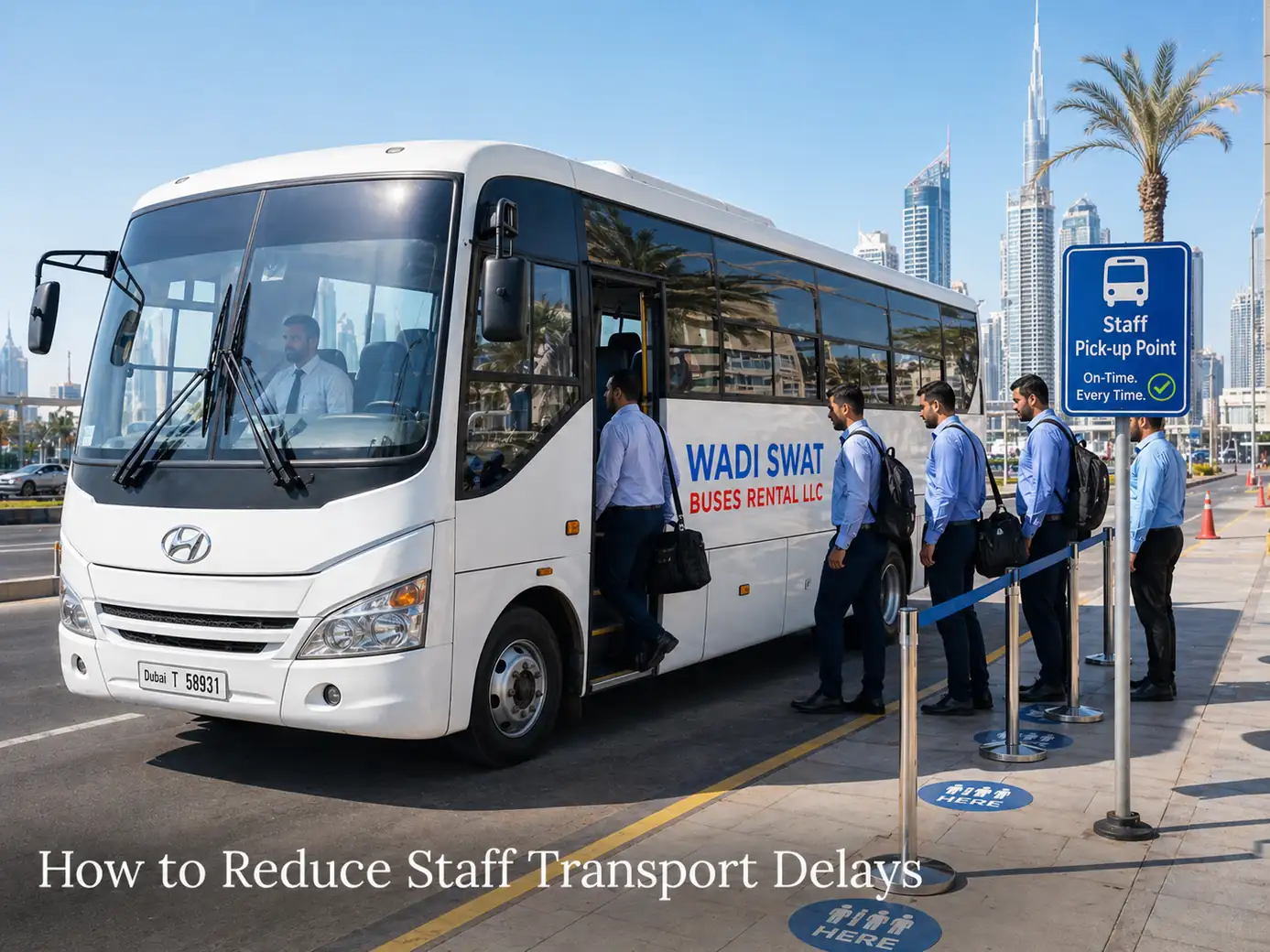
Daily pickup and drop delays usually come from route discipline rather than vehicle availability alone. Too many loosely defined stops, inconsistent boarding timing, poor sequencing, unrealistic journey assumptions, and unplanned waiting points all create delay patterns.
How to compare the right options
The best route setups use fixed stop logic, realistic time windows, and clearly managed boarding points. Once the route is stable, vehicle size and contract structure become easier to optimise without creating new delay points.
Common mistakes buyers make here
Many teams try to solve delays by changing vehicles first. In reality, the issue may be stop density, passenger readiness, or route sequencing. Another mistake is designing a route once and then never reviewing it as staff distribution changes.
How this plays out in Dubai and the UAE
In the UAE, transport planning is shaped by airport timing, business-district access, hotel operations, labor accommodation patterns, industrial movement windows, intercity spread, and building-entry rules. That means the right answer has to fit local operating conditions, not just a general transport assumption.
What you should do next
Once you understand the difference, you can take a more accurate next step. If you still need buying clarity, move to the guides section. If your requirement already points to a service type, go to the matching service page. If the main decision is vehicle fit, continue to fleet categories. If price is your main question, review Dubai bus rental rates. If the route and scope are already clear, request a quote.
Use the related pages below to continue with the most useful commercial next step.
Continue to staff transport services if your requirement involves recurring employee movement and route reliability. Open the pick and drop service page if your concern is daily movement, stop logic, and recurring punctuality. Use the fleet categories page if the main question is still vehicle size, seat range, or category fit. Use Bus Rental UAE for a broader view of service scope before narrowing the decision further. Move to the quotation page once your route, timing, and service scope are clear enough to request live pricing.
Questions buyers often ask about how to reduce delays in daily pickup and drop routes
Who is this article most useful for?
It is most useful for buyers who are still comparing options and want a clearer answer before they choose a service page, fleet category, pricing route, or quotation path.
Will this article help me request a better quote?
Yes. By clarifying the decision first, it becomes easier to define the route, vehicle fit, service scope, and information a supplier needs for an accurate response.
What should I do after reading this article?
Move to the most relevant service, fleet, pricing, or quote page once the route, service model, and decision point are clear enough to take the next step.
Use the article, then move to the right next page
Read this article to clarify the decision, compare the options that matter, and then continue to the service, fleet, pricing, or quotation page that best matches your requirement.