Musaffah • Industrial workforce staff movement

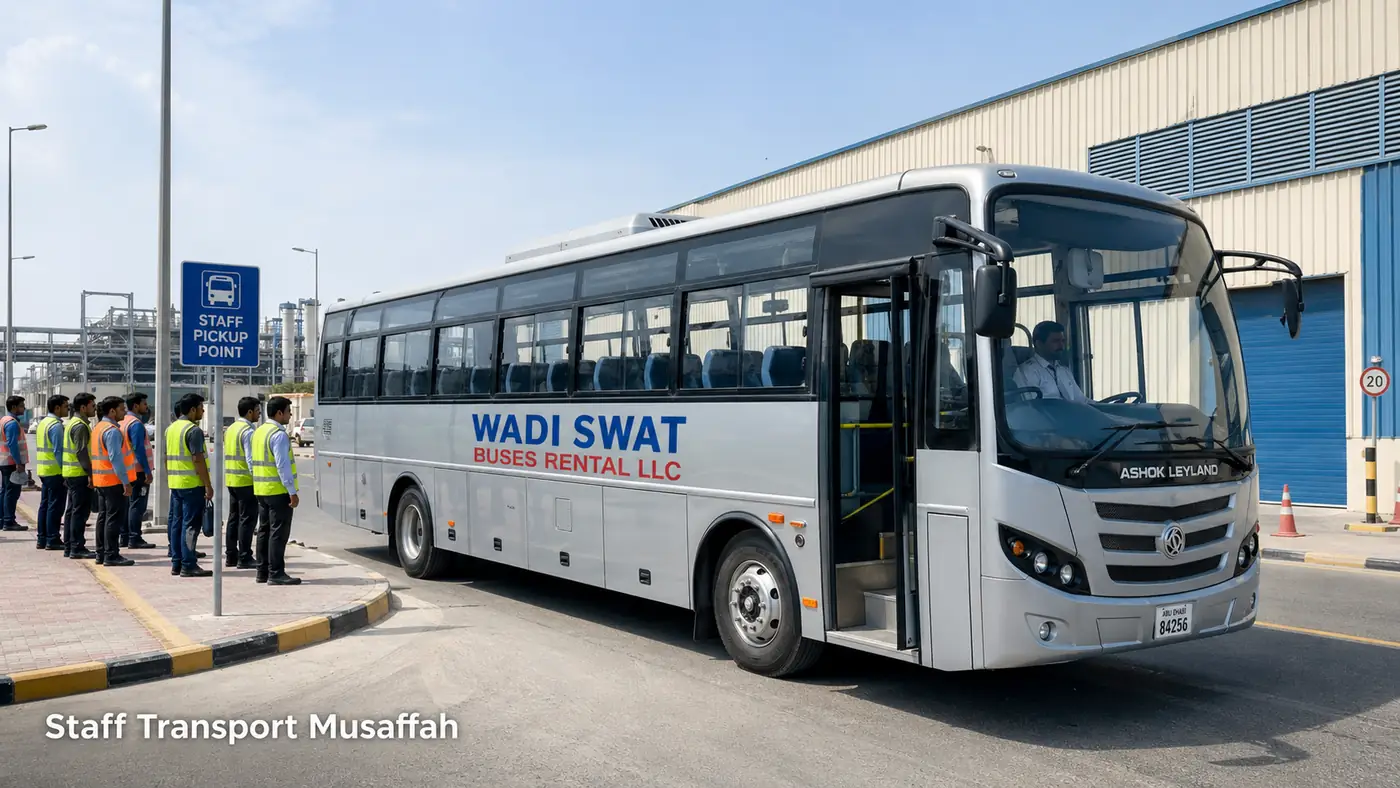
Staff Transport Musaffah

Staff transport Musaffah is built for employers who need structured daily movement into industrial and mixed-use work areas where shift timing and site access shape the route.

Operational Fit

Musaffah staff timing matched to industrial access

Focus on industrial shift schedules, staff camp routes and heavy-duty route logic.

Buyer Relevance

Vehicle capacity planned around site-linked staff demand

HR teams, administration teams, office managers, facilities teams, operations managers, procurement teams and employers running repeat commuter routes

Local Logic

Daily continuity for repeated Musaffah movement

The Musaffah market rewards route clustering, stronger timetable control and vehicle matching that suits both access conditions and employee comfort.

Group Size

10-500+ passengers across one or multiple recurring routes

Recurring transport fit based on real seat planning and daily route structure.

Route Type

Fixed-route, multi-stop, intercity, feeder and last-mile office transport

Planned around pickup flow, multi-stop movement and access realities.

Timing Type

Peak-hour, split-shift, multi-shift, weekday recurring and weekend-optional

Suitable for peak starts, staggered arrivals and recurring route timing.

Commercial Intent

Comparison + Vendor Selection

Musaffah should stand alone because it serves an industrial-heavy Abu Dhabi zone where staff movement often depends on shift structure, site access, and route discipline rather than standard office commuting.

Booking Model

Monthly contract, quarterly contract, annual contract or recurring service agreement

Reliable contract-based staff transport with punctual recurring operations, route-led planning and ongoing service coordination

Best For

Daily employee pickup and drop

Musaffah generates recurring commuter demand from offices, business parks, mixed-use districts and employers moving teams on repeat schedules.

Best For

Shift-based office or site movement

Route planning in Musaffah has to account for peak windows, access controls, curb limitations, parking rules and realistic arrival buffers.

Best For

Intercity staff routes connected to Musaffah

Pickup design usually works best through grouped stops, practical assembly points and timed drops that reduce delay at busy work locations.

Not Ideal For

one-off VIP rides, leisure outings, airport-only bookings and very small ad hoc transfers

Staff Transport Musaffah, Labor Transport Musaffah or Worker Transportation Abu Dhabi may be more relevant when the requirement leans more toward industrial shifts, site-linked movement or worker logistics.

Overview

Musaffah Staff Transport with More Industrial Awareness

Musaffah needs a staff transport page that understands industrial timing, mixed-use work patterns and access-sensitive daily movement. Buyers in this area usually want clearer guidance on route control before they commit to a long-term transport setup.

Service Fit

Which Buyers Usually Need This

Service users often include HR teams, site-linked administrators, operations managers, facilities teams and employers moving staff into industrial or mixed-use work areas on a repeated basis.

Use Cases

Where the Service Usually Creates Value

This setup performs well for daily employee pickup and drop, shift-based movement, feeder routes and recurring staff transport where access conditions and time control matter as much as seat count.

Not Ideal Fit

When Another Transport Category Fits Better

A more specific service page is usually better if the need is premium guest movement, a one-time airport transfer or very small non-recurring travel.

Route Logic

How Staff Routes in Musaffah Are Usually Structured

Planning typically begins with route mapping, pickup clustering, shift logic, site access and the most practical way to balance travel time with dependable daily loading and drop-off.

Scheduling

Schedule Design for Repeated Industrial-Area Movement

Some clients need regular office timing, while others need layered shifts, staggered departures or overtime coverage. The schedule has to reflect how the workforce actually operates, not how a generic template imagines it.

Vehicle Planning

Matching the Fleet to Musaffah Route Reality

The right fleet depends on corridor length, stop pattern, capacity demand, access conditions and whether the service is tied more closely to industrial or office-style movement.

Toyota Hiace 12 Seater Passenger VanToyota Coaster 30 Seater Mini BusAshok Leyland 50 Seater Staff Transport BusLuxury tourism coaches, oversized premium buses and small casual vehicles that do not suit structured route demand
Commercial Logic

How Pricing Usually Forms in Musaffah

Pricing is driven by route behavior in practice. Distance, stop count, timing pattern, seat demand and how regularly the service runs are all part of the commercial picture.

Route distance and travel durationPassenger count and vehicle sizeStop density and access complexityService frequency and contract term
Why Wadi Swat

Why Wadi Swat Fits Musaffah Staff Movement

Providers become valuable here when they make recurring movement easier to operate day after day. Buyers usually care most about planning discipline, route stability and the ability to respond cleanly when operating conditions change.

Service Confidence

Operational Standards and Daily Dependability

Reliability here comes from process, not promises. The service becomes easier to manage when route planning, communication, driver standards and day-to-day continuity are handled in a commercially clear way.

Compliance

RTA-Aware Planning

Commercially aware route planning with access realities, load suitability and practical operating discipline

Driver Standards

Service Discipline

Professional driver allocation, punctual reporting, route familiarity and service discipline suited to recurring transport

Safety

Operational Safety

Safe boarding, disciplined routing, sensible stop design and practical loading-point control throughout the daily operation

Reliability

Daily Continuity

Consistent scheduling, route stability, responsive coordination and continuity planning for repeated transport demand

Contracts

Recurring Booking Logic

Flexible recurring booking structure with room for route review, capacity changes and timetable adjustment as demand evolves

Location Logic

What Buyers Need to Consider in Musaffah

Musaffah buyers usually need more than a general staff transport overview. They often want to understand how industrial timing, site-entry conditions, worker concentration and route discipline affect repeated daily movement, especially where office-style assumptions do not match the operating environment.

Demand Pattern

Local Demand

Musaffah generates recurring commuter demand from offices, business parks, mixed-use districts and employers moving teams on repeat schedules.

Traffic Reality

Access and Timing

Route planning in Musaffah has to account for peak windows, access controls, curb limitations, parking rules and realistic arrival buffers.

Pickup Reality

Staging Logic

Pickup design usually works best through grouped stops, practical assembly points and timed drops that reduce delay at busy work locations.

Route Advantage

Location Strength

The Musaffah market rewards route clustering, stronger timetable control and vehicle matching that suits both access conditions and employee comfort.

Frequently Asked Questions

Staff Transport Musaffah FAQs

For Musaffah, the most common questions usually relate to industrial timing, site-linked routes and whether recurring staff movement can stay operationally stable.

How do you plan staff routes for Musaffah employers with industrial timing needs?

We normally build around shift times, industrial road reality, worker concentration and the most practical entry points for the destination.

What vehicle categories usually fit Musaffah staff movement best?

The right category depends on route scale, but industrial-linked staff movement often requires reliable, capacity-appropriate vehicles that can handle repeated daily use.

Can Musaffah staff transport include city pickups and site-linked movement together?

Yes. One plan can connect residential corridors with work zones if timing buffers and site access are designed carefully.

What buyer inputs are needed to shape a Musaffah transport proposal?

Headcount, pickup origins, worksite location, reporting times, shift frequency and any security or access conditions are the main starting points.

Is recurring staff movement the main focus of this Musaffah page?

Yes. It is intended for repeated commuter and workforce transport rather than casual or premium one-time use.

What improves daily continuity for Musaffah staff transport?

Continuity is strongest when routes are disciplined, shift logic is realistic and the service can adapt as site or workforce patterns evolve.

Next Step

Plan Staff Transport Musaffah With a Route That Actually Works

For Musaffah staff routes, the most helpful next step is to share the worksite, shift timing and pickup pattern so the transport plan can be shaped around real operating conditions.