
Construction Staff Transport
Construction Staff Transport in the UAE
Built around project offices, supervisors, engineers, admin staff, reporting windows and site-access commuting instead of camp-to-site labor transport.
This page helps a buyer compare workforce profile, shift timing, route practicality, fleet fit and contract model before requesting a quotation.
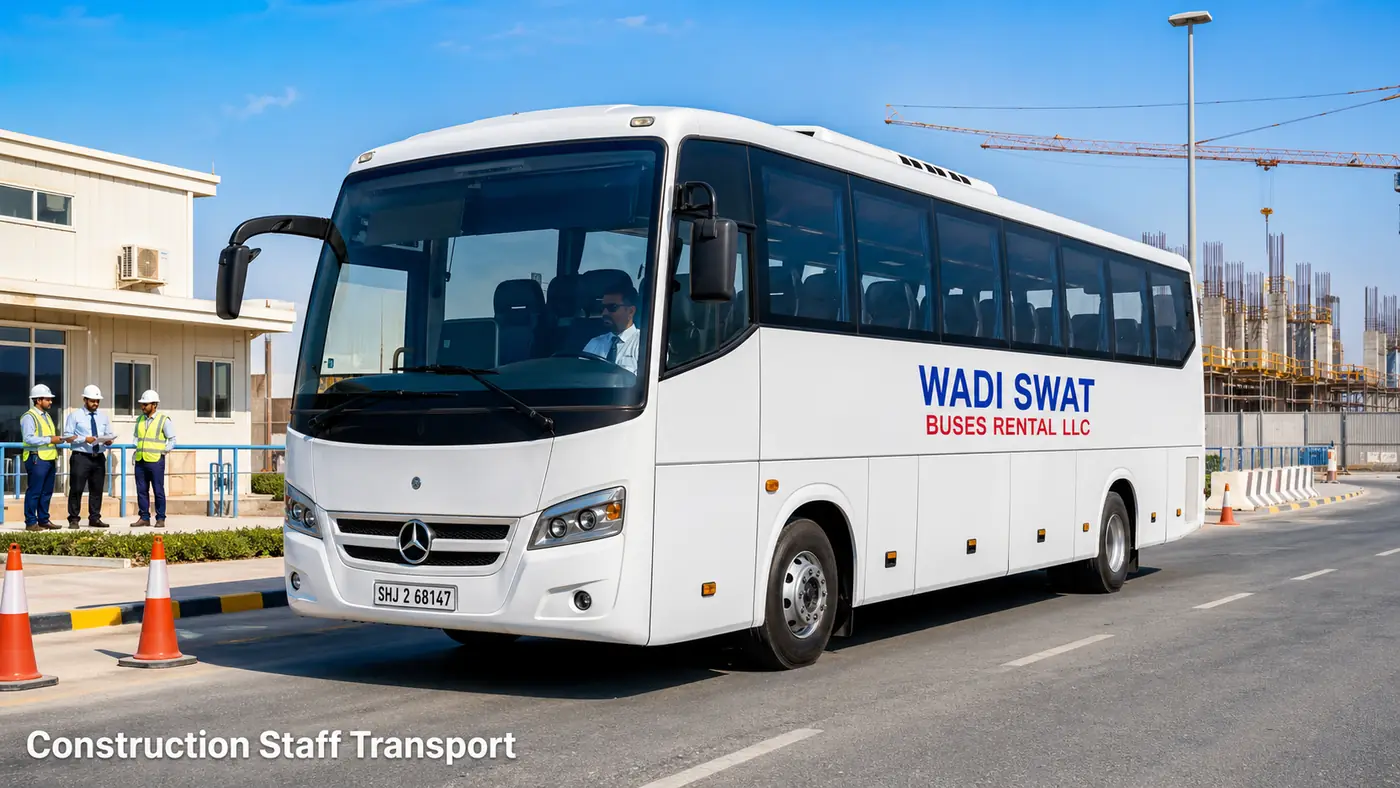
Construction Staff Transport
Construction Staff Transport explains how construction staff transport works in practice across UAE operating conditions, with stronger guidance on route fit, workforce pattern and contract structure.
The purpose of this page is to help procurement, operations and admin teams evaluate a real transport fit for the sector. Built around project offices, supervisors, engineers, admin staff, reporting windows and site-access commuting instead of camp-to-site labor transport. It connects the sector problem to the right service family, route logic and fleet decision instead of treating every industry like a generic bus booking.
Why this industry needs its own planning approach
Built around project offices, supervisors, engineers, admin staff, reporting windows and site-access commuting instead of camp-to-site labor transport. The timing, workforce profile, access environment and procurement logic here are not the same as a generic staff route or a one-off rental enquiry.
Who this page suits
This page is aimed at operations teams, HR and admin managers, procurement leads, project coordinators and commercial decision-makers who need a buyer-first view of construction staff transport before asking for pricing.
Core transport needs in this industry
Typical needs include moving supervisors, engineers, survey teams, project admins, hse staff, office support and contractor management teams, protecting reporting discipline across early-start site attendance, standard daytime office shifts, split reporting windows and occasional weekend coverage, and making sure origin patterns like company accommodation, residential clusters, metro-linked pickup points, project offices and intercity staff catchments connect cleanly to construction sites, site offices, project compounds, utility corridors and contractor yards.
Recurring contract transport with moderate passenger density but strict punctuality and repeatability
Shift and route planning considerations
Route design should account for early-start site attendance, standard daytime office shifts, split reporting windows and occasional weekend coverage, the operating geography across dubai south, jebel ali, dubai investment park, abu dhabi projects, sharjah industrial extensions and growth corridors, and restrictions such as site induction timing, gate permissions, ppe-related dispatch windows, controlled access and no-late-arrival pressure. That is what keeps the service practical rather than theoretical.
Dubai South, Jebel Ali, Dubai Investment Park, Abu Dhabi projects, Sharjah industrial extensions and growth corridors
Fleet and vehicle fit for this sector
The strongest default fit is usually executive vans, 20-34 seater minibuses and 35-seater staff shuttles. A secondary option is 50-seater staff buses for larger multi-stop supervisor or admin routes when headcount, comfort expectations or route shape shift the requirement.
Executive vans, 20-34 seater minibuses and 35-seater staff shuttles
50-seater staff buses for larger multi-stop supervisor or admin routes
Compliance and operations fit
Use only verified wording around licensing, maintenance, driver standards and operating controls. Operationally, buyers should review access control, timing tolerance, boarding order, service continuity and route revision risk before contract sign-off.
Site induction timing, gate permissions, PPE-related dispatch windows, controlled access and no-late-arrival pressure
Booking model and quotation flow
The most practical way to price this sector is to confirm workforce type, shift pattern, route geography, access limits and contract term first. That makes it easier to match the service against monthly staff contracts, project-period agreements and phased mobilization support.
Share workforce type, route origin, destination environment, shift pattern, passenger count, service frequency, access restrictions and contract term so the right sector transport plan can be reviewed properly.
Project office teams and site management staff
Large-scale camp-to-site labor movement
Engineer, supervisor and admin commuting
Luxury guest transport with no workforce or site-access angle
Structured repeat routes linked to project reporting times
Emphasise punctuality, continuity, route practicality and commercial clarity rather than vague quality claims.
Explore relevant service, fleet and industry pages
Move to staff transport services for broader employee route planning, compare infrastructure project transport when the project is dispersed across multiple sites, and review the fleet overview before finalising vehicle size.
Questions buyers commonly ask about construction staff transport
What information should be shared for this type of transport request?
The most useful starting details are passenger count, workforce type, pickup origin, destination environment, shift pattern, service days, route geography, access restrictions and expected contract term.
Is this page meant for one-time bookings or recurring contracts?
The page is mainly written for recurring and commercially planned movement, although some sectors may also need project-based or surge support depending on timing and scale.
How is this page different from a general staff transport page?
It adds the sector-specific operating reality: who is moving, when they report, how access works, what route pressure exists and which fleet types are more practical.
Can the route be adjusted if headcount or timing changes?
In many cases, yes. Final route flexibility depends on passenger count, operating environment, contract structure and vehicle availability.
What usually affects the final quotation most?
Passenger volume, route length, shift timing, number of trips, waiting time, access complexity, fleet type and whether the service is one-off, monthly or contract-based all shape the final price.
Request a Quote for Construction Staff Transport
Share your workforce profile, shift pattern, route geography and contract need so the right plan for construction staff transport can be reviewed quickly.
Fast quote responses are usually available during working hours, with final planning subject to route review, access conditions, headcount and fleet availability.
Share workforce type, route origin, destination environment, shift pattern, passenger count, service frequency, access restrictions and contract term so the right sector transport plan can be reviewed properly.
Booking model: Monthly staff contracts, project-period agreements and phased mobilization support
Route complexity: Medium, with multiple project phases, changing pickup rosters and site access rules
Operational note: Use only verified wording around licensing, maintenance, driver standards and operating controls.
Speak to our transport planning team
Use the numbers, WhatsApp, email, or the nearest office card below to move from planning into a live quotation discussion.
971543886682
971505554623
971543886682
mukhtar@swattransport.ae
Al Barsha First , Near MOE, Dubai – UAE
Showroom No3 – S120 University City Rd – opposite Homecenter – Industrial Area 4 – Industrial Area – Sharjah