Employee Transportation Solutions
Employee Transportation Solutions for Smarter Workforce Commuting
Useful for employers reviewing workforce mobility needs, route practicality, comfort balance, and service continuity before choosing the right employee-transport model.
When employee experience and attendance matter as much as the vehicle, buyers need a broader mobility view. This page helps employers compare commute support, route design, fleet fit, and recurring transport options.
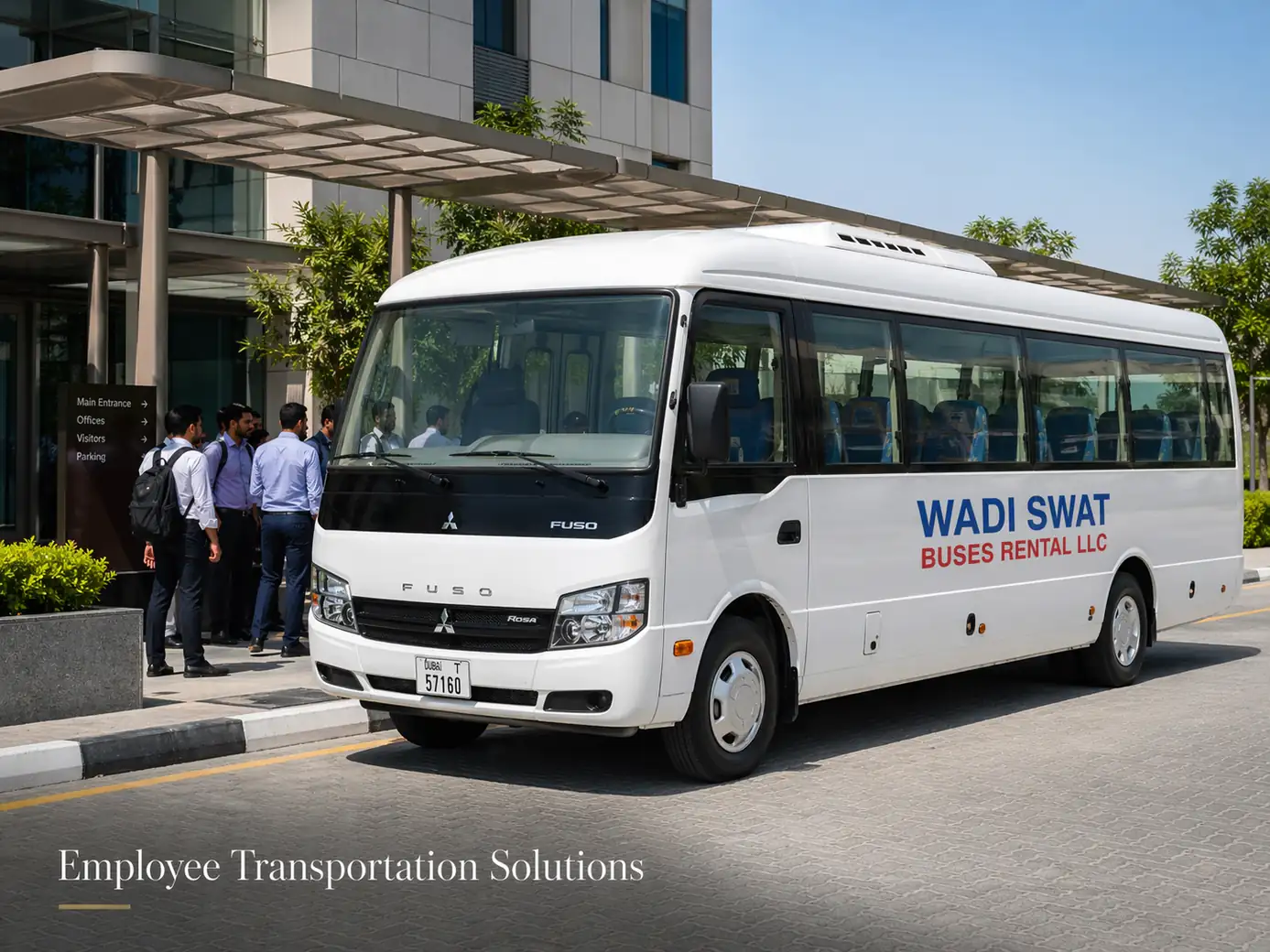
Focused on commute support and workforce stability
Get an employee transportation quote based on workforce distribution and route needs
Useful for HR teams and workforce-mobility planning
Review commute comfort, productivity angle, and route practicality before booking
Supports recurring route practicality with a better comfort balance
Some buyers want a more employee-experience-focused framing and worry about punctuality, commute burden, and whether transport will support attendance and retention.
Employee commute support
HR-led workforce mobility planning
Companies linking transport to attendance and employee experience
HR and business buyers comparing employee mobility outcomes, route practicality, and service quality
Provides a more employee-experience-focused angle for employers who want workforce mobility framed beyond pure transport operations.
Useful when the buyer thinks in employee wellbeing, retention, and commute support terms rather than broad staff transport language
Why Employee Transportation Solutions Matter to Workforce Stability
Employee transportation often needs to be looked at as a workforce-mobility issue rather than as a single-route problem. Attendance support, employee experience, service continuity, and route practicality all come into that decision, and this page helps frame it properly.
For employers looking at workforce mobility more broadly, this page helps compare route practicality, attendance support, and service continuity before a specific model is selected.
Who Employee Transportation Solutions Are Best Suited For
Employers focused on staff mobility outcomes rather than only route mechanics will find this page more relevant. HR teams, employee-experience leads, and operations managers looking at attendance support, commuter comfort, and wider workforce movement are the intended audience. You can also review our Bus Rental UAE page first.
Employee Mobility Use Cases
This page works best where employee commute support, HR-led mobility planning, attendance-focused transport thinking, and staff experience all need to be considered together.
When a More Route-Led Service Fits Better
Industrial labor routes, pure VIP journeys, or one-off leisure transport are outside the strongest use of this page. Buyers with those requirements may be better served by Staff Transport Services or Corporate Shuttle Services.
How Employee Mobility Is Usually Planned
Office commutes, feeder services, multi-stop employee pickup, and cross-city staff movement usually shape this service. The better model is the one that supports attendance and employee practicality instead of simply moving people from stop to stop.
How Workforce-Timing Needs Show Up Here
Employee transportation often has to work around daily starts, shift overlaps, staggered reporting, and attendance-sensitive schedules. The service improves once the timing model reflects how employees actually travel, not how the route looks on paper.
What Fleet Makes Sense for Employee Transportation Solutions
Fleet fit here depends on workforce size, commute style, comfort balance, and how wide the route network needs to be. Buyers often compare the Toyota Hiace 12 Seater Passenger Van, Toyota Coaster 30 Seater Mini Bus, and Ashok Leyland 50 Seater Staff Transport Bus.
What Drives Pricing in Employee Transportation Solutions
Employee transportation pricing usually depends on workforce volume, commute pattern, route repetition, service hours, comfort expectations, fleet mix, and whether the employer needs one corridor or several linked routes. The broader the workforce-mobility need, the more route design affects cost.
Toyota Hiace 12 Seater Passenger Van
A strong fit where route structure and passenger count match this service requirement.
Toyota Coaster 30 Seater Mini Bus
A useful option when the route needs more passenger room or broader operating flexibility.
Ashok Leyland 50 Seater Staff Transport Bus
Well suited where the service line needs larger-capacity movement and recurring route practicality.
Why Workforce Mobility Needs Broader Thinking
Employee transportation is often compared on attendance support, commuter practicality, service continuity, and how well the setup matches workforce experience rather than only route mechanics. Buyers usually want a provider that understands that wider mobility picture.
Trust, Service Standards and Route Reliability
The service should be positioned around practical route planning, suitable fleet allocation, disciplined drivers, clear communication, and service support that matches real operating conditions in the UAE. Trust grows when the service is explained in practical terms instead of relying on broad transport claims.
RTA-Conscious Planning
Commercial transport planning should reflect route suitability, operating practicality, and service expectations consistent with UAE transport standards.
Driver Standard
Professional driver allocation, punctual reporting, and route-aware service discipline.
Operational Safety
Safe boarding, sensible route design, and suitability between service type and vehicle choice.
Service Continuity
Stable scheduling, clear communication, and practical execution for the agreed route model.
Recurring Booking and Contract Structure
Where the service is recurring, stronger continuity usually comes from a clearly defined route brief, practical service scope, and a booking structure that fits how often the movement repeats.
Employee Transportation Solutions: UAE Route and Buyer Realities
Employee transportation decisions usually reflect how people actually travel rather than how a route looks on paper. Attendance support, route practicality, and ease of management matter most where employers want workforce movement to feel stable instead of improvised.
Traffic and access reality: Commute burden, residential distribution, office arrival expectations, and route practicality influence the service
Pickup and staging logic: Often organized around employee clusters, attendance needs, and commute convenience
How to Plan and Request Employee Transportation Solutions
The fastest way to get an accurate quote is to share your passenger count, route or pickup pattern, destination, service timing, preferred vehicle size, and whether the requirement is one-time or recurring. Once the route logic is clear, the service can be matched to the right fleet, timing model, and pricing structure much more accurately.
Explore the Most Relevant Supporting Pages
This service page works best when the quote request, fleet choice and supporting information are easy to review together.
Frequently Asked Questions About Employee Transportation Solutions
These answers cover the common buyer questions that arise when comparing employee transportation solutions and deciding whether this service is the right fit.
What is the best way to plan employee transportation solutions?
The best approach is to begin with the real route brief: group size, pickup and drop points, timing, service purpose, and any comfort or luggage requirements. Once those details are clear, the right service structure and fleet fit are much easier to confirm.
What vehicle types are commonly used for employee transportation solutions?
For employee transportation solutions, buyers usually compare the Toyota Hiace 12 Seater Passenger Van, Toyota Coaster 30 Seater Mini Bus, and Ashok Leyland 50 Seater Staff Transport Bus depending on workforce size, comfort needs, and route type.
What information is needed for an accurate quote?
A useful quote usually needs the passenger count, pickup and drop locations, expected timing, trip type, service frequency, preferred vehicle class, and any access or waiting requirements.
Is employee transportation solutions suitable for recurring bookings?
It can be, depending on the service type and how regularly the route runs. If the requirement is ongoing rather than one-time, sharing the schedule and expected route pattern early usually leads to a better commercial setup.
How is this different from Staff Transport Services?
Employee Transportation Solutions is broader and suits employers looking at workforce mobility from a wider planning perspective. Staff Transport Services is more route-driven and becomes the better fit once recurring employee pickup and drop is already clearly defined.
What is the safest way to choose the right employee transportation solutions option?
Share the full requirement first rather than only a keyword. Route pattern, timing, passenger profile, luggage or equipment needs, and service frequency usually determine whether this page is the right fit or whether a related service or different fleet class would be a better choice.
Need Help Planning Employee Transportation Solutions?
Let us know your employee count, reporting times, route pattern, and mobility needs so the right employee-transportation model can be recommended before you commit.