Bus Rental Dubai
Need a Toyota Coaster for rent in Dubai for staff transport, airport guests, an exhibition, a hotel group or a private tour? Our Coaster bus rental in Dubai service offers 23-seater and 30-seater options with a professional driver and a route agreed before dispatch. Send the actual passenger number, luggage count, pickup locations, destination, reporting time, waiting period and return plan. Those details matter because a bus may have enough seats yet still be unsuitable for a luggage-heavy airport movement, repeated boarding or a long duty.
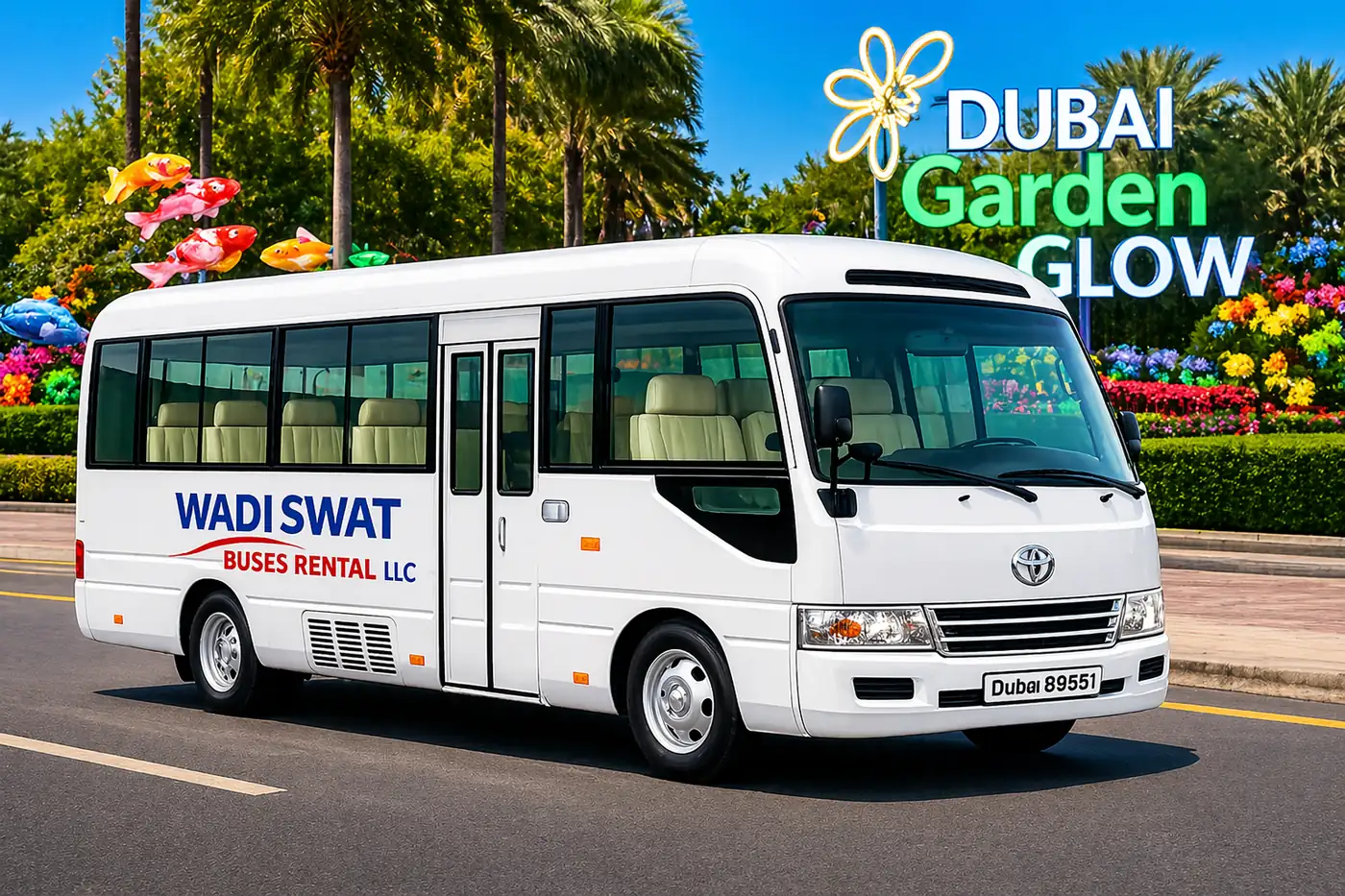
Coaster Bus Routes for Dubai Airports, Offices and Events
A Coaster sits comfortably between a passenger van and a full-size coach. It works particularly well when one medium-size group must travel together, yet the pickup location, luggage and duty hours do not justify a larger bus. The four examples below show typical uses; the final vehicle is chosen from the complete route brief.
See common Dubai route patterns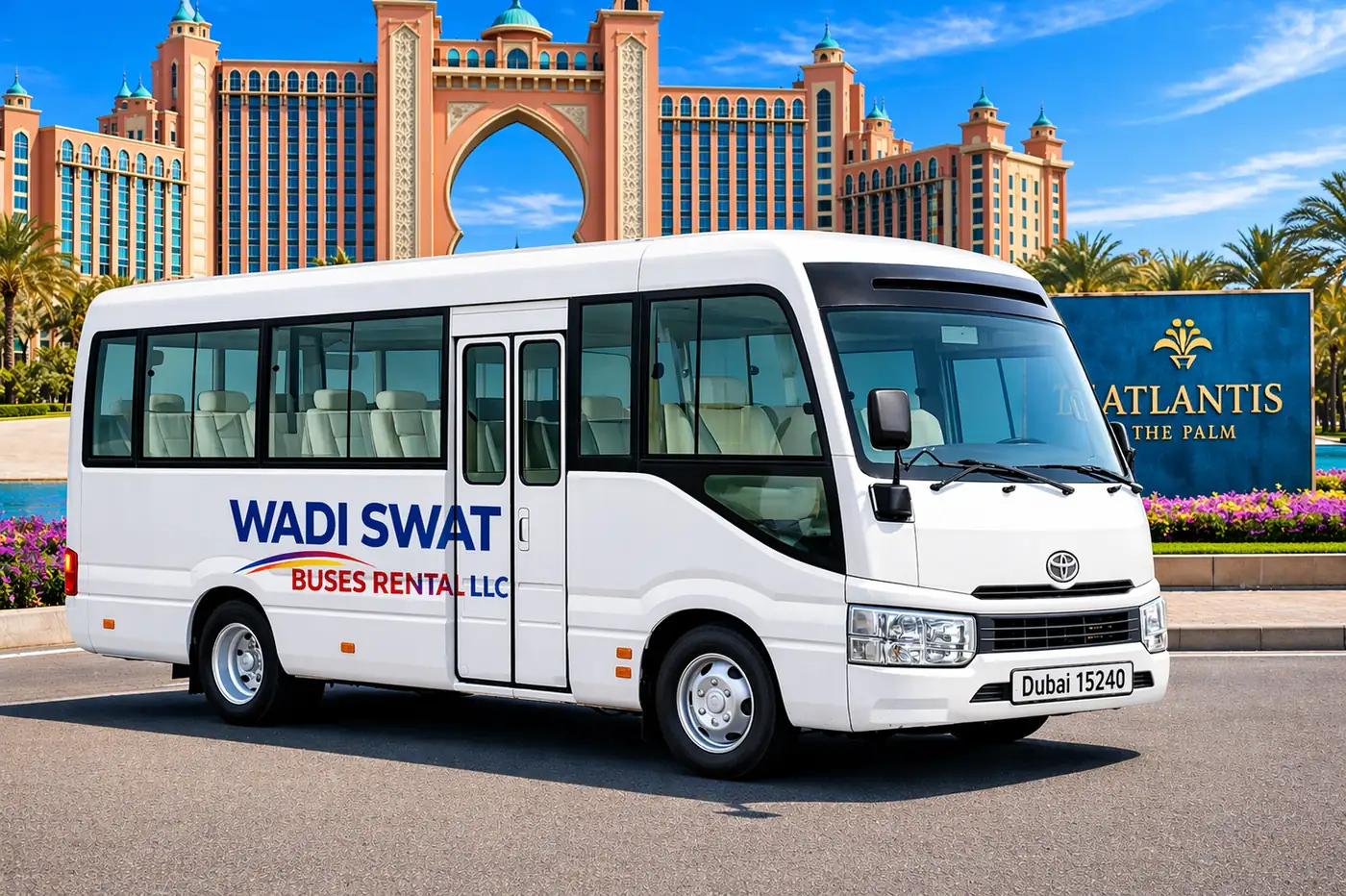
Airport Arrivals and Hotel Transfers
DXB and Al Maktoum Airport jobs begin with a simple calculation: people plus luggage. A 23-seater often suits a smaller party with several suitcases, while a 30-seater can handle more passengers when baggage remains light enough for the offered layout.
Office Teams in Dubai Business Districts
Business Bay, DIFC, Internet City and Media City services depend on punctual reporting and realistic collection points. A single Coaster keeps the team together and avoids splitting passengers between two vans, provided tower access and the evening return are planned properly.
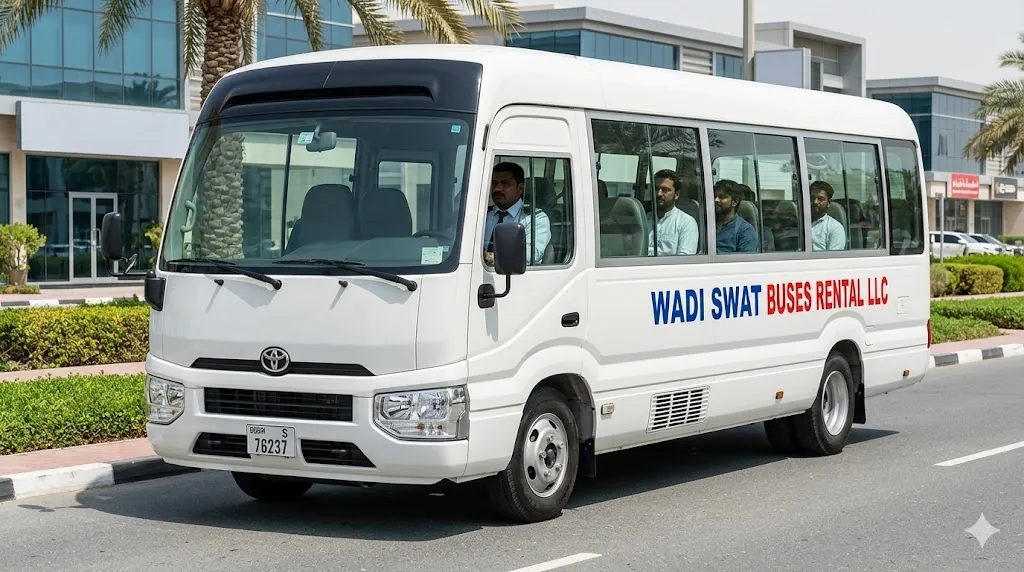
Jebel Ali, DIP and Dubai South Staff Routes
Industrial and free-zone routes usually involve early starts, shift changes and more than one residential pickup. Share the required worksite arrival time, not only the first pickup time, so the stop sequence can be built backwards and the correct seating class can be reserved.
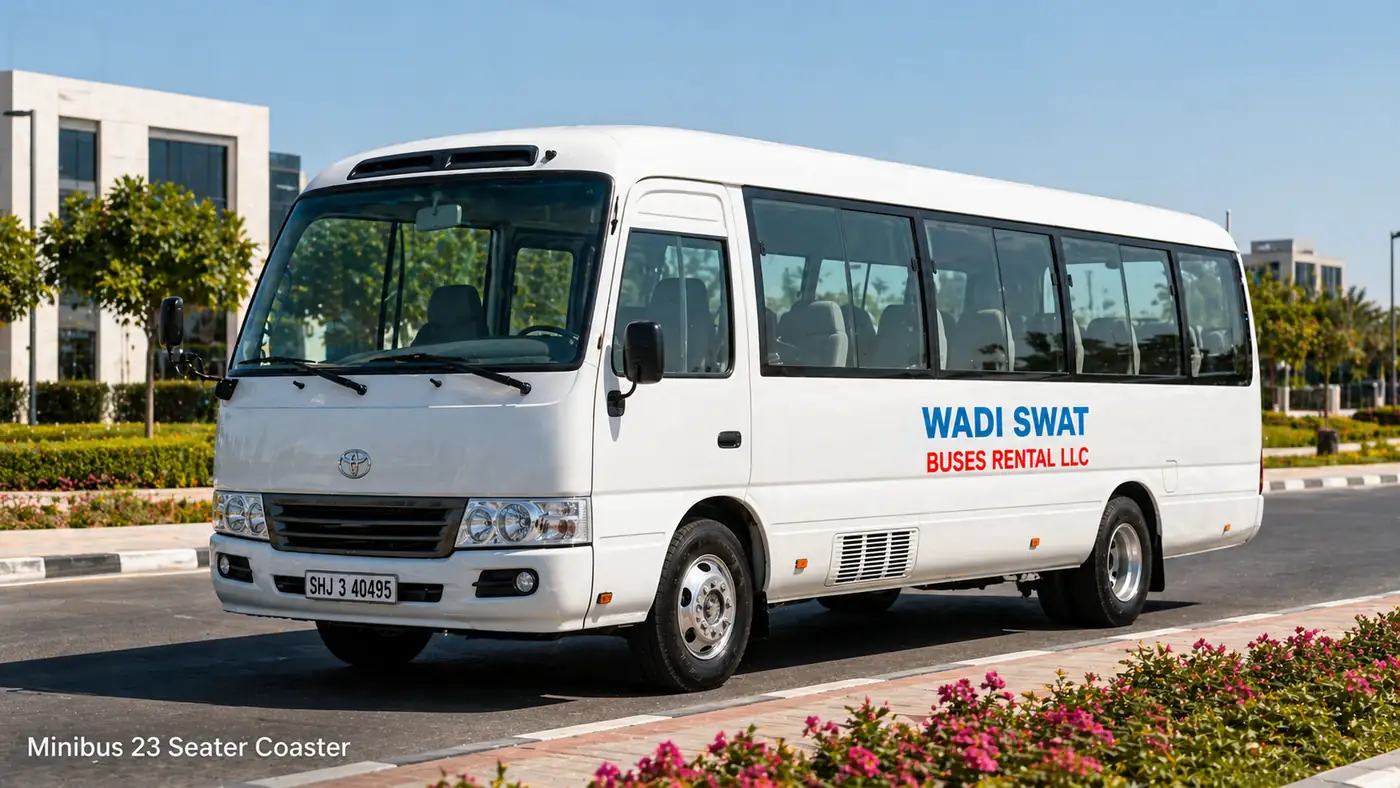
Dubai Marina, JBR and Venue Transfers
Hotel guests, wedding parties and event teams around Marina, JBR and Palm Jumeirah often travel in timed waves. The operator needs the hotel entrance, venue gate, finish time and return arrangement before confirming where the bus can wait and how long the duty will run.
Why a Coaster Bus Suits Medium-Size Groups
A group that has outgrown a Hiace or Urvan does not automatically need a large coach. A Toyota Coaster keeps passengers in one vehicle, gives the driver one route to manage and remains easier to position at many hotels, offices and event locations. It is a sensible choice for company teams, airport parties, guests and private groups in the middle-capacity range. Related planning: Bus Rental Al Nahda Dubai.
Seat count is only one part of the decision. The actual interior may include folding seats, different aisle widths and limited baggage areas. Journey length, repeated boarding and passenger comfort also matter. We therefore match the offered bus to the people, bags and route rather than treating “23-seater” or “30-seater” as a complete answer.
Coaster Bus Hire for Staff, Airports, Hotels and Tours
The same passenger number can call for a different bus on a different day. Office staff usually carry light personal bags; airport guests may arrive with large suitcases; an exhibition group may need several hours of standby. Start with the purpose of the trip, then choose the seating configuration that fits the complete duty.
Corporate Staff Shuttle
Fixed reporting times, sensible residential collection points and a realistic return make staff routes dependable. Common destinations include Business Bay, DIFC, Internet City, Jebel Ali, DIP and Dubai South.
Check staff route detailsAirport Group Transfer
For DXB or DWC, send the terminal, flight time, destination, passenger total and separate bag counts. Waiting and pickup instructions must also be agreed.
Check airport passenger fitHotel Guest Movement
Hotel work may connect a property with an airport, venue, restaurant or second hotel. The correct coach entrance, coordinator and boarding window prevent delays.
Plan hotel guest transportEvent and Exhibition Shuttle
Delegates, crew and guests may need hotel collection, venue drop-off, standby and separate return waves. DWTC, Expo City and private venues use different staging points.
Plan an event shuttleSchool and Education Trip
School, university and training trips need accurate student and staff numbers, a responsible coordinator, reporting time, destination, return plan and any institution conditions.
Prepare an education tripPrivate Dubai City Tour
Private groups can use one medium-size bus for a planned Dubai itinerary. List the stops in order and allow time for parking and boarding.
Build a private tour routeMonthly Company Transport
Recurring company transport is quoted from the operating days, passenger load, pickup order, shift times and contract period. Discuss planned changes before service begins.
Prepare a monthly scheduleInter-Emirate Group Journey
A Coaster can travel from Dubai to another Emirate when the distance, stops, waiting and return suit the vehicle. Longer duties may need a larger bus.
Check inter-emirate suitabilityCoaster Bus Seating Capacity: Compare 23- and 30-Seater Options
A vehicle name tells you the nominal seating class, not the usable capacity for every journey. Check the registered layout, folding seats, aisle, luggage and route duration. A lightly loaded 23-seater can be more comfortable for an airport group than a 30-seater filled to its maximum, while a staff shuttle with small personal bags may use the larger layout efficiently. Related planning: Tourism Bus Fleet for Group Travel.
Dubai Medium-Size Bus Comparison
| Vehicle | Nominal seats | Where it works well | Capacity and luggage notes | Photo |
|---|---|---|---|---|
| Toyota Coaster | 23 | Airport parties, hotel guests, office teams and private groups | A sound medium-group option. Leaving several seats free may improve boarding and luggage handling, depending on the confirmed interior. | |
| Toyota Coaster | 30 | Staff shuttles, events, education trips, tours and larger groups | More seats, but a full load can limit suitcase space and cabin movement. Check folding seats and baggage before booking. | |
| Hyundai County | 25 | Company routes, hotel work, events and organised group duties | A practical nearby alternative. Confirm the supplied layout, baggage requirement, step access and availability. | 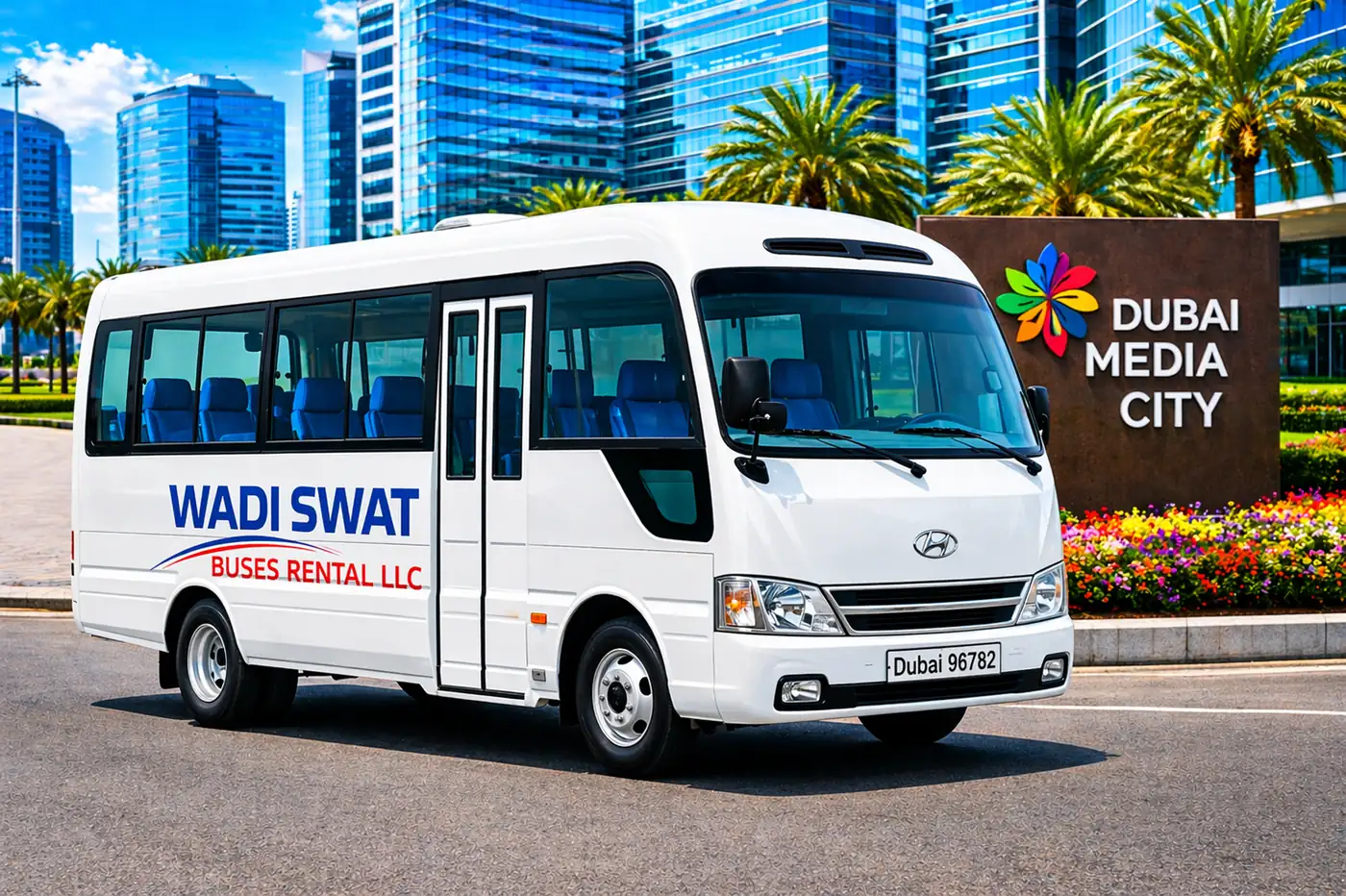 |
| Nissan Civilian | 30 | Staff transport, events, tours and recurring medium-capacity work | Another 30-seat option. Check the interior, baggage handling, route access and availability. | 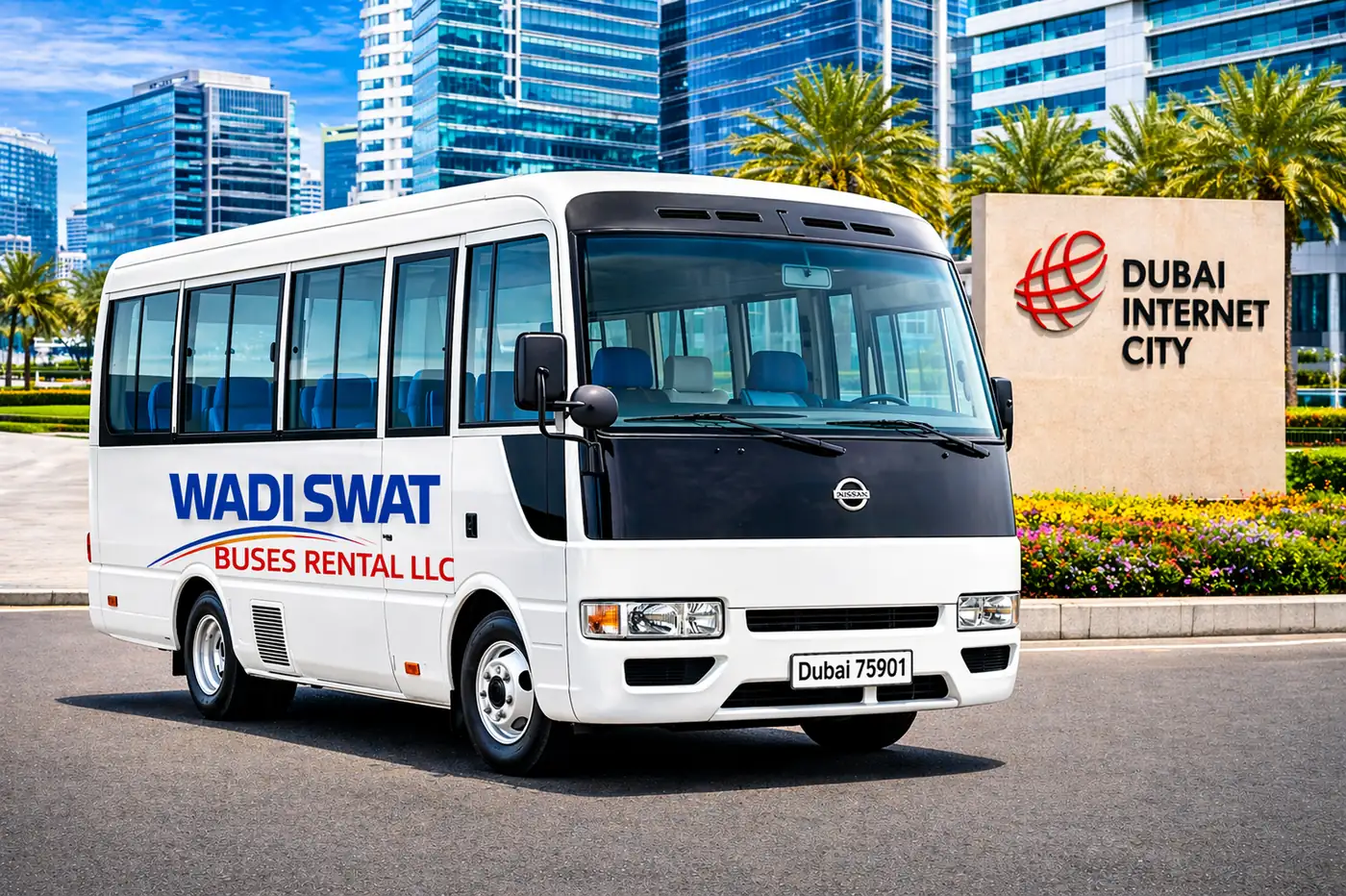 |
| Mitsubishi Rosa | 34 | Groups close to or above a comfortable Coaster load | Useful when the passenger total, journey or luggage makes a Coaster feel tight. | 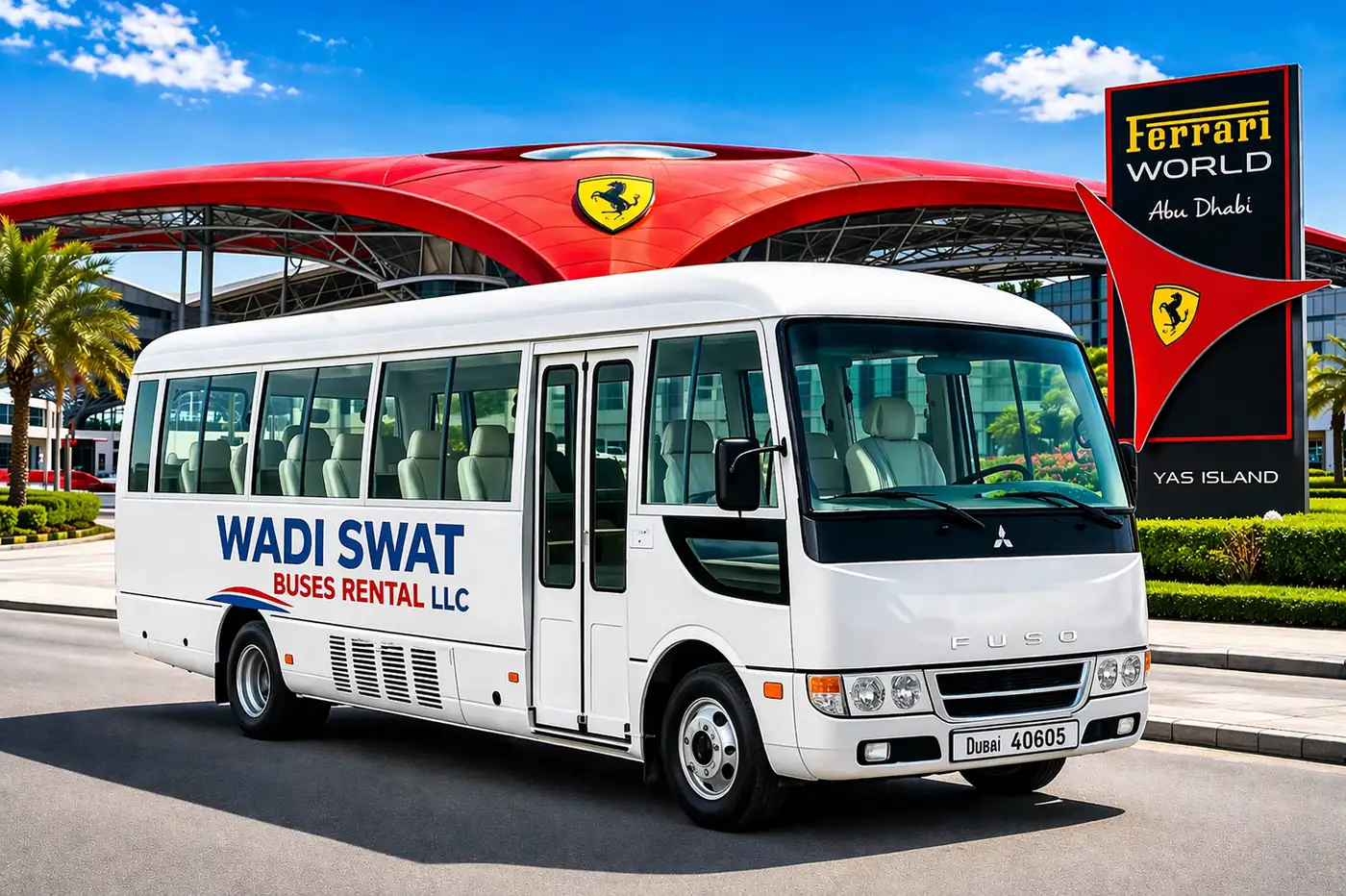 |
| 35-seater upgrade | 35 class | Larger event groups, longer journeys and duties needing more space | Choose a larger bus when the group needs more separation, luggage space or a comfortable capacity margin. | 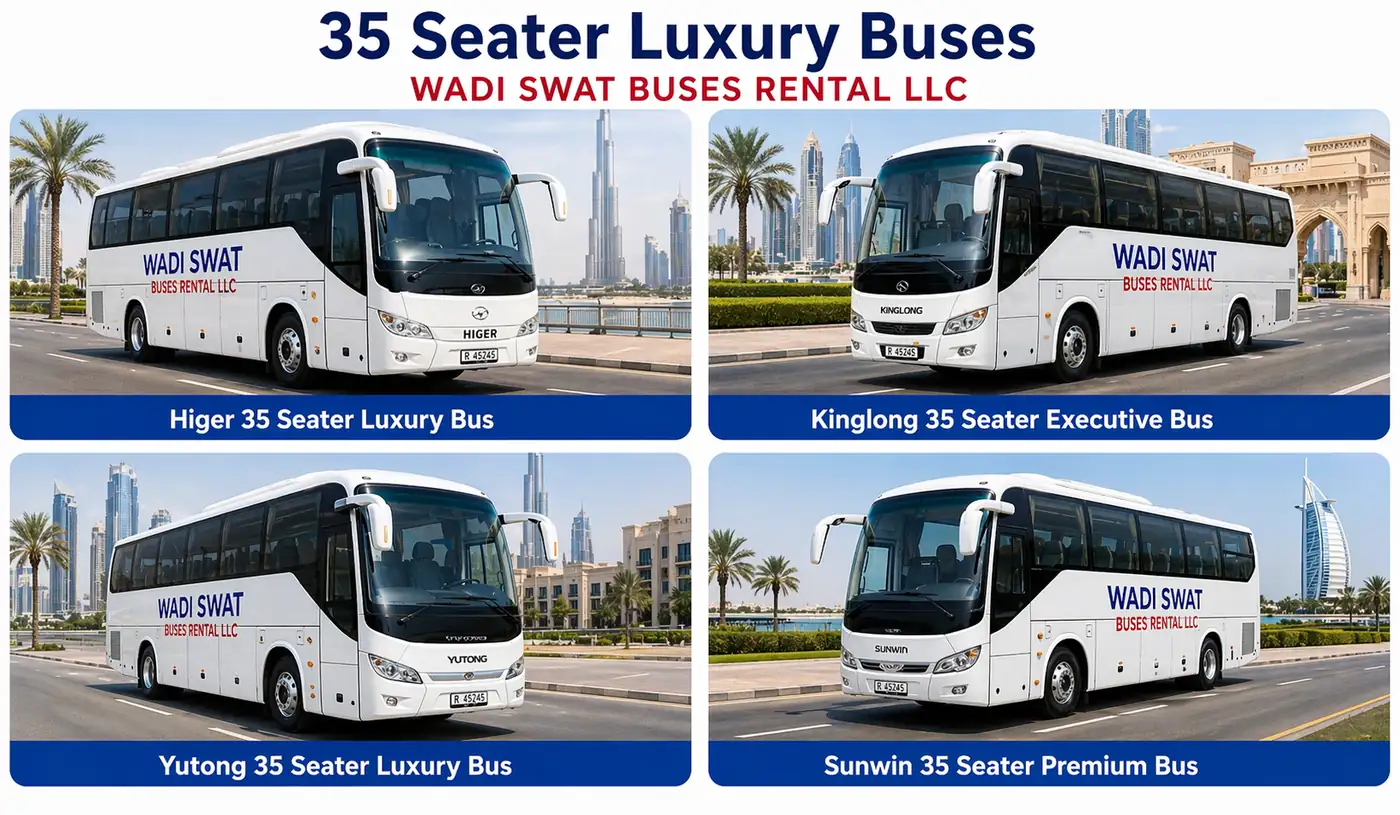 |
Popular Coaster Bus Routes Across Dubai
These are examples of the journeys customers regularly request, not fixed public timetables. The final plan starts with the exact building or terminal, passenger count, baggage, reporting time, stop order and return. A change from one hotel entrance or worksite gate to another can alter the schedule more than the area name suggests. Related planning: Burj Khalifa Downtown Dubai · Group Transport to Dubai Marina.
What a Coaster Bus Quotation Should Confirm
The quotation should leave no doubt about the movement being priced. It needs the vehicle class, driver, date, route and duty period, along with any agreed operating costs. Airport waiting, parking, extra trips and inter-emirate work vary from one booking to another, so the final commercial scope must be written clearly.
Confirm these details before booking
- Vehicle class, requested seating configuration and any agreed equivalent
- Professional driver, service date and vehicle reporting time
- Exact pickup, destination and every scheduled stop
- One-way, return, standby or full-duty arrangement
- Commercial inclusions written into the quotation
Confirm these items separately when they apply
- Waiting beyond the agreed period or a delayed passenger release
- Extra trips, additional pickups or last-minute route changes
- Airport, hotel, parking, venue or access charges
- Heavy baggage, equipment or mobility needs that affect vehicle choice
- Inter-emirate extensions, permits or special operating coordination
What Decides the Right Coaster Bus Size?
Passenger number alone does not decide the bus. Twenty-three employees carrying small personal bags create a very different load from twenty-three airport passengers with large suitcases. The practical answer also changes with folding seats, aisle access, the number of stops and the length of time passengers will remain on board.
For a recurring staff route, add the pickup clusters, shift start, operating days and normal changes in attendance. For a one-off transfer, give the precise reporting point, destination, waiting period and return. These details allow the transport team to recommend a vehicle class without relying on a seat label.
Passengers and the actual seat layout
State how many people will travel and whether the group includes children, supervisors or passengers who may need easier boarding. The registered seating and interior arrangement of the offered bus must match the request.
Suitcases, cabin bags and equipment
Count large cases, hand luggage, exhibition items, school materials and unusual equipment separately. A Coaster near maximum seating is not automatically suitable for a baggage-heavy duty.
Timing, stop order and pickup access
Say whether the service is one-way, return or continuous duty. List every pickup and drop, including the correct hotel entrance, tower loading bay, residence, venue gate or industrial access point.
Prepare a Coaster Bus Rental Brief
Use the fields below to organise the information a dispatcher needs. The result is an initial vehicle direction, not a confirmed booking. The offered bus, driver schedule and commercial terms are checked after the complete route is received.
What Affects the Cost of a Coaster for Rent in Dubai?
A useful quotation is built from the actual duty, not a single generic price. Distance, hours, stop count, waiting, baggage and the required seating class all change the operating scope. Send the complete route for a figure based on the work the bus and driver will actually perform.
Route distance and return movement
A direct transfer, a return trip and an inter-emirate journey involve different distance and operating time. Include every destination and planned detour.
Duty hours, waiting and standby
Airport holding, an event standby, a full-day tour and a short point-to-point transfer are different duties. State when the vehicle may be released.
23-seat or 30-seat configuration
Availability and the confirmed interior affect the quoted bus. The lowest seat count is not always the best value if it leaves too little luggage space.
Stops, access and baggage
Extra pickups, restricted loading areas and heavy bags can increase the time needed or change the suitable vehicle class.
Typical Coaster Bus Booking Scenarios
The examples below show why two groups with the same headcount can need different arrangements. They are planning examples, not named customer cases or promises of availability.
Daily Office Team Route
An office team travels from residential collection points to Business Bay or Jebel Ali. Confirm operating days, site arrival, stop order, shift finish and attendance changes.
Airport Group With Suitcases
A group lands at DXB with checked and cabin bags. Send the terminal, passenger total, bag count, destination, pickup instruction and expected waiting.
Hotel Guests Travelling to an Event
Guests leave several hotels for a venue. The plan may need short boarding windows, an approved staging area and more than one return wave.
School or University Outing
Students and accompanying adults need a coordinator, full group count, campus pickup, destination, departure time, return plan and institution requirements.
Private Dubai Sightseeing Group
A private group wants several sightseeing stops. The stop order, parking time, bags left on board and final drop determine the duty.
Dubai to Abu Dhabi Day Duty
A group visits Abu Dhabi and returns to Dubai. Duty length, waiting, stops and comfort decide whether a Coaster remains suitable.
When a Coaster Is Better Than a Van or Full-Size Coach
The Coaster is most useful in the space between a practical van load and a genuine coach requirement. Pick the smallest vehicle that carries the group, luggage and route comfortably, rather than choosing by habit or by the highest advertised seat number.
Use a van for a genuinely small group
A Hiace, Urvan or similar van can be more efficient for a smaller party with light baggage, especially at residences and loading areas where a longer bus is inconvenient. Extra empty seats do not automatically improve the journey.
Use a Coaster for a medium-size group
A Coaster bus keeps an office team, airport party, hotel group, event delegation or tour together in one organised vehicle. It provides more capacity than a van without the footprint of a large coach.
Move to a Rosa or coach when the margin is tight
Choose a larger minibus or coach when passengers approach the comfortable Coaster limit, luggage is substantial, the trip is long or the group expects more personal space. A sensible capacity buffer is better than a cramped maximum-seat layout.
23-Seater and 30-Seater Coaster Bus Options in Dubai
Seat descriptions must match the actual bus offered. Ask for the registered passenger capacity, interior layout and any folding seats before treating “23-seater” or “30-seater” as guaranteed usable space. The best configuration is the one that carries people and belongings comfortably on the planned route.
23-Seater Passenger Fit
The 23-seater suits groups that have outgrown a van without needing maximum Coaster capacity. Free seats can improve boarding and comfort.
23-Seater Luggage Planning
For airports and hotels, list checked cases, cabin bags, prams and unusual items. A near-full load may need a larger minibus.
Where the 23-Seater Works Well
Company teams, hotel guests, private tours and smaller event groups commonly use this class. Access, stops and journey length still matter.
30-Seater Coaster for Rent: Passenger and Luggage Fit
The 30-seat class suits larger staff, event, education and tour groups, especially when daily baggage is light.
Folding Seats in Higher-Capacity Layouts
Some layouts use folding or auxiliary seats. Check aisle access and repeated boarding, particularly for elderly guests or multi-stop routes.
When a Larger Minibus Is the Better Choice
A County, Civilian, Rosa or 35-seater may be better when the Coaster leaves too little room for bags or comfort.
Information Needed for an Accurate Coaster Rental Quotation
A complete enquiry saves several rounds of questions and reduces last-minute changes. Put the operational details in one message, especially for urgent bookings, airport work, several pickups or a monthly route.
Actual passenger count
State how many people will travel, not the bus size you hope to book. Mention children, supervisors or passengers who need extra boarding assistance.
Number and type of bags
List checked suitcases, cabin bags, prams, exhibition items and other equipment separately. “Some luggage” is not enough information for an airport vehicle decision.
Exact pickup and destination
Give the exact terminal, hotel, tower, residence, school, venue or worksite. Include every pickup and drop so travel time and stop order can be assessed.
Date and reporting time
Share the service date, vehicle reporting time and passenger departure target. For flights, add the terminal and flight timing when available.
One-way, return, standby or full duty
Explain whether the bus leaves after drop-off, returns later or stays with the group. Waiting and standby can materially change the duty.
One-time, weekly or monthly service
For recurring transport, provide operating days, contract period, shift times, pickup order and expected route changes. A monthly request needs a stable timetable.
Dubai Pickup and Route Conditions to Confirm
The bus may be suitable while the route is still incomplete. Dubai collections range from airport terminals and hotel coach entrances to tower loading bays, residential streets, industrial gates and event staging areas. Precise access information prevents avoidable delays.
Airport and hotel loading
Identify the terminal and whether the job is an arrival or departure. For hotels, give the correct coach entrance, group coordinator and boarding window rather than only the property name.
Business-district collection
Business Bay, DIFC, Internet City and Media City often allow short loading windows. Several office stops can add more duty time than the distance on a map suggests.
Industrial and free-zone access
Jebel Ali, DIP and Dubai South may involve security gates, permit checks and shift changes. Work backwards from the required site arrival when setting employee pickup times.
Event-venue staging
Large events may require early vehicle staging, a remote holding area or more than one return wave. Share the organiser’s transport instructions and the on-site contact.
Travel outside Dubai
An inter-emirate route adds distance and driver duty. Every destination, stop, waiting period and return time is needed before confirming capacity and schedule.
Routes with several pickup points
Multiple residential, hotel or office collections can turn a direct transfer into a long shuttle. Practical meeting points keep the timetable realistic and reduce passenger waiting.
Dubai Areas Served by Coaster and Medium-Size Minibuses
The areas below are common route references. Service still depends on the exact building or terminal, access, date, reporting time, requested duty and vehicle availability. Share a map pin when the pickup is inside a large development, industrial area or venue complex.
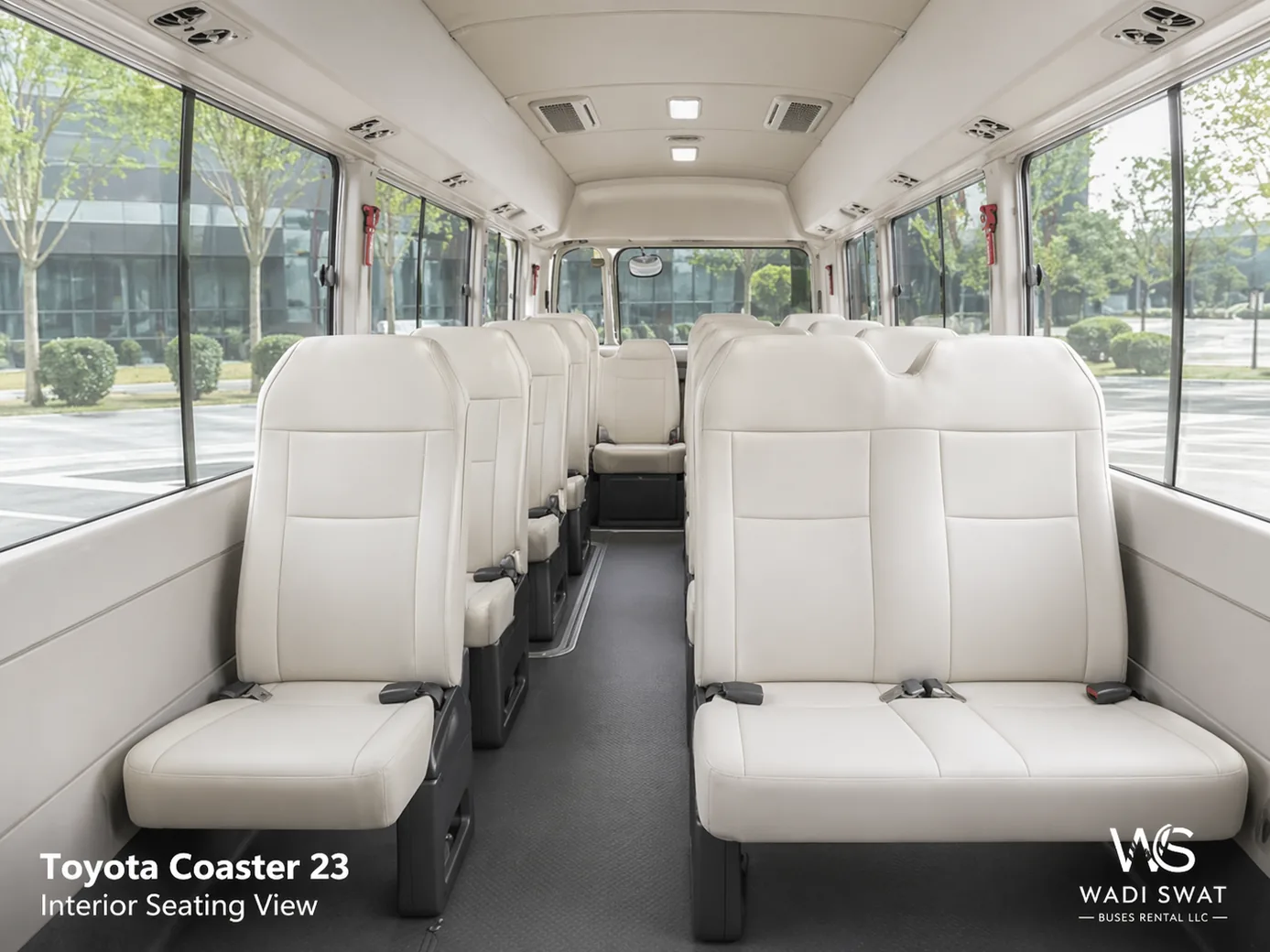
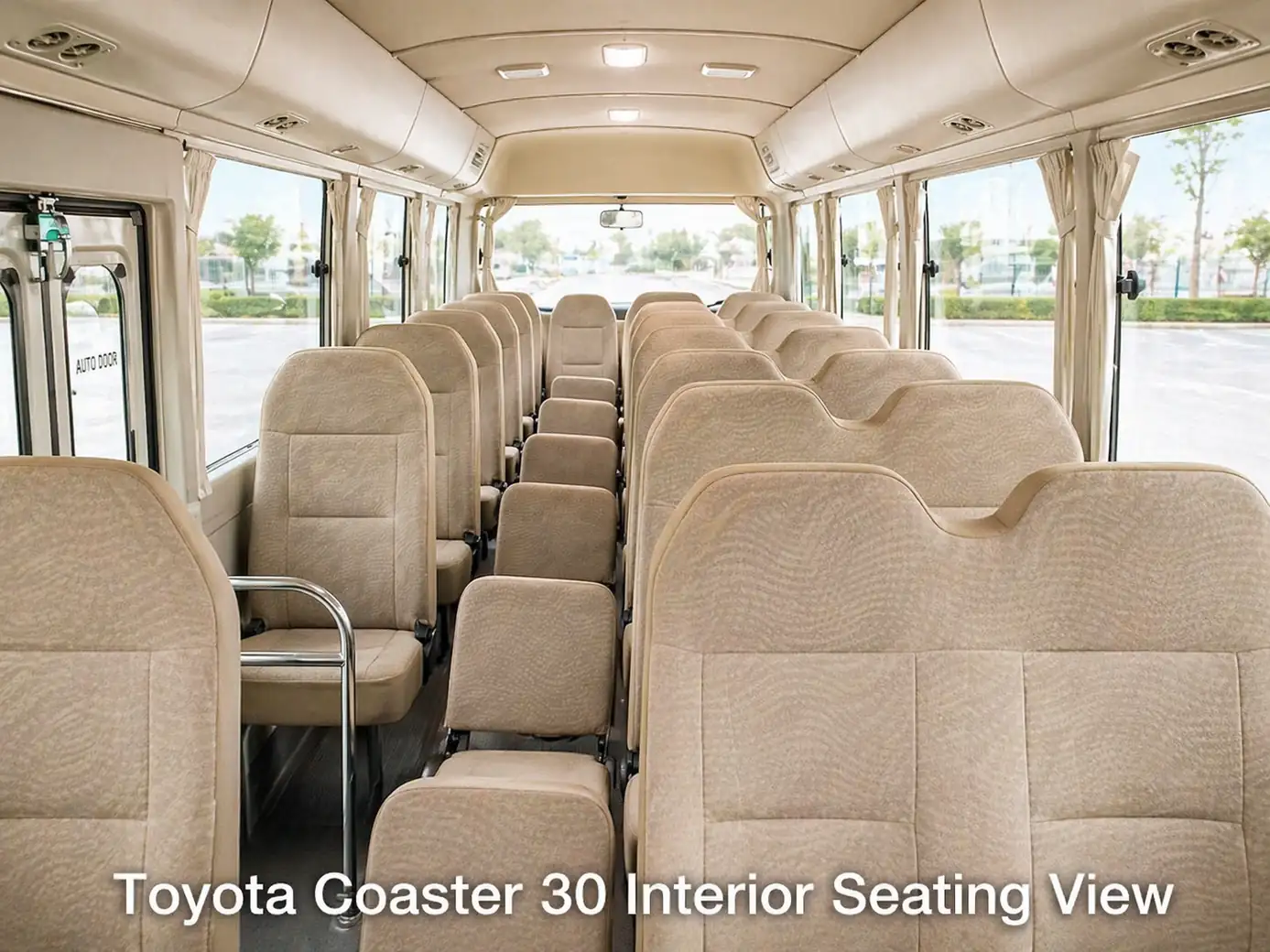
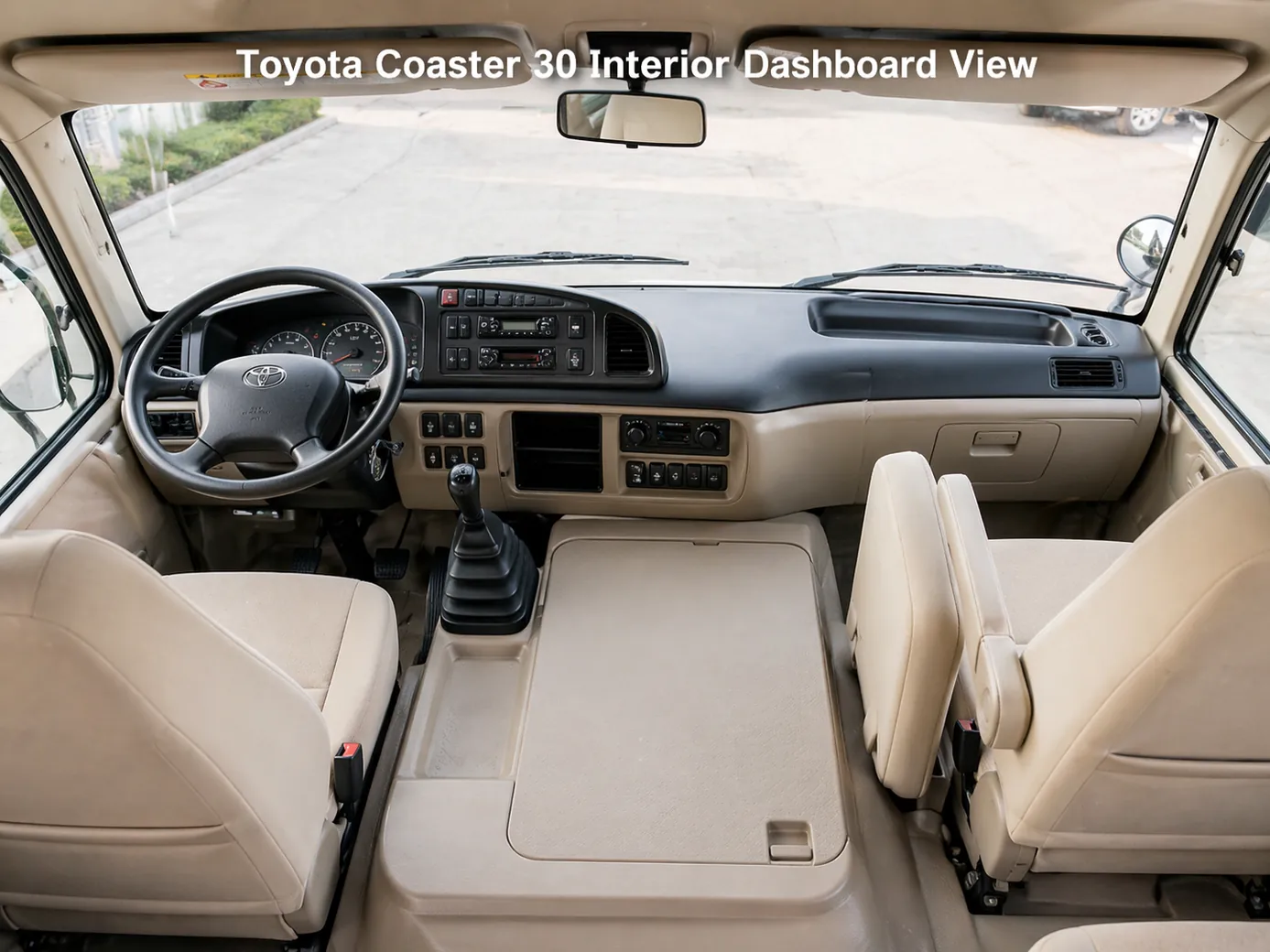
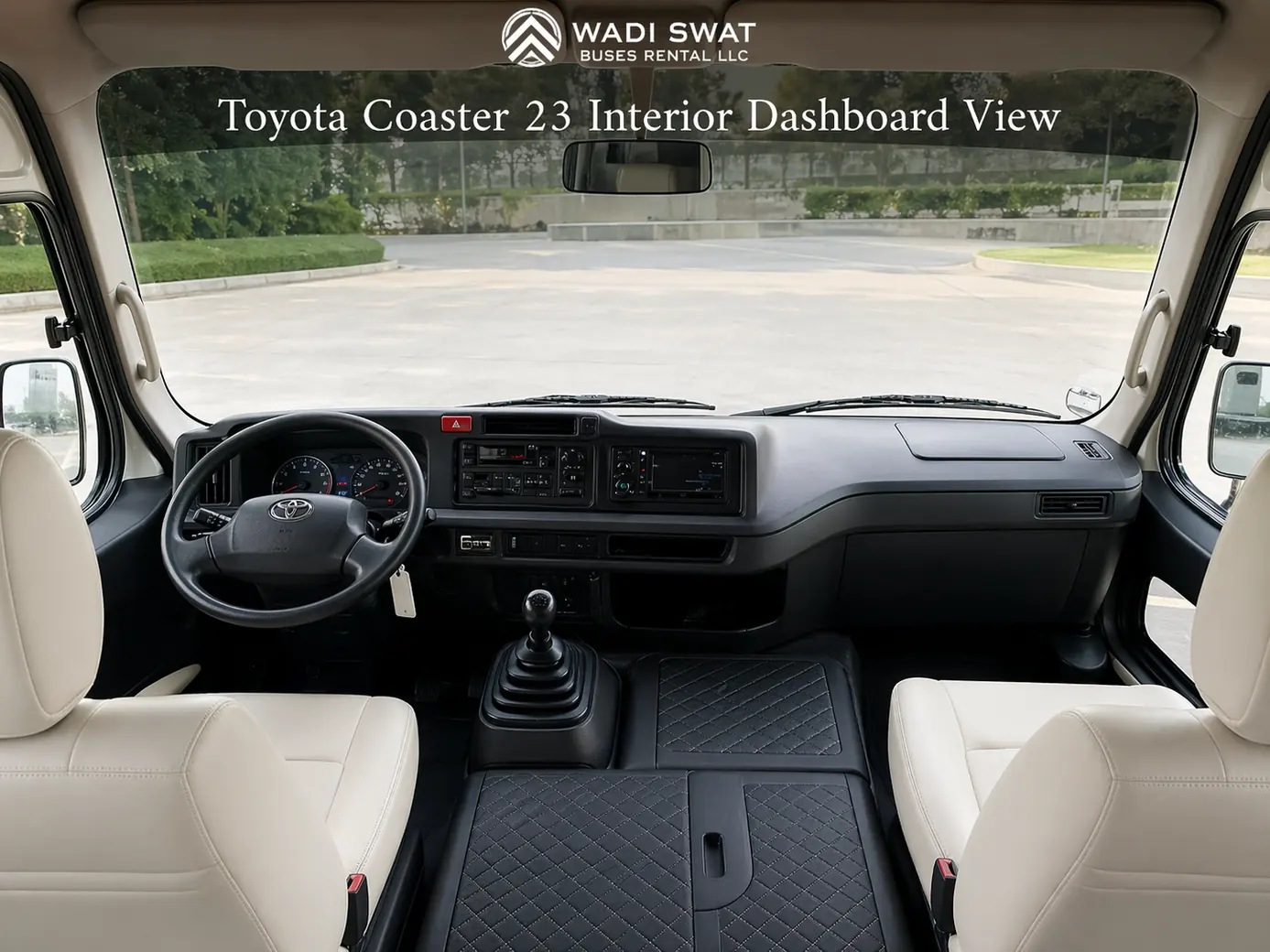
Coaster Bus Interiors, Seating and Passenger Access
Use the photographs to understand the vehicle class, not as a guarantee of the exact bus. The quotation and dispatch confirmation identify the offered model, seating arrangement and availability for the service date.
Related Coaster and Medium-Size Minibus Pages
Use these comparisons for a closer look at a seating class or alternative model. Route fit, passenger comfort and luggage remain more important than choosing a particular badge before availability is checked.
20–34 Seater Minibuses
Compare the wider medium-minibus category when route fit matters more than one model.
Bus Rental AjmanToyota Coaster 23-Seater
See the lower-capacity Coaster for photographs, layout and typical use.
Bus Rental Abu DhabiToyota Coaster 30-Seater
Review the higher-capacity Coaster class for staff, events and larger groups.
Group Transport to Dubai Creek HarbourHyundai County 25-Seater
Compare a 25-seat alternative for company, hotel and event duties.
Dubai Parks and ResortsNissan Civilian 30-Seater
Consider another 30-seat class when layout or availability favours the Civilian.
20-34 Seater MinibusesMitsubishi Rosa 34-Seater
Move up when the group needs a safer margin above practical Coaster capacity.
Minibus Rental with DriverMinibus Rental With Driver
Use the broader service when the exact model can follow the route and availability.
Passenger Transport Companies in DubaiDubai Marina Minibus Route
Check route considerations for Marina, JBR, hotels and nearby guest pickups.
How to Book Staff Transport in DubaiDubai Investment Park Route
Review staff timing and recurring routes serving DIP and surrounding areas.
Plan a DIP minibus routeMedium-Size Fleet Models
Compare Coaster, County, Civilian, Rosa and other medium-size fleet choices.
Compare medium-size fleet modelsThree Common Coaster Booking Mistakes
Most last-minute vehicle changes come from incomplete information rather than the route itself. Confirm the points below before the bus is allocated. Related planning: Best Vehicle Types for Workforce Movement.
Choosing only by the advertised seat count
A 23-seater or 30-seater label does not describe the complete interior. Ask what vehicle is being offered and check the practical passenger, aisle and baggage arrangement.
Leaving luggage and folding seats out of the calculation
Large suitcases, event equipment and auxiliary seats change usable capacity. A group that fits comfortably on a staff shuttle may need a larger vehicle for an airport journey.
Sending a request without the full route
“Need a Coaster tomorrow” is not enough to allocate a bus. Include date, reporting time, pickup, destination, passengers, bags, stops, waiting and return in the first message.
Final Coaster Bus Booking Checklist
Confirm the passenger total, number and type of bags, exact pickup and destination, service date, reporting time, every stop, waiting or return, preferred seating class, accessibility needs and whether the duty is one-time or recurring. A complete brief lets the operator check availability and price without guessing.
Coaster Bus Rental in Dubai: Frequently Asked Questions
These answers cover seating, luggage, route planning and the information needed before a bus can be confirmed. The written quotation remains the final reference for the offered vehicle and commercial scope.
What is Coaster Bus Rental Dubai best suited for?
It is best suited to medium-size groups that need one coordinated vehicle for staff routes, airport and hotel transfers, exhibitions, events, education trips, private tours, recurring company transport or suitable inter-emirate journeys. The practical choice still depends on passenger numbers, luggage, access and the full duty schedule.
Which vehicles can be used for Coaster Bus Rental Dubai?
A 23-seat or 30-seat Toyota Coaster may suit many requirements, while a passenger van, another minibus or a larger coach may be recommended when the group, luggage, comfort level or access conditions require a different capacity. The written quotation confirms the offered vehicle class rather than guaranteeing a model before availability is checked.
What information is required to quote Coaster Bus Rental Dubai?
Send the service date, reporting time, actual passenger and luggage counts, exact pickup and destination, every planned stop, required arrival time, waiting or standby period, return arrangement and whether the service is one-time, regular or contractual. Map pins and access instructions are useful for hotels, towers, airports, free zones and event venues.
What affects the price of Coaster Bus Rental Dubai?
The quotation can be affected by the vehicle class, route distance, total duty hours, waiting, standby, number of stops, pickup access, return movement, tolls, parking, permits, operating frequency, timing and availability. The written quotation should identify the included scope, separately chargeable items and client responsibilities.
Are permits, parking or access approvals needed for Coaster Bus Rental Dubai?
Requirements depend on the airport, venue, hotel, tower, free zone, worksite, authority and route. Share gate details, loading points and any known permit or access requirements before confirmation. The quotation or contract should state which party is responsible for permits, parking, tolls and special access arrangements.
How are changes, delays or replacement vehicles handled for Bus Rental Dubai?
Changes to passenger numbers, route, timing, stops or duty duration should be reported immediately so the vehicle and commercial scope can be reassessed. Delay communication, breakdown support and any replacement-vehicle arrangement should follow the confirmed quotation or contract, operational availability and the agreed service-continuity procedure.
Prepare Your Coaster Bus Route for a Quotation
Use the route builder to organise the people, bags, pickup, destination, date, reporting time, stops and return. Once the scope is complete, send it for vehicle availability and commercial confirmation.