🧭 UAE TOUR JOURNEYS

Tours

Tours is planned around the itinerary, the passengers and the time available at each destination. It is designed for tour operators, hotels, travel coordinators, families, schools and private groups who need multi-stop sightseeing across the UAE, including city landmarks, cultural venues, waterfront areas, mountain destinations and attraction transfers. The route, vehicle capacity, luggage, access arrangements, driver duty and written responsibilities should be confirmed together so the group can move between destinations with a practical schedule rather than a generic bus request.

🗓️ Itinerary 👥 Group size 🧳 Luggage 📍 Tour stops
UAE city tours Abu Dhabi
A tourism transport plan built around destinations, passengers and time on the road.
TRAVEL PLANTours
🏙️ City stops 🕌 Cultural visits 🌴 Waterfronts ⛰️ Mountain routes
🏙️ City stops 🕌 Cultural visits 🌴 Waterfronts ⛰️ Mountain routes 🎡 Attractions
Tour planner
Build the first version of the tour movement plan

Add the starting point, principal destination, group size and number of days. The result is a planning summary, not a price or availability promise.

🏨 Hotel🕒 Timing🎟️ Visits
Planning summary

01
Itinerary design

UAE Tour Transport: Itinerary and Group Plan

Turn the travel idea into a day-by-day movement plan with ordered destinations, practical visit windows and a named group coordinator. A UAE tour may combine different emirates, hotels and visit windows, so the sequence should be written by day rather than supplied as a loose list of places.

Sightseeing Bus Charter

Tour Dates, Stops and Timings — Tours

A workable Tours itinerary begins with a route that can actually be operated, not only a list of attractions. The coordinator should set the reporting point, the order of stops, the planned duration at each location and the final return. For this page, the main operating context is multi-stop sightseeing across the UAE, including city landmarks, cultural venues, waterfront areas, mountain destinations and attraction transfers. A UAE tour may combine different emirates, hotels and visit windows, so the sequence should be written by day rather than supplied as a loose list of places. The sequence should also show which stop is a simple drop-off, which requires the vehicle to wait and which needs a later collection from a different point.

Itinerary inputs — Tours

The movement sheet should be shared with the driver and the group coordinator before travel. It should identify the first passenger contact, the guide if one is used, map pins, access notes and the target departure from every major stop. Small timing gaps can accumulate over a full tour day, so the plan needs realistic transfer and boarding time rather than an attraction schedule copied without road movement.

  • confirmed travel date and reporting time
  • ordered destination list with map pins
  • visit duration and collection point for each stop
Passenger Profile, Guide and Luggage — Tours

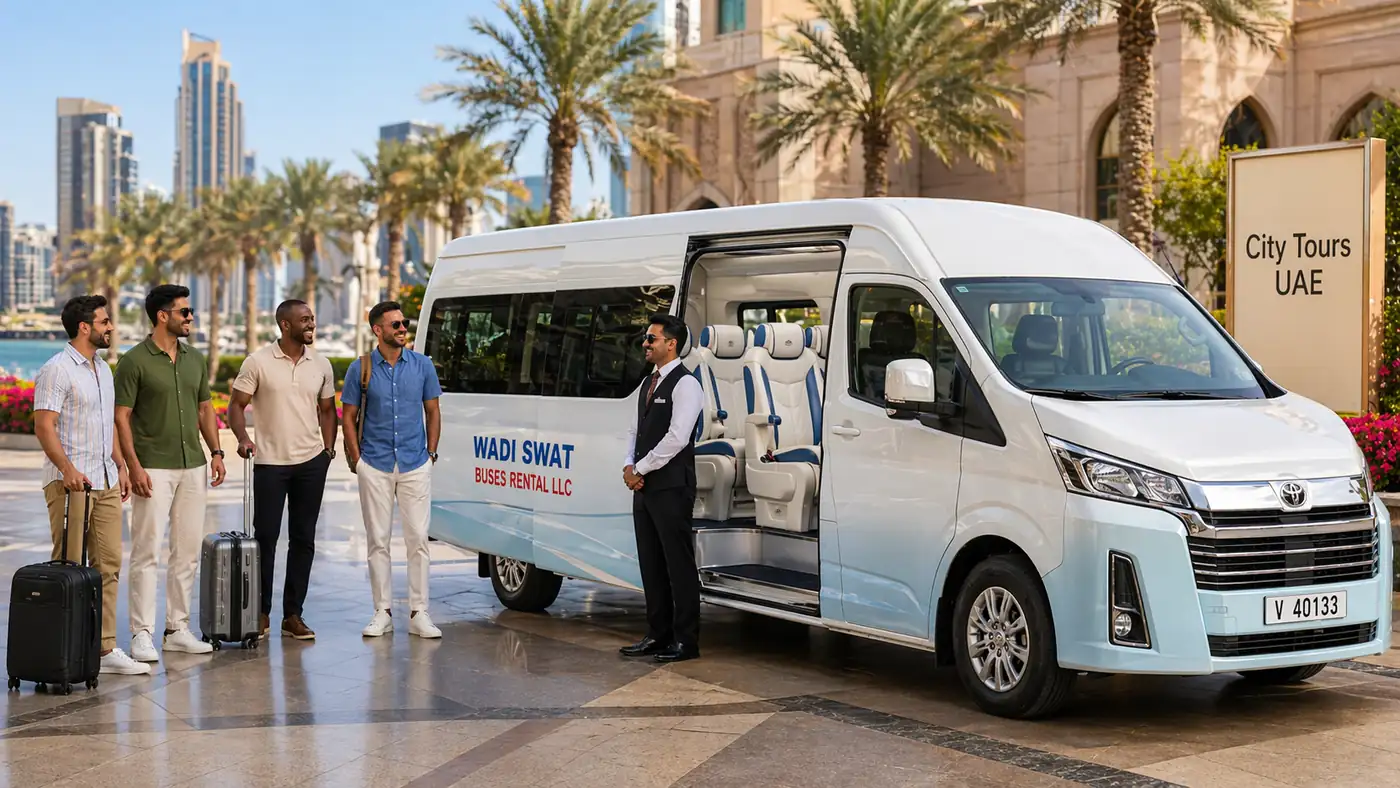
Tours should be planned around the people travelling as well as the destinations. The typical users are tour operators, hotels, travel coordinators, families, schools and private groups. The final passenger number affects seating, luggage storage, boarding time and the person responsible for counting the group. Children, elderly travellers, delegates with equipment or guests carrying large cases may need additional boarding time or a different vehicle class.

Group requirements — Tours

The coordinator should distinguish cabin-size bags, large suitcases, equipment and items that must remain inside the passenger area. Guide seating, microphone requests, cool boxes or event materials should also be declared before the quotation is confirmed. A clear group profile helps avoid selecting a vehicle that has enough seats but insufficient practical space for the journey.

  • adult and child passenger totals where relevant
  • guide, coordinator and special-assistance information
  • number and approximate size of bags or equipment
01🏨 Hotel
02🚌 Departure
03📸 First stop
04🍽️ Break
05🌇 Final visit
06↩️ Return
02
Vehicle fit

Vehicle Comfort and Capacity — Tours

Match the vehicle class to the real passenger, luggage and comfort requirement. The best fit depends on access and journey pattern, not only the number of seats.

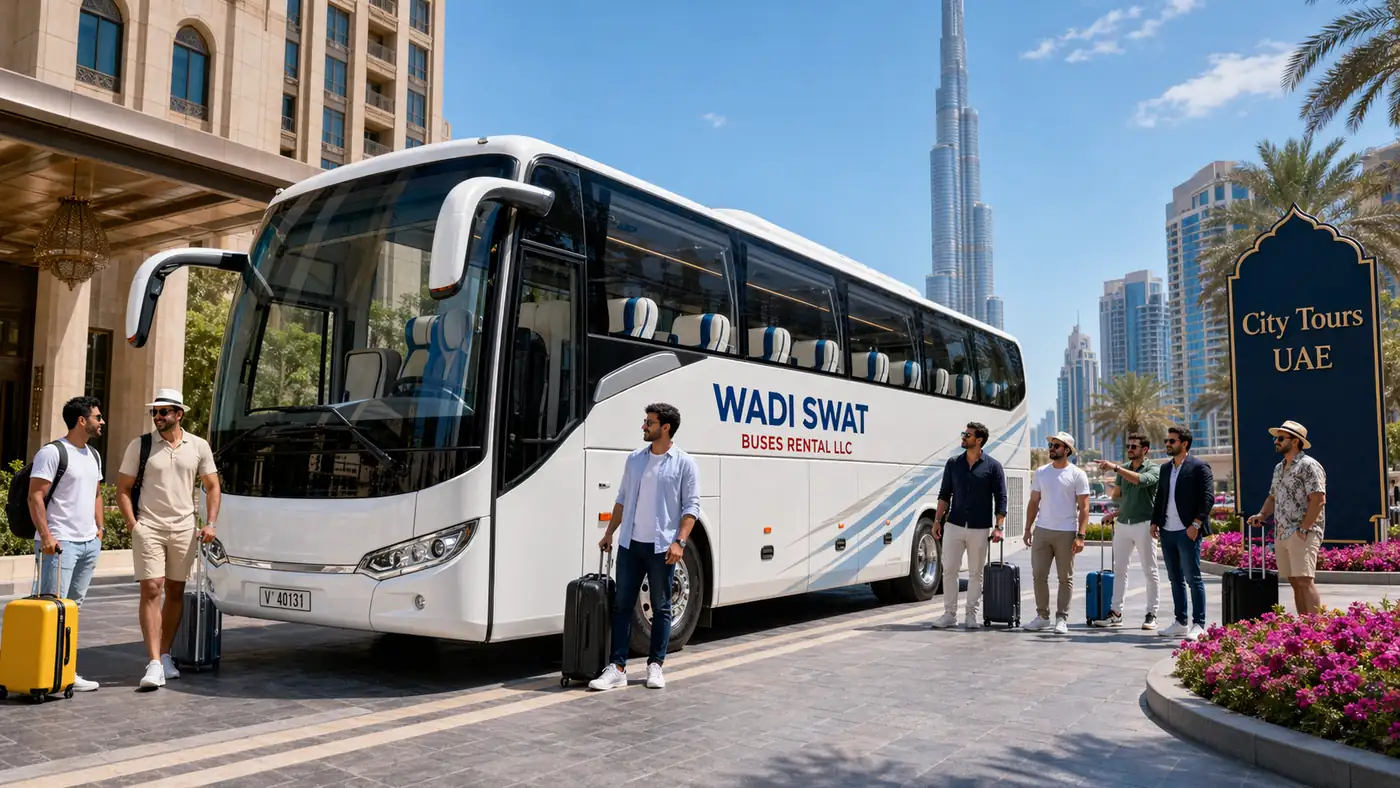
50-53 Seater Luxury Buses
UAE city tours Dubai

Seating, Air Conditioning and Bag Space — Tours

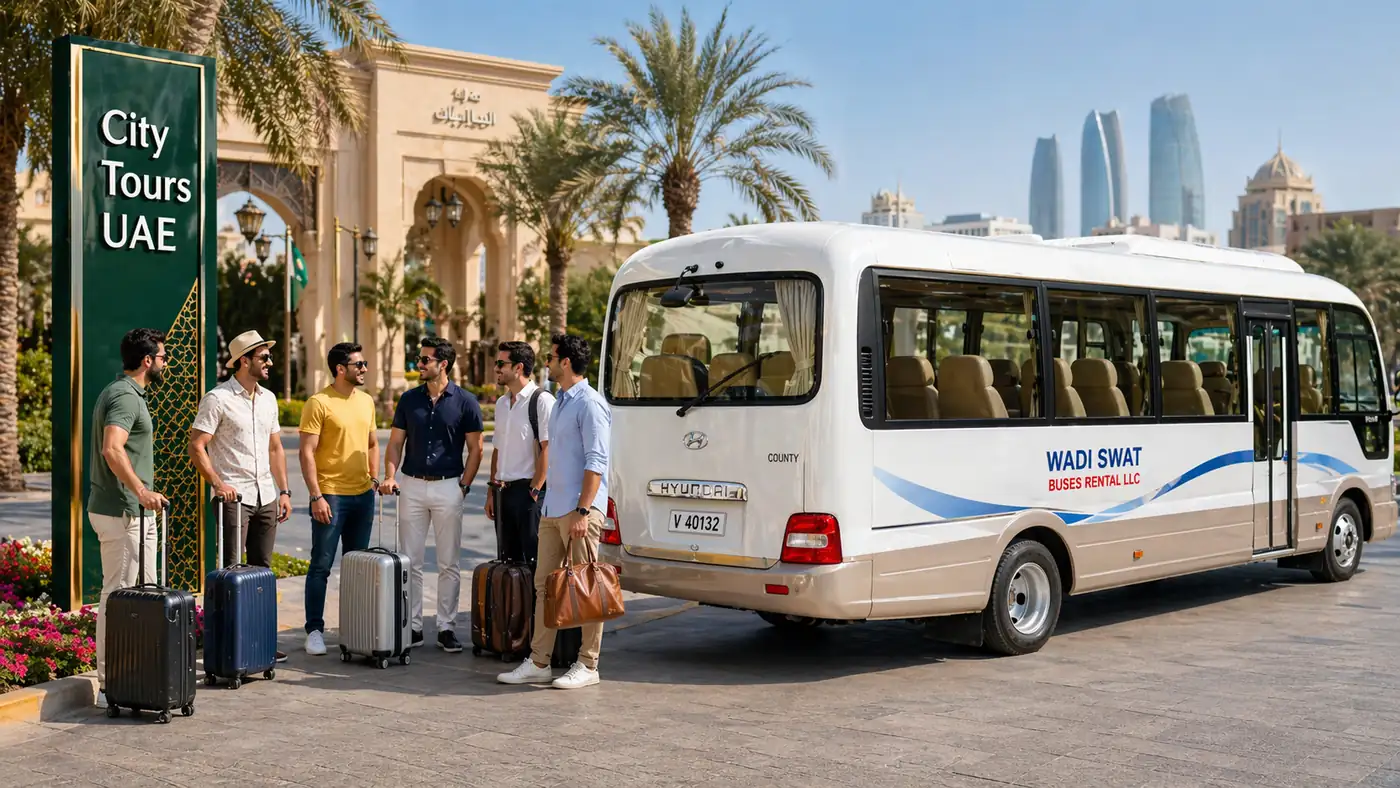
Capacity for Tours is not decided by seat count alone. The route, boarding access, luggage and journey duration all affect whether a van, minibus or full-size coach is appropriate. A compact group may prefer a smaller vehicle for hotel entrances and short city movements, while a larger group or longer programme may need coach seating, stronger luggage capacity and a more spacious aisle.

Vehicle fit — Tours

Air-conditioning, seat layout, step height and access to baggage should be reviewed in relation to the group. The written offer should state the vehicle capacity class and any confirmed features without promising a specific model before availability is checked. Passenger numbers should be frozen by the agreed deadline because a late increase can require a different vehicle and a revised commercial scope.

  • passenger count by sector of the tour
  • luggage and equipment volume
  • access limits at hotels, terminals and attractions

Coach Features for Longer Journeys — Tours

Longer sectors within Tours require more attention to comfort than short point-to-point transfers. Journey time, road type, expected breaks and the age profile of the group influence the most suitable seating and vehicle category. For multi-emirate timing, luggage changes, hotel check-in windows and a clear daily return point, the transport plan should protect passenger comfort without creating unrealistic promises about a particular interior or model.

Comfort considerations — Tours

Useful confirmed features may include air-conditioning, reclining or coach-style seating, baggage space and a microphone where available and requested. The quotation should distinguish standard operational requirements from optional preferences. Rest stops should be built into the itinerary when the distance or group profile requires them, and those stops should be included in the driver duty calculation.

  • journey duration and planned comfort breaks
  • requested features that must be confirmed in writing
  • boarding access for the least mobile passenger
03
Destination access

Route, Attraction and Access Planning — Tours

Check how the vehicle will approach, drop, wait and collect at each attraction. Tourism routes work better when every map pin and meeting point is written before departure.

Dubai to Hatta Bus
UAE city tours Sharjah

Parking, Drop-Off and Restricted Areas — Tours

Route planning for Tours should identify the practical access point for every destination. Some locations permit a short drop-off but do not provide long-stay coach parking; others use a designated group bay or a remote collection point. The itinerary should therefore include exact map pins and the coordinator should confirm venue instructions rather than relying on a landmark name alone.

Destination access — Tours

The driver needs enough information to approach the site legally and safely, while the group leader needs a clear meeting point for the return. Traffic restrictions, security checks, terminal procedures or busy event periods can change the time required. Where access is uncertain, the route should be reviewed before final confirmation and an alternative collection point should be recorded.

  • approved or practical vehicle approach point
  • drop-off, waiting and collection arrangement
  • venue contact or booking reference when applicable

Driver Hours, Breaks and Multi-Day Duties — Tours

Driver duty is part of the operating plan for Tours. The complete duty includes positioning, passenger boarding, all journey sectors, waiting, breaks and the return to base or overnight location. A tour itinerary can look short when only attraction times are shown, yet become a long duty once road movement and waiting are included.

Operational limits — Tours

For multi-day or extended programmes, daily start and finish times should be listed separately. Changes that extend the day may require route or staffing review. The coordinator should not assume unlimited waiting or driving hours. A controlled itinerary supports lawful, realistic operations and gives the group a clearer expectation of when the vehicle will be available.

  • daily reporting and release times
  • planned driver and passenger breaks
  • overnight or positioning requirement where relevant
04
Quote control

Pricing and Inclusions — Tours

Compare quotations on the same complete duty: days, hours, distance, waiting, parking, tolls and responsibilities. This keeps the commercial scope clear.

Dubai to Hatta Bus

Daily Duty, Distance and Waiting — Tours

A quotation for Tours should be based on the complete duty rather than only the distance between the first and last point. Vehicle class, total kilometres, operating hours, waiting, additional sectors, parking, tolls and the number of service days can all affect the commercial offer. The customer should provide the most stable itinerary available so the price reflects the intended work.

Cost factors — Tours

The written offer should state the included hours or duty, vehicle capacity, driver scope and any named exclusions. If the programme changes after confirmation, the route and price may need reassessment. Comparing quotations is more meaningful when the same destinations, hours, passenger count and responsibilities are used across all offers.

  • vehicle class and number of operating days
  • estimated duty hours, kilometres and waiting
  • written inclusions, exclusions and variation rules

Accommodation, Tolls and Entrance Charges — Tours

Some Tours programmes create costs outside the basic vehicle movement. Driver accommodation may be needed for an overnight route, while parking, tolls, terminal access, permits or entrance-related vehicle charges can vary by destination. Attraction tickets, tour guides, meals and passenger accommodation are not transport inclusions unless they are specifically written into the offer.

Responsibility checks — Tours

The responsibility matrix should show which items are arranged by the customer, tour operator or transport provider. This is especially important for multi-emirate timing, luggage changes, hotel check-in windows and a clear daily return point. Clear ownership reduces last-minute disputes at hotels, terminals and attractions and allows the operations team to prepare the correct documents and payment method where a charge is known in advance.

  • driver accommodation or overnight parking responsibility
  • tolls, parking and access charges
  • third-party tour items excluded from transport
05
Tour-day support

Booking and Tour-Day Support — Tours

Freeze one final itinerary, contact list and escalation process. Changes can then be assessed quickly without conflicting instructions reaching the driver.

Booking FAQ

Final Itinerary and Contact List — Tours

Before Tours is released for operation, the final itinerary should be converted into one controlled version. It should include dates, pickup pins, passenger numbers, contact names, destination order, expected waiting, guide details and the approved finish point. The customer should nominate one person authorised to request changes and one backup contact for the tour day.

Confirmation — Tours

The driver or operations team should not have to combine information from several chat messages. A single final movement sheet makes the service easier to monitor and reduces conflicting instructions. The confirmation should also show the quotation reference and the deadline for any passenger or itinerary update.

  • final itinerary version and quotation reference
  • primary and backup coordinator contacts
  • passenger list or group count confirmation

Changes, Delays and Contingencies — Tours

Tour days can change, so Tours needs a communication and contingency process. A delayed flight or vessel, extended attraction visit, traffic restriction, weather condition or passenger issue may require a revised collection time. The coordinator should report the change quickly and confirm whether the next stop, waiting time or return commitment is affected.

Support process — Tours

The operations response may involve updating the driver, checking duty hours, revising the route or assessing a replacement vehicle. Continuity measures are subject to the agreed contract and operational availability; they should not be described as an unconditional guarantee. The group should retain the agreed contact number and understand the escalation route before departure.

  • authorised contact for live changes
  • impact check on route, duty hours and cost
  • documented escalation and continuity procedure
Questions before confirmation
Practical answers for tour planning

Clear answers for the route, passenger capacity, responsibilities and written quotation.

Tours is most useful for tour operators, hotels, travel coordinators, families, schools and private groups when the journey has a defined group, route and programme. It can cover multi-stop sightseeing across the UAE, including city landmarks, cultural venues, waterfront areas, mountain destinations and attraction transfers. A useful request states the pickup point, destination sequence, reporting time, expected finish, passenger count, guide or coordinator contact and any luggage. The transport scope should be separated from attraction tickets, guides, meals or other tour services unless those items are expressly included in the written offer.

Vehicle choice for Tours depends on the number of passengers, luggage volume, journey length, access at each stop and the desired comfort level. Vans can suit smaller groups and restricted pickup areas, minibuses can support medium groups, and larger coaches may suit consolidated groups or longer journeys. The final quotation should confirm the capacity class and service scope. A specific make, model or feature should only be treated as confirmed after availability and route suitability are checked.

To quote Tours, provide the date, pickup address or map pin, destination order, expected visit times, passenger count, luggage, guide details, parking or access information, waiting requirements and the final return point. For multi-emirate timing, luggage changes, hotel check-in windows and a clear daily return point, include any related deadlines or handover instructions. Clear information helps the operations team assess distance, duty hours, vehicle capacity and the practical sequence before issuing a written offer.

The price of Tours is influenced by vehicle class, total distance, duty hours, number of days, waiting time, parking, tolls, driver accommodation where relevant, additional sectors and changes requested after confirmation. Attraction entrance fees, guides and third-party services are separate unless the quotation says otherwise. A reliable comparison should review the same route, inclusions, exclusions, operating hours and change conditions rather than comparing only one headline amount.

Permits, terminal rules, coach bays, parking approvals or attraction access procedures for Tours depend on the destination and route. The customer or tour coordinator should identify known booking references, venue instructions and approved meeting points. The transport provider can then review vehicle access and required operational documents. No permit, parking position or special access should be assumed until the relevant venue, authority or operator has confirmed it.

Changes affecting Tours should be communicated through the agreed coordinator as early as possible. A changed stop, delayed vessel, longer attraction visit, passenger increase or revised hotel can alter distance, driver hours and vehicle capacity. The response should include a route reassessment, updated passenger communication and a continuity plan. Replacement arrangements remain subject to the written scope, route information and operational availability, so the escalation contacts should be confirmed before travel.

A smoother journey begins with a written plan
Share the itinerary and group details for a route review

Plan sightseeing transport around the itinerary, not around a generic vehicle request.